
Bible symbol · 3 lenses
What Does Evil Mean in the Bible Read through 3 lenses
for there will be no reward to the evil man. The lamp of the wicked will be snuffed out.
for there will be no reward to the evil man. The lamp of the wicked will be snuffed out.
Evil: fear in the mind of another, seen as an outside force but empty of any power the mind does not lend it.
Christian Psychology lens · Matthew 5:39
Therefore remove sorrow from your heart, and put away evil from your flesh; for youth and the dawn of life are vanity.
Jabez called on the God of Israel, saying, “Oh that you would bless me indeed, and enlarge my border! May your hand be with me, and may you keep me from evil, that I may not cause pain!” God granted him that which he requested.
Now these things were our examples, to the intent we should not lust after evil things, as they also lusted.
Same symbol, 3 ways of seeing it. Tap one to jump to it.

Fear promises a reward it can never deliver, because everything built on separation ends in nothing. A mind that follows the ego chases a light that was never lit from within, a small flame of specialness that seems to shine only against the dark it imagines around it.
Such a light goes out, not as punishment sent from above, but because nothing real was ever feeding it. The going out takes nothing true away. It only clears the room for the light that no illusion can put out.
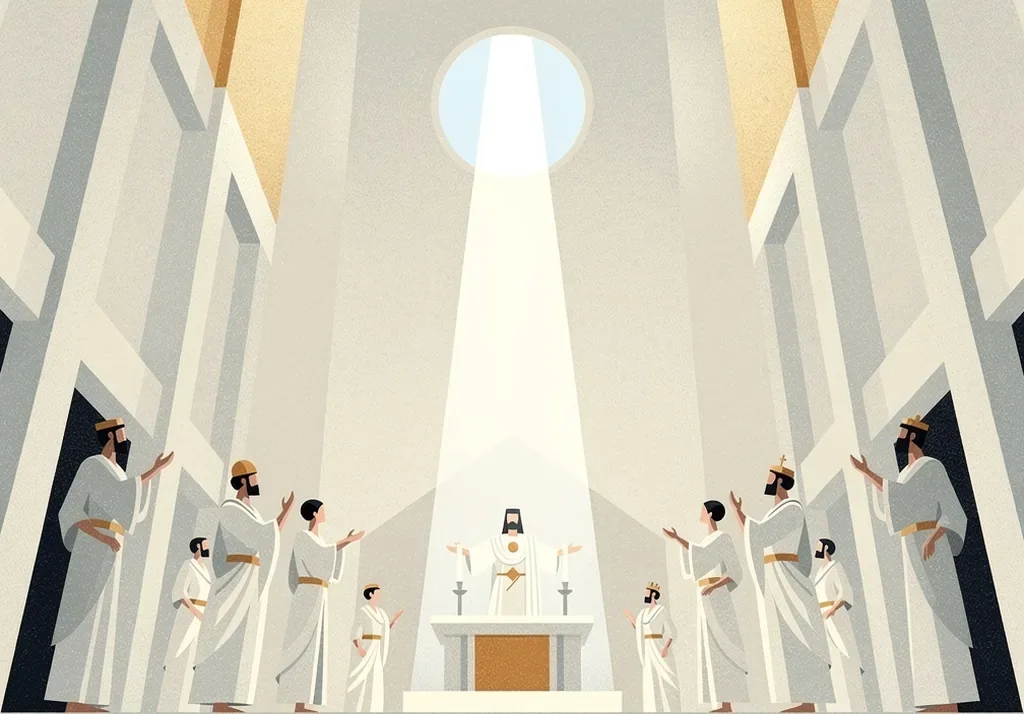
The strange woman is not a person outside but the seductive pull of the lower emotional and sensual nature within, the feeling-force turned away from spirit and toward mere appetite. Her flattering tongue is the inner voice that soothes and coaxes a person deeper into the desires of the flesh, promising sweetness while it drains the higher life.
The teaching guards the inner man from being drawn down by his own lower feeling dressed up as pleasure. When the seductive whisper of appetite is recognized for what it is, its flattery loses the power to pull the higher nature down into the senses.
Childhood and youth are vanity because they are already slipping through the hand that tries to hold them. Everything green passes, and knowing the morning does not last is the very reason to set down grief today. The fleeting quality of these years becomes the very ground for letting worry go.
Remove sorrow, put away evil, is the plain work of laying two burdens down. Renunciation is setting aside what weighs on the heart and the body the way you take off a wet coat at the door. The letting go is the whole instruction, one hand for grief and one for harm.
Because the young years vanish, the counsel is to live them with care rather than waste them on sorrow. Heedfulness is the awake attention that does not sleepwalk through a short season, spending each day well because there are not many. The passing of youth sharpens the call to keep the heart clear now.
· · ·
Everything that arises passes away (anicca): every green season, every year you meant to keep. Childhood and youth are already slipping through the hand that tries to hold them, and knowing the morning does not last is the very reason to set down grief today.
Because the young years vanish, live them with care. The awake attention that does not sleepwalk through a short season (appamāda) spends each day well because there are not many. "Childhood and youth are vanity": that passing sharpens the call to keep the heart clear now.
One line per lens.
In Lensightful, names, numbers and symbols light up in the text. Tap one to see what it means in each tradition you choose.
Get Lensightful on the App Store