
Bible symbol · 3 lenses
What Does Hope Mean in the Bible Read through 3 lenses
(for the law made nothing perfect), and a bringing in of a better hope, through which we draw near to God.
(for the law made nothing perfect), and a bringing in of a better hope, through which we draw near to God.
The hope turns over: peace (nibbāna) is the spring when the roots have rotted through and no shoot rises. Dig the craving out from under the stump, and the ground falls silent. The tender branch that "will not cease" is set down, and nothing green is left to cut.
Buddhism lens · Job 14:7
“For there is hope for a tree if it is cut down, that it will sprout again, that the tender branch of it will not cease.
rejoicing in hope; enduring in troubles; continuing steadfastly in prayer;
or does he say it assuredly for our sake? Yes, it was written for our sake, because he who plows ought to plow in hope, and he who threshes in hope should partake of his hope.
Same symbol, 3 ways of seeing it. Tap one to jump to it.
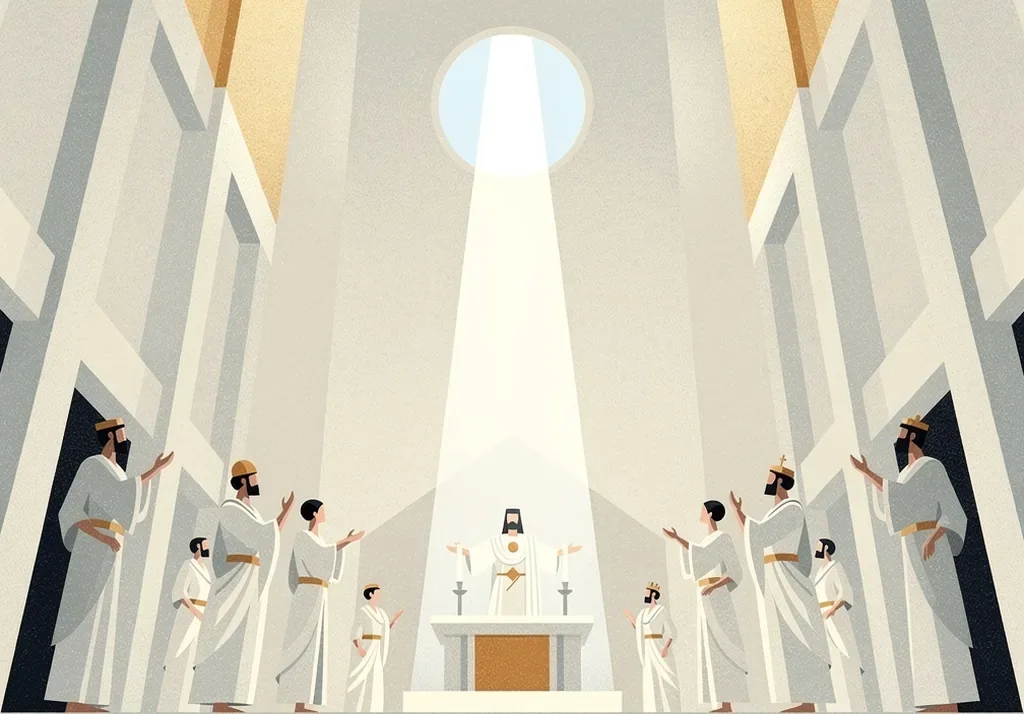
The old law is outer code, a set of rules laid on the body from outside, and outer code only rearranges the flesh; it perfects nothing because it never reaches the place where God is actually met. That place is the pineal gland, the small organ deep in the brain where a person sees God face to face, and the better hope is the Cosmic Christ consciousness already seated there, waiting to replace the whole apparatus of ordinance and tithe.
Drawing near, then, is not travel toward a distant heaven but the lower thinking mind turning inward to face that higher self lit in the pineal. The law arranged behavior; it could not switch on the light in the head. Coming close to God means the meat-and-bone computer of the brain finally opening its innermost room, where the divine has been the whole time.
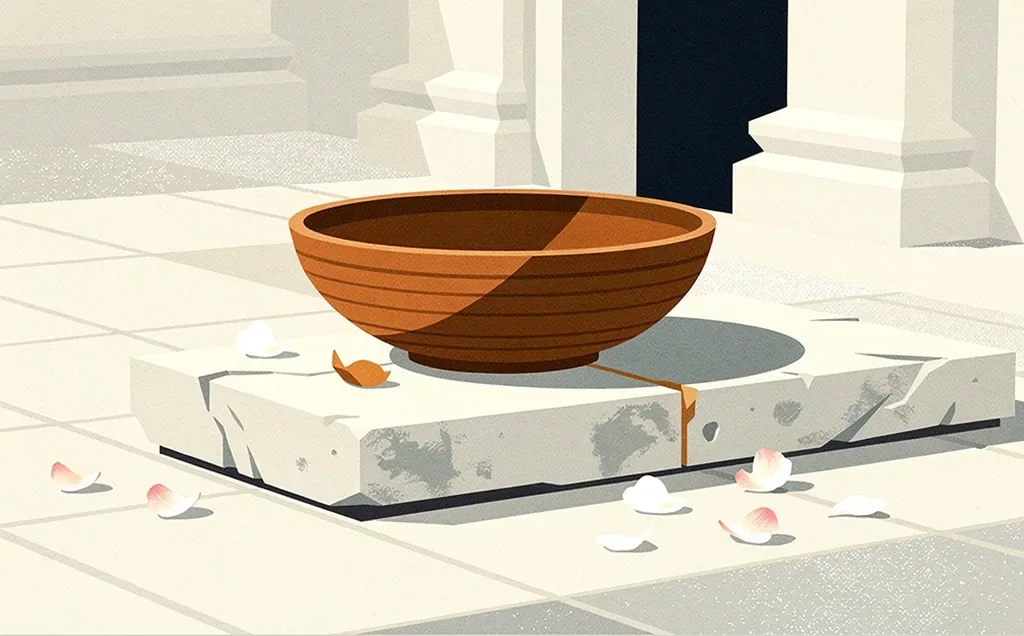
Taṇhā: Craving Craving is the sap still climbing inside a stump that refuses to die. Fell a whole life down to the ground, and this thirst keeps forcing fresh shoots up from below, which is why the tender branch "will not cease." As long as the wanting stays green and wet in the wood, some new growth will always break the soil and reach for the light.
Anusaya: Latent tendency Beneath the cut, the old roots lie whole and asleep, still gripping the dark soil. A stump throws up green only because these buried leanings were left in the ground, firm and patient under the axe. Clear away every branch and twig you can reach, and the hidden roots quietly send the tender branch back up with the next warm spring.
Punabbhava: Renewed becoming Renewed becoming is the shoot climbing up as the same life wearing a new shape. The green on the old stump is one round of living handed straight to the next, sap poured out of the fallen trunk and into the rising branch. To sprout again is this handing-on, growth passed forward so the bare ground never stays bare for long.
Saṃsāra: The turning round Saṃsāra is the wheel that keeps swinging back around: cut, sprout, grow, and cut once more. The tree turns this circle with no end in sight, and the branch that "will not cease" is precisely that ceaselessness at work. Every fresh shoot it lifts is also the quiet promise of the next axe, the same round that carries a life through birth after birth after birth.
· · ·
The thirst that can never be satisfied (taṇhā) is the sap climbing inside a stump that refuses to die. Fell a life to the ground, and it pushes fresh shoots up.
Under the cut, the mind's old leanings sleep in the soil, patient beneath the axe (anusaya). They send the tender branch up next spring.
The shoot is the same life wearing a new shape, one round of living handed to the next (punabbhava).
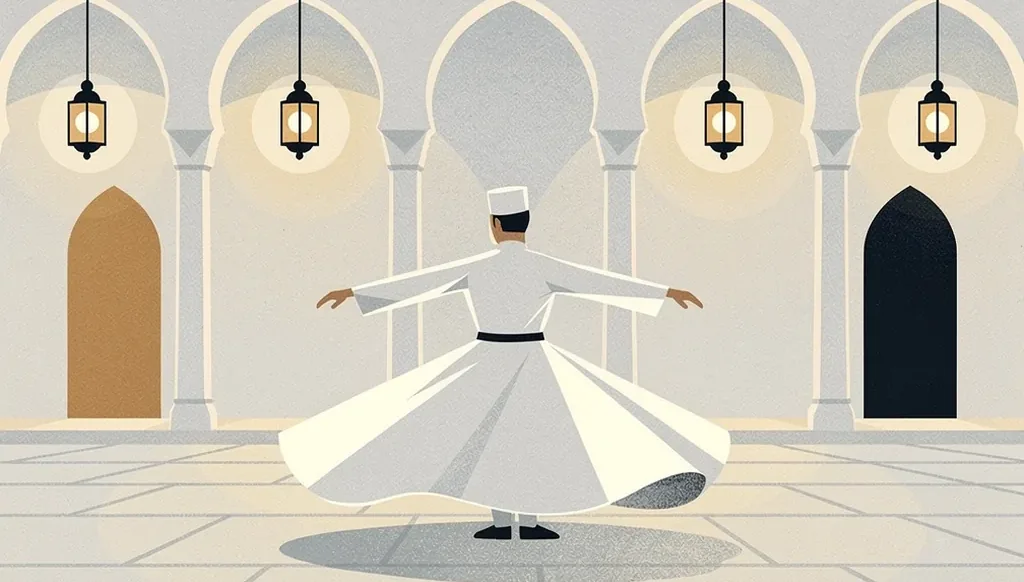
Wondrous is the affair of the believer: good news and bad both turn out well The Prophet said that everything lands well for a person of faith, since good fortune meets gratitude and hard fortune meets patience, and both do them good. Someone who takes that to heart stops sorting the days into wins and losses. Pain still hurts, but it stops feeling like evidence that they have been abandoned.
Ṣabr: Staying steady under strain Patience means staying with a hard stretch without walking out on it, and the Quran promises God's company to those who manage it. Long trouble usually shows up as the urge to force an exit, lash out, or go numb until it passes. A patient person keeps doing the ordinary duties while the pressure lasts, so the trouble stops running everything.
Dhikr: Keeping God in mind Sufis treat remembrance as something carried through the whole day, often a few words repeated while the hands stay busy. Set times of prayer can feel very far apart when worry fills the hours in between. Remembrance closes that gap, so a person is never long alone with their own churning thoughts before turning back toward God.
A late gift is no reason to despair: the answer comes on its own schedule Ibn Ata Allah wrote that a delayed response, even after long and repeated asking, gives no cause to give up. He added that God has promised an answer in what He chooses and at the time He chooses, which will not always match the request. That takes the sting out of the silence, and a person can keep asking without reading the wait as a refusal.
In Lensightful, names, numbers and symbols light up in the text. Tap one to see what it means in each tradition you choose.
Get Lensightful on the App Store