
Bible symbol · 4 lenses
What Does Joy Mean in the Bible Read through 4 lenses
Your words were found, and I ate them. Your words were to me a joy and the rejoicing of my heart, for I am called by your name, Yahweh, God of Armies.
Your words were found, and I ate them. Your words were to me a joy and the rejoicing of my heart, for I am called by your name, Yahweh, God of Armies.
Joy has a root: trust already given, not a mood that arrives on its own. The heart that will not rejoice is still gripping its own plans, and its worry is a quiet accusation that the Name cannot be relied on. The cure is the letting-go: to lean the full weight somewhere and feel it hold.
Sufism lens · Psalms 33:21
to provide for those who mourn in Zion, to give to them a garland for ashes, the oil of joy for mourning, the garment of praise for the spirit of heaviness, that they may be called trees of righteousness, the planting of Yahweh, that he may be glorified.
“Again, the Kingdom of Heaven is like treasure hidden in the field, which a man found, and hid. In his joy, he goes and sells all that he has, and buys that field.
David spoke to the chief of the Levites to appoint their brothers as singers with instruments of music, stringed instruments, harps, and cymbals, sounding aloud and lifting up their voices with joy.
Same symbol, 4 ways of seeing it. Tap one to jump to it.
To find words of truth and merely think about them changes nothing. To eat them, to take them so deeply inward that they become part of your Being, is to be nourished where the mind cannot reach.
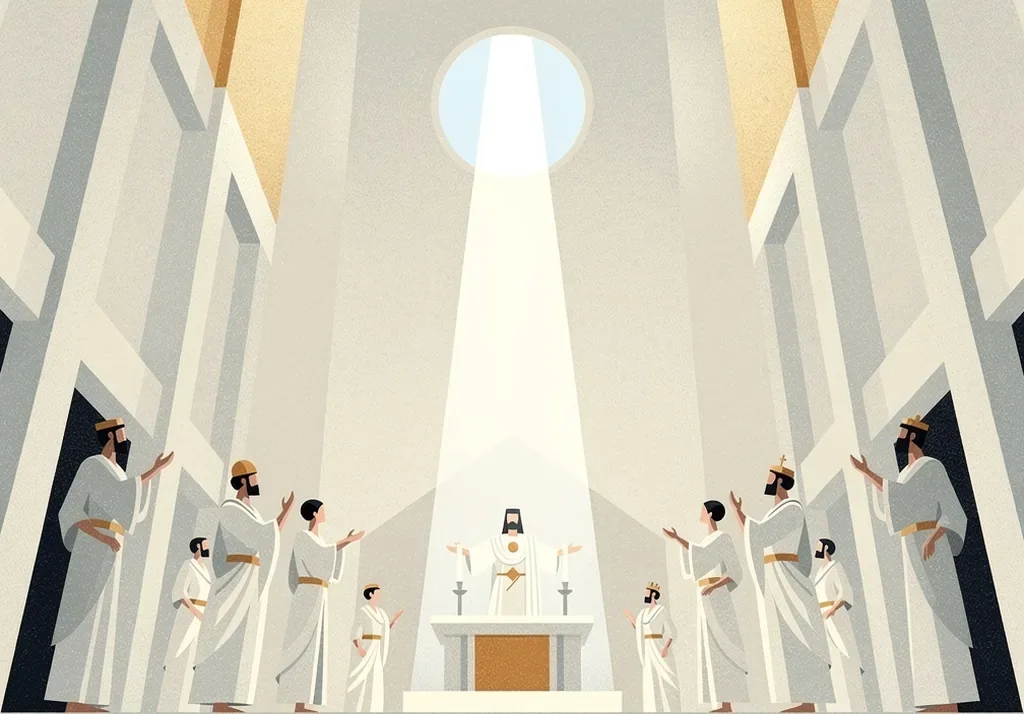
Zion is the high place in the head, the crown of consciousness, and those who mourn there are the higher faculties grieving in the ash of a life burned down to its remainder. The exchange is the whole work of transformation within: ashes are what is left when the lower nature is consumed, and beauty is the finer form that rises from the same fire. The oil of joy is the sacred substance that flows through the awakened body and gladdens it, anointing the very head where the mourning began, replacing the heaviness that pressed the spirit down.
To become trees of righteousness is to grow upright and rooted, the spine a living trunk drawing energy from below to the light above. A person planted this way stands as the divine growing in human form, made straight and fruitful from within.
Nidhi: Hidden Treasure A buried store of wealth. The field holds one worth more than the field itself, so the finder covers it over again, knowing passers-by tread that ground without a glance. Old teaching draws the same scene: coin buried in the earth can be stolen or lost just when you need it, while the treasure no thief can reach is the one laid up inside a life well lived.
Amata: The Deathless The kingdom hidden in that soil is the deathless itself, past all birth and dying. Every coin in his purse and every acre he now farms will one day slip through his fingers, while the thing buried there stands clear of loss. Weighed against what cannot die, the cost of "all that he has" stops looking steep.
Pīti: Rapture The lift of gladness that rises in someone who has tasted the truth. "In his joy" he does not stop to calculate at the sale; the gladness itself carries him out the door. Once you have seen what the ground was hiding, delight is what moves your feet.
Nekkhamma: Renunciation Stepping back from the whole household world. He "sells all that he has," every holding turned loose for one buried thing. Fingers that would close around a hundred small comforts fall open, since those comforts weigh nothing against the one.
Magga: The Path The eightfold road that reaches the goal. He "buys that field" instead of digging the treasure up and bolting, since it comes only with the whole ground that holds it. You cannot pocket the deathless in passing; you take on the entire training that carries it.
Paññā: Discerning Wisdom Clear sight that weighs things at their true worth. To the neighbors, trading a lifetime's savings for one field is a fool's move; the finder alone has done the sum and knows the buried worth dwarfs the price. Give up a smaller happiness to gain a far larger one, and the wise let the smaller go without a backward glance.
· · ·
The field holds a buried store of wealth (nidhi) worth more than the field itself. Passers-by tread that ground without a glance.
The kingdom hidden in that soil is the state past all birth and dying (amata). Every acre he farms will slip through his fingers, so the cost of "all that he hath" stops looking steep.
Neighbors call it a fool's trade. Clear sight that weighs things at their true worth (paññā) has done the sum: the buried worth dwarfs the price.

And the One trusted is not watched from a distance. He is nearer than the trusting, the very light by which a heart can lean at all, the source a spring leans on and never leaves.
In Lensightful, names, numbers and symbols light up in the text. Tap one to see what it means in each tradition you choose.
Get Lensightful on the App Store