
Bible symbol · 5 lenses
What Does Law Mean in the Bible Read through 5 lenses
“Don’t think that I came to destroy the law or the prophets. I didn’t come to destroy, but to fulfill.
“Don’t think that I came to destroy the law or the prophets. I didn’t come to destroy, but to fulfill.
The law: outer code laid on the body from without, able only to rearrange the flesh and never to reach the inner light
Esoteric lens · Hebrews 7:19
Where there is no revelation, the people cast off restraint; but one who keeps the law is blessed.
because the mind of the flesh is hostile toward God; for it is not subject to God’s law, neither indeed can it be.
Tamar his daughter-in-law bore him Perez and Zerah. All the sons of Judah were five.
Same symbol, 5 ways of seeing it. Tap one to jump to it.

Spirit is process. The static forms of a tradition are thrown up by something living, and that living process stays inside the forms, promoted by them even after their keepers forget it. Righteousness that consists of identification with tradition halts at the letter. The scribes and Pharisees are scrupulous in precisely that manner, faithful to the form while what generated it has gone dead in them. Morality has to move from the rule of law to the rule of spirit.
Christ appears as a second Moses, leading a culture out of bondage to its own law as Moses led slaves out of Egypt. In practice the shift is easy to state and punishing to perform. The highest good a person can conceive becomes the aim, whatever obstructs it is sacrificed, and the truth is told about what the climb reveals. The kingdom that results is interior, the promised land in its final version, relocated inside a person.

Without a way of seeing that comes from beyond the body's eyes, the many thoughts of the mind wander lost, mistaking shadows for the way. To lose true vision is to be handed over to the ego's sight, which shows only threat and lack and calls that fear reality.
The thought that holds instead to love's single principle is already at peace. Happiness is not a reward added later but the natural state of a mind that has kept its sight clear. To live by love's one rule is to be home.
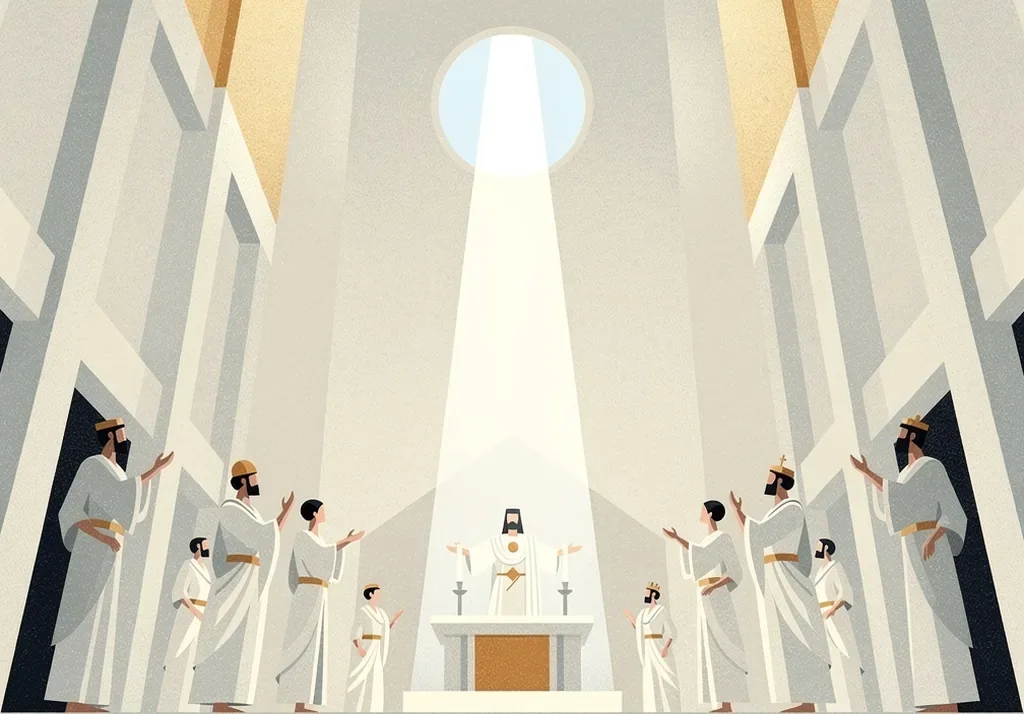
The lower, reasoning mind that reads everything as literal fact can never touch spiritual truth, because Scripture is written in symbol and the flesh-bound mind grinds symbol into stone. This carnal thinking is the single enemy, the tribal and fearful chatter that builds hells out of mistranslated words. It cannot bend to the inner law because its whole nature is to divide and defend. Emptying it in thoughtless stillness is the only release: when the judging quiets and no thought remains, the source alone stays, and truth opens on its own, in the silence where the flesh-bound mind has finally gone quiet.
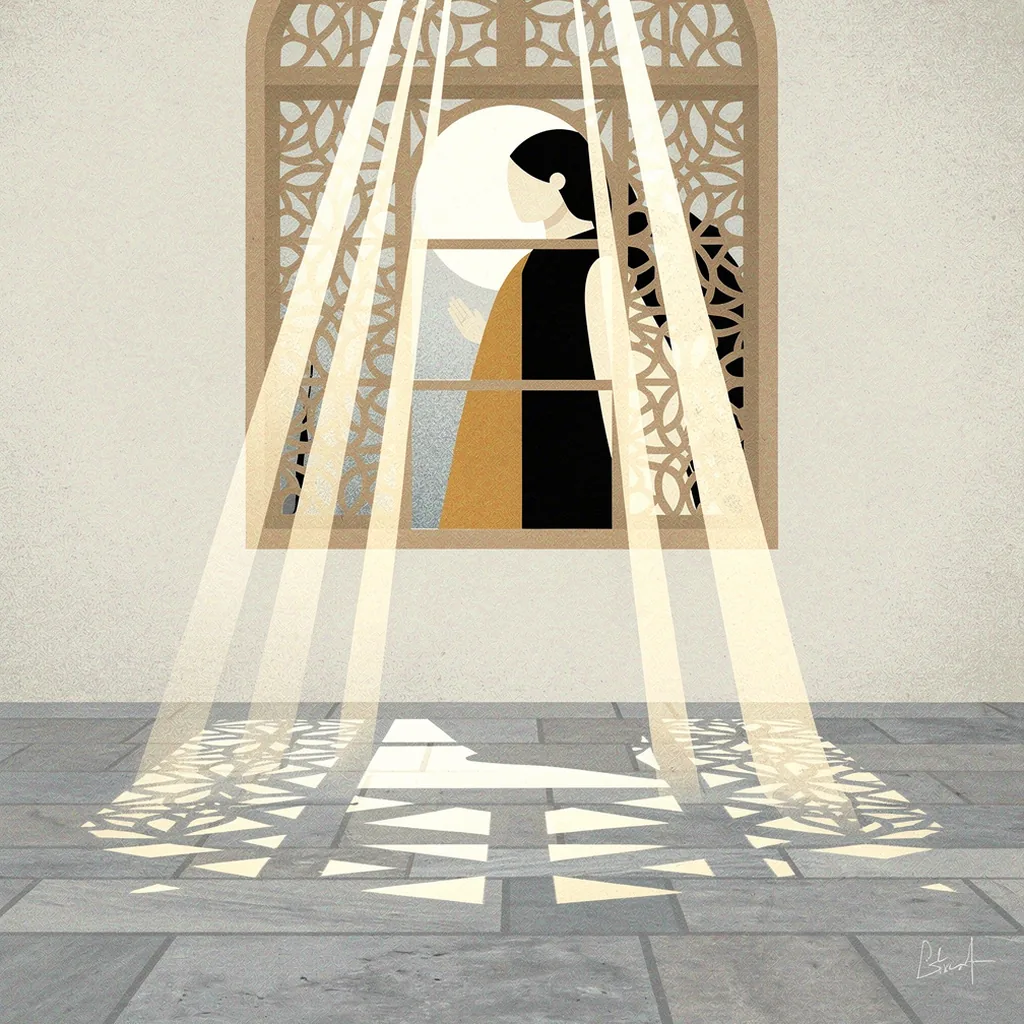
Seven years have passed in the fields and villages, and a word goes out across the land: let go. Every man who lent something to a neighbor opens his hand and stops asking for it back. Seven is one full turn, the whole week of making, and at the end of a full turn everything goes home to where it started. In truth nothing you hold stays the same for even one breath. The Merciful breathes the world out new at every moment, the way a word is spoken and then spoken again, so the thing you lent is already not the thing owed to you.
From a foreigner you may still collect, from your brother never, because a brother is whoever knows he came from the same single source and is owed nothing on his own. Then comes the promise: no poor among you, and you will lend to many nations and borrow from none, rule and not be ruled. The one who claims nothing becomes the open channel of the Rich. Wealth pours through him endlessly because it never stops anywhere inside him, and he stands over the world as God's deputy, the place where the names come out.
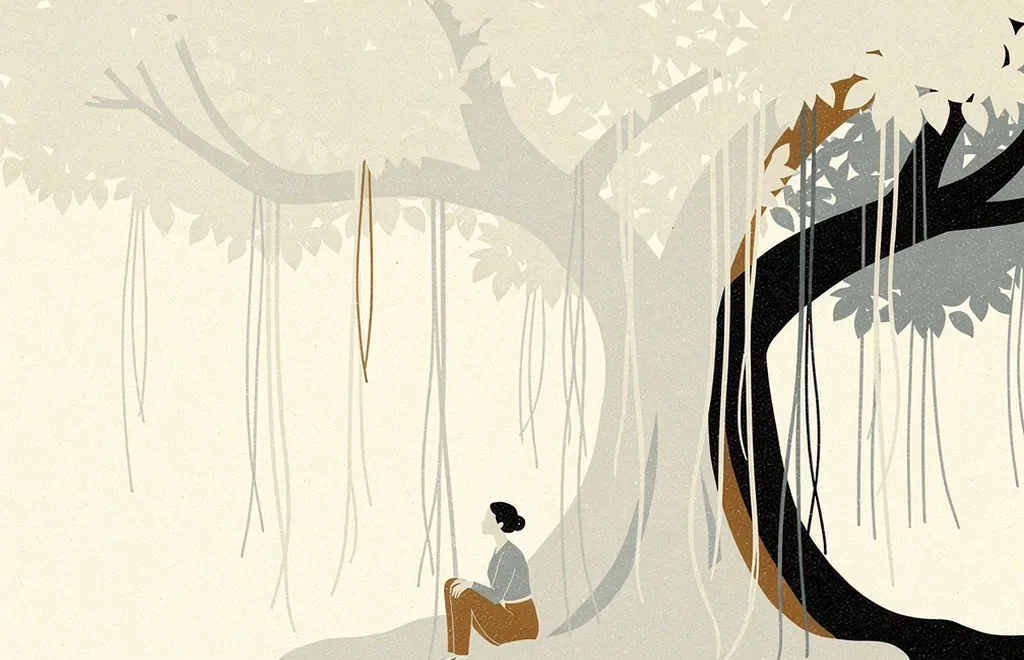
States the teaching's core law directly: the arrogant self-image collapses precisely because power without humility turns into blindness.
The ego does not panic when a person fails. It panics when it is seen. Narasimha is not mythology. It is the moment illusion gets exposed, the day awareness kills the false self. This has happened to kings. It has happened to CEOs. It happens to everyone. The moment a person thinks "No one can touch me," reality sends Narasimha. Hiranyakashipu asked for protection from death in every possible way: no man, no animal, no weapon, no day, no night, no inside, no outside.
He did not just want safety. He wanted superiority over reality. His son Prahlada did something dangerous: he refused to shift his inner alignment even when threatened. When asked, "Is your Vishnu in this pillar?" he answered calmly, "He is everywhere." And the pillar broke, not to kill a father, but to break arrogance. These characters live inside every person. Prahlada is the part that stays calm when insulted. Hiranyakashipu is the voice that says, "How dare they?" The boon is the story a person tells themselves: "I've covered all risks." The pillar is the inner center.
Narasimha is what happens when truth interrupts control. Ego is not confidence. Ego is the panic when the self-image cracks. It whispers, "I must not look small," "I must win," "I must not be questioned." The tension felt in the chest when corrected is ego defending a picture. Prahlada's real strength was that he did not fight, did not debate, did not over-explain, did not try to dominate back. He simply refused to abandon his center.
They are fear contracts. The pillar is not outside a person. It is the center. Shaking when insulted, panicking when money drops, inflating when praise comes are all signs that the pillar is weak. Strength is built in silence. Ego is logical, so reality defeats it illogically: not man, not animal, not inside, not outside. Truth does not attack weakness. It attacks the blind spot: the resignation letter that was not expected, the rejection that humbled, the feedback that stung.
The right response is not a complaint of why this happened but what illusion just died The destruction happened between categories, at the threshold, not fully inside, not fully outside, not day, not night. Ego does not collapse in dramatic battles. It collapses in micro-moments: right before a person defends themselves, right before they blame, right before they exaggerate. There is a two-second doorway. If a person pauses there, Narasimha acts.
Miss it, and the demon survives. Hiranyakashipu was not thrown away. He was held on the lap. Ego is not destroyed publicly. It dissolves privately, in one's room, in one's thoughts, in the conversations no one hears. The ego survives in noise; awareness survives in silence. Prahlada was not loud. He was steady. Devotion here does not mean religion. It means refusing to betray one's center. Living this story means first identifying where control is demanded, then choosing one non-negotiable habit and protecting it daily.
The pillar is built through repetition, not hype. When life corrects, the lesson is extracted rather than defended against. More is maintained than announced. One promise a day, kept. That is Vishnu energy. Ego is not crushed; it is outgrown. When it speaks, it is named. When it lies, it is questioned. When it fears, it is soothed. Then a person acts with awareness anyway. Repeated enough, the old identity loosens. Transformation is repetition, not drama.
The mantra "Ugram Viram Maha Vishnum" carries the wish that fierce clarity burn one's illusions before they become one's destiny. "Om Namo Bhagavate Vasudevaya Namah" is not ritual but alignment. It means: a bow and surrender to the sustaining intelligence within existence.
Recommended practice
Tonight, notice one moment of performing instead of simply existing. Name the inner tyrant honestly. When triggered, quietly say, "I'm protecting an image," and watch what softens. Before responding, take three slow exhales. Once today, write, "I might be wrong about..." and let the sentence breathe. Say, "I don't need control to survive." Stand upright for two minutes with no phone and no adjustment, in stillness. When corrected, name what illusion just died instead of asking why me.
Guard the two-second doorway before defending, blaming, or exaggerating. Sit alone and name what truth about the self has been avoided, without answering quickly, letting it hurt a little. When anxiety rises, repeat, "I witness this. I am not this." Choose one non-negotiable habit and protect it daily. Keep one promise per day. When the ego speaks, name it; when it lies, question it; when it fears, soothe it, then act with awareness anyway.
One line per lens.
In Lensightful, names, numbers and symbols light up in the text. Tap one to see what it means in each tradition you choose.
Get Lensightful on the App Store