
Bible symbol · 6 lenses
What Does Life Mean in the Bible Read through 6 lenses
Behold, I have set before you today life and prosperity, and death and evil.
Behold, I have set before you today life and prosperity, and death and evil.
Life: the identity the mind chooses to keep, which is fear's small separate self when clutched and the changeless Self when released
Christian Psychology lens · Mark 8:35
She is a tree of life to those who lay hold of her. Happy is everyone who retains her.
He said to me, “I have become the Alpha and the Omega, the Beginning and the End. I will give freely to him who is thirsty from the spring of the water of life.
For we who live are always delivered to death for Jesus’ sake, that the life also of Jesus may be revealed in our mortal flesh.
Same symbol, 6 ways of seeing it. Tap one to jump to it.
The choice is not set before you in some distant future. It is placed in front of you this day, in this very moment, which is the only place a choice has ever been made or ever will be. Every present moment holds the same fork in the road.
Love is not something to admire from a distance but something to take hold of and keep, and the mind that reaches for it finds a source that steadily restores it. To lay hold is to decide, again and again, that the gentler teacher will be trusted, and in that holding the mind is nourished by a life the ego could never give.
Happiness here is not a mood that comes and goes but the natural state of a mind that has stopped letting go of love, remaining close to what heals it rather than wandering back into fear.
That it is done speaks the completion of the inner work, the whole cycle of consciousness brought to its finish. Alpha and Omega is the higher self holding both the origin and the end of a person, the single source from which the being goes out and to which it returns.
The fountain of the water of life is the wellspring of pure awareness rising within, given freely to the one who thirsts for it. Whoever truly longs for the living center drinks from it without price.
A steadiness that neither rises to praise nor sinks under blame. To count the verdict of others a very small thing is to let their approval and their scorn pass through without snagging on either. A rock in the surf that lets every wave break over it and stays put.
The eight gusts of gain and loss, honor and scorn, praise and blame, pleasure and pain. Man's judgment is one of these winds, and Paul has felt it shift too often to trim his sails to it. A weathervane spins with every breeze, and he has stopped being the vane.
The habit of taking a solid "me" to be defended and scored. Saying he will not even judge his own self, he loosens the grip on the very thing a verdict fastens onto. Nobody is home at the door the accusation keeps knocking on.
· · ·
Steadiness that neither rises with praise nor sinks under blame (upekkhā) lets approval and scorn pass through without snagging on either. To count the verdict of others "a very small thing" is to stand in that steadiness.
Beneath the sting of any verdict sits the habit of taking a solid "me" to be defended and scored (sakkāya-diṭṭhi). Saying "I judge not mine own self," he loosens the grip on the very thing a verdict fastens onto. Nobody is home at the door the accusation keeps knocking on.
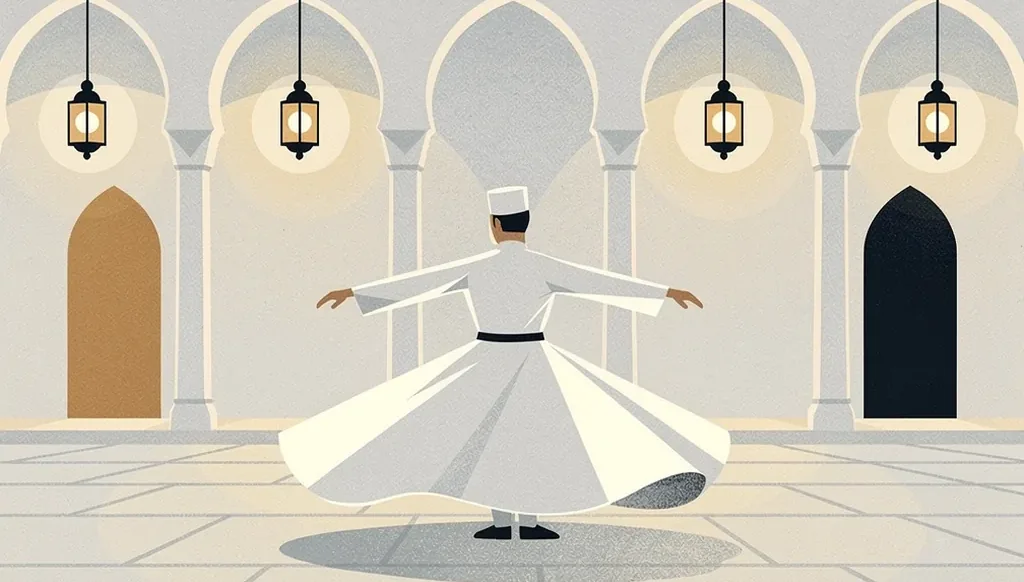
Balā': Hardship sent by God Balā' names trouble that arrives from God's own hand. Someone worn down over and over starts to wonder whether being crushed means being dropped. The Prophet said the hardest tested are the prophets, then those nearest them, which turns the weight into a mark of closeness.
Fanā': The self passing away Fanā' is the self thinning out until it stops running things. Being handed over to loss again and again wears down the part that wants credit, safety, and a good name. The hands and voice stay the same while the wanting behind them goes quiet, so a person carries hard things that never pay off.
In my killing is my life: his dying was his giving Hallaj said this in Baghdad with his execution coming. Anyone handed over to danger for the sake of someone they love has to decide what the danger means. He read his own undoing as the place his life came from, so the pain stopped being waste and became part of what he gave.
Baqā': Abiding in God once the self is gone Baqā' is the living that continues after the self has emptied out. A person hollowed by loss might expect to have nothing left for anybody. Instead the empty space fills with something that was never his to begin with, and it comes out as steadiness and warmth toward others.
Tajallī: God showing Himself through a created form Tajallī is God appearing in something able to carry the showing. A body worn thin looks like the last place anything of God would turn up. Al-Ghazali held that nothing shines with light of its own, and a lamp's glass shows it plainly: chipped or clean, the light still comes through.
I become his hearing and his sight: God acts through a person's own limbs The Prophet passed this on as God's own words about the servant He loves. The body stays a body; it gets tired, injured, and old, and none of that changes. Yet God moves through those same tired hands, and what reaches other people is a patience the body could not supply alone.
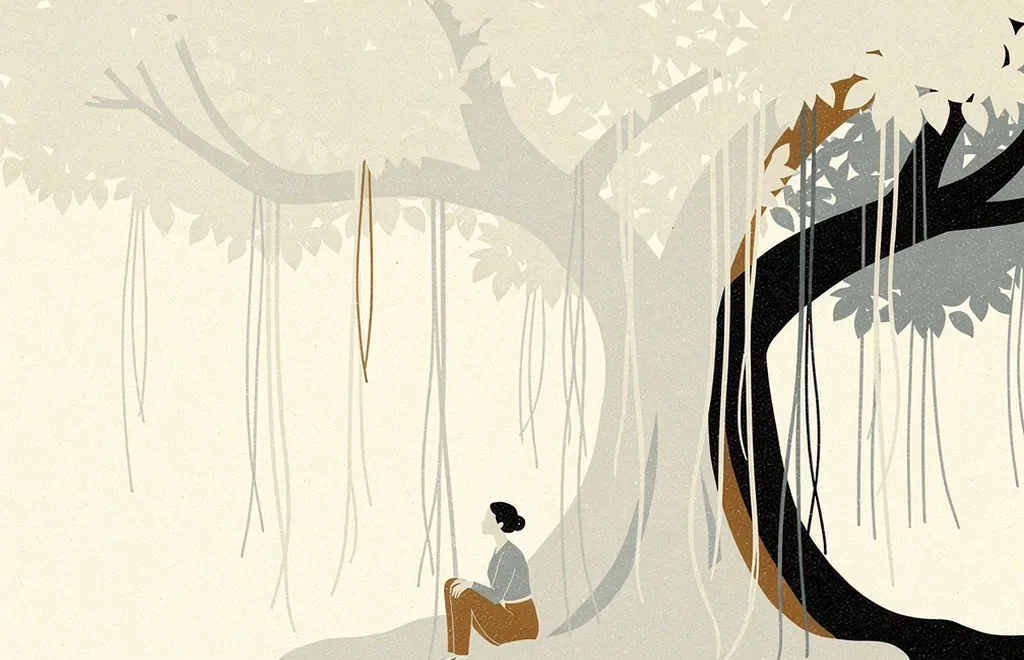
Both attack stagnation and drifting, urging continuous movement over passive delay, warning that idleness leads to decay.
Purpose is a direction for one's energy. When energy has direction, the mind calms down, action becomes simple, and confusion reduces automatically. Without purpose, even talent becomes toxic. Purpose is not about what is achieved. It is about where life is flowing. In the Vedas, Dharma does not mean religion. Dharma means the natural law of a thing. Fire's dharma is to burn. Water's dharma is to flow. The sun's dharma is to shine.
The human dharma is to create. Creation is not optional for humans. It is a biological, psychological, and spiritual design. A life without dharma looks like constant confusion, emotional ups and downs, dependency on motivation, and fear-driven decisions. This is why ancient systems never asked whether a person was successful. They asked whether a person was aligned. When dharma is missing, even comfort feels empty. Everything in existence follows one cycle: creation, maintenance, dissolution.
Sound is created then fades. Thoughts arise then dissolve. Bodies are born then return to earth. Civilizations rise then disappear. Nothing escapes this law. Suffering begins when humans try to pause the cycle or get attached to one phase. Dissolution cannot be stopped. Outcomes cannot be controlled. But creation is always possible. That is why money comes from creation, meaning comes from creation, and confidence comes from creation.
Creation keeps a person in rhythm with existence. This is dharma in motion. One life, one strategy: strategies can change, paths can change, methods can change, but creation cannot be replaced. Any work may be done, industries may be changed, tools may be switched, but forward movement in creation must never stop. Stagnation is not rest. Stagnation is decay. Movement heals what thinking cannot. Depression dissolves in movement.
Anxiety weakens with action. Money flows where movement exists. Even nature never stays still. Action does not need motivation. Action creates motivation. Small movement today is better than perfect planning forever. Flow means one direction, one commitment, one stream of action. Not ten plans, not scattered effort, not mental jumping. When action becomes continuous, the mind becomes silent. This flow is what scriptures call God: not a person, but a principle of alignment.
Act fully. Detach from results. Let creation be prayer. There is no failure. There is only incomplete repetition, broken continuity, and emotional impatience. Nature repeats endlessly. Humans quit early. Patience is not waiting. Patience is staying in motion without doubt. When the right action is repeated long enough, reality reorganizes itself. The enemy is not the world. The enemy is fear of wasting time, fear of being judged, and fear of choosing wrong.
Fear hijacks attention. Attention feeds thoughts. Thoughts paralyze action. Bad thoughts are powerless until they are given importance. Starve fear. Feed movement. Identity decides consistency. If identity keeps changing, strategy keeps collapsing. Choose one identity, one direction, one dharma. Depth comes from commitment, not intelligence. Clarity is born from loyalty to one path. Creativity is not talent. Creativity is presence plus repetition.
Writing every night, alone, in silence, with depth, is why people feel something. One task, one flow, no distraction. This is not discipline. This is devotion to creation. Purpose does not need to be found. Creating needs to be started. Creation reveals dharma. Movement reveals clarity. Flow reveals peace. One life, one dharma: create, and let the universe respond. Brahma is misunderstood because people want results rather than creation, fruits rather than roots, success rather than process.
So they chase Vishnu, who represents comfort and maintenance, and Shiva, who represents destruction and transformation, but they ignore Brahma, the work of beginning. That is why people start excited and quit early, want money without movement, and want purpose without creation. Brahma disappears when action stops. Creation demands responsibility, and most people avoid it. To live with Brahma Dev means to create daily even when unseen, to respect beginnings more than endings, to choose movement over overthinking, and to start again without emotional drama.
Brahma does not need to be worshipped. Brahma needs to be embodied. Asking daily what was created today aligns a person with dharma. Creation is prayer. Movement is meditation. Consistency is devotion.
Recommended practice
For the next seven days, pick one task, one direction, one creation. Avoid optimization, comparison, and switching. Show up and create. Even thirty minutes daily is enough to activate the Brahma principle. Create daily, even when unseen. Respect beginnings more than endings. Choose movement over overthinking. Start again without emotional drama. Each day, ask: what did I create today?
One line per lens.
In Lensightful, names, numbers and symbols light up in the text. Tap one to see what it means in each tradition you choose.
Get Lensightful on the App Store