
Bible symbol · 6 lenses
What Does People Mean in the Bible Read through 6 lenses
These are the years of the life of Ishmael: one hundred thirty-seven years. He gave up his spirit and died, and was gathered to his people.
These are the years of the life of Ishmael: one hundred thirty-seven years. He gave up his spirit and died, and was gathered to his people.
The people: the many aspects of one mind, each gladdened as healing in a single part is recognized as belonging to the whole.
Christian Psychology lens · Luke 18:43
They trespassed against the God of their fathers, and played the prostitute after the gods of the peoples of the land, whom God destroyed before them.
We toil, working with our own hands. When people curse us, we bless. Being persecuted, we endure.
Zadok the priest took the horn of oil from the Tent, and anointed Solomon. They blew the trumpet; and all the people said, “Long live king Solomon!”
Same symbol, 6 ways of seeing it. Tap one to jump to it.
A man writes a letter, probably from a guarded room in Rome, far from the city he is writing to. He names himself first: a messenger of Christ Jesus, and by the will of God, not by his own choosing. No story of how he earned the title, no case built for himself. The part of us that keeps guarding a picture of who it is, the self made out of thoughts, has gone quiet in him. He is not fighting the walls around him either. Whatever this moment hands him, he says yes to it, and the letter comes out of that yes.
A mind that had withdrawn to be alone is followed by the very need it sought to rest from, and it turns and receives that need without resentment. This is the pattern of love: it does not send away what comes to it, but welcomes it and gives what is asked. There is no reluctance in it and no keeping of accounts.
What the people are given is first the truth of the kingdom and then their healing, in that order, for the healing follows from the teaching. To be told what one truly is begins the cure, and those who had need of healing are simply the minds ready to hear it and let the belief in their sickness go.
Ishmael is the part of a person born of the natural drive, the wild outer nature that runs ahead of the higher purpose. His span closes because every outer nature has its measured term inside a man, a season of the flesh that spends itself and comes to rest. To give up the ghost is to release the breath that animated that lower part, letting its energy return to its own root.
To be gathered to his people is to fall back into the ground he came from, the common stock of the natural forces. What was driven and restless in a person quiets at last and is reabsorbed, its work finished within the body's long unfolding.
Eleven days out of Horeb, through a waste so wide and frightening that no one could tell where the ground was leading, they reach the hill country at Kadesh. Moses tells them the land is already given: go up, do not be afraid. The desert is the school, not the punishment. Being lost is the normal state of anyone looking for the Real, since what is real never holds still long enough to be mapped. And the land is given before it is walked, the way being itself is given to everything that exists.
They go up into the valley of Eshcol, look it over, cut fruit, and carry it down in their hands. Then their word: it is good, this land our God gives us. The fruit is the point. They did not bring back a description but something to taste, and only tasting changes the one who knows; what is merely heard stays outside the door. Yet the grapes are not the land, and the land is not the Giver. Every form is a sign, and whoever reads the sign properly reads himself at the same time, for whoever knows his own soul knows his Lord.
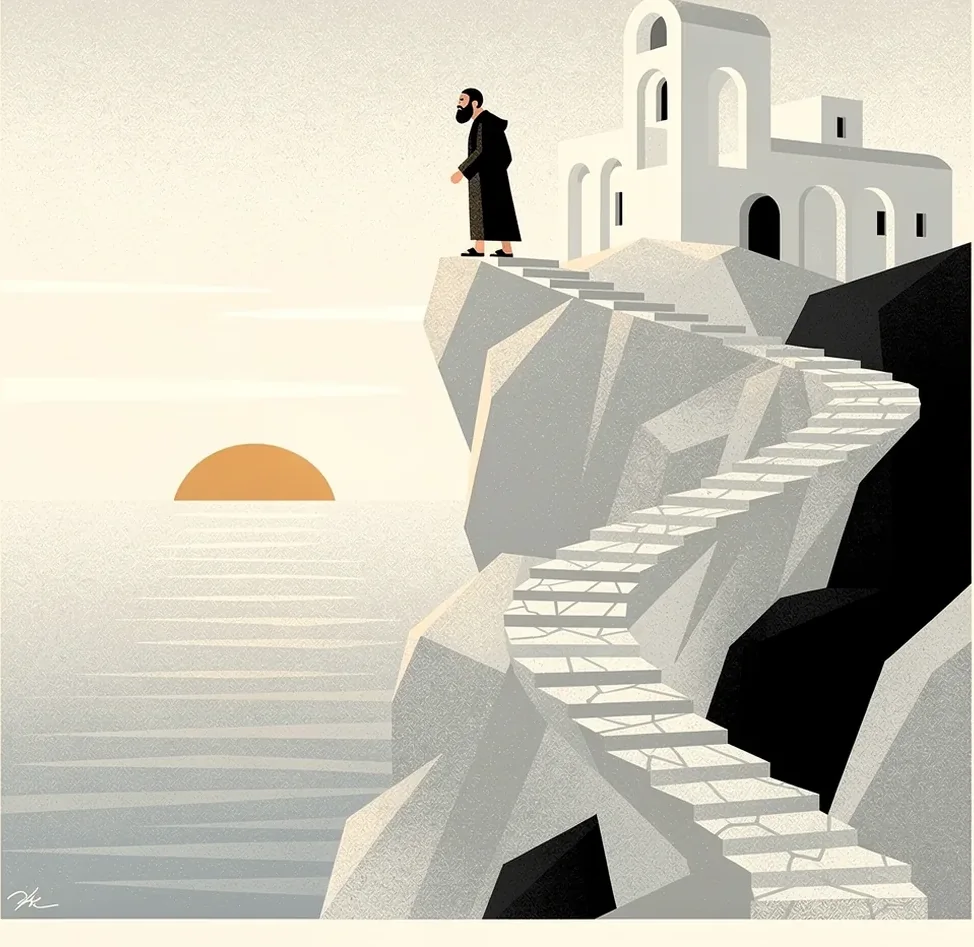
A man walking in from the fields, Simon from Cyrene, is pulled out of the crowd and forced to carry the wood for a condemned prisoner. He did not volunteer. That is how most people first come to the cross, pressed into it by a day that went wrong, and the carrying turns into following. They reach Golgotha, the place of the skull. The old telling is that Adam's skull lay buried in that hill, which is why the icons paint a skull in the rock beneath the cross with blood running down into it: the death of the first man is being washed at its root. They hold out wine mixed with myrrh to dull the pain, and he refuses. He is not simply being killed. He is handing himself over, and a gift has to be given awake.
The nails go in, and while he hangs the soldiers gamble for his clothes. He is stripped bare, the way Adam stood after the garden, and the shame of that nakedness is taken back from the inside. Over his head they nail the charge: King of the Jews. They mean it as a joke, and it is the one accurate sign in the city. He who hung the earth upon the waters is now hung upon the tree, and the cross is not the end of his kingdom but the throne of it. Two robbers are crucified beside him, one at his right and one at his left, the exact places two of his friends once asked to be given in his glory. Now they see what those seats are.
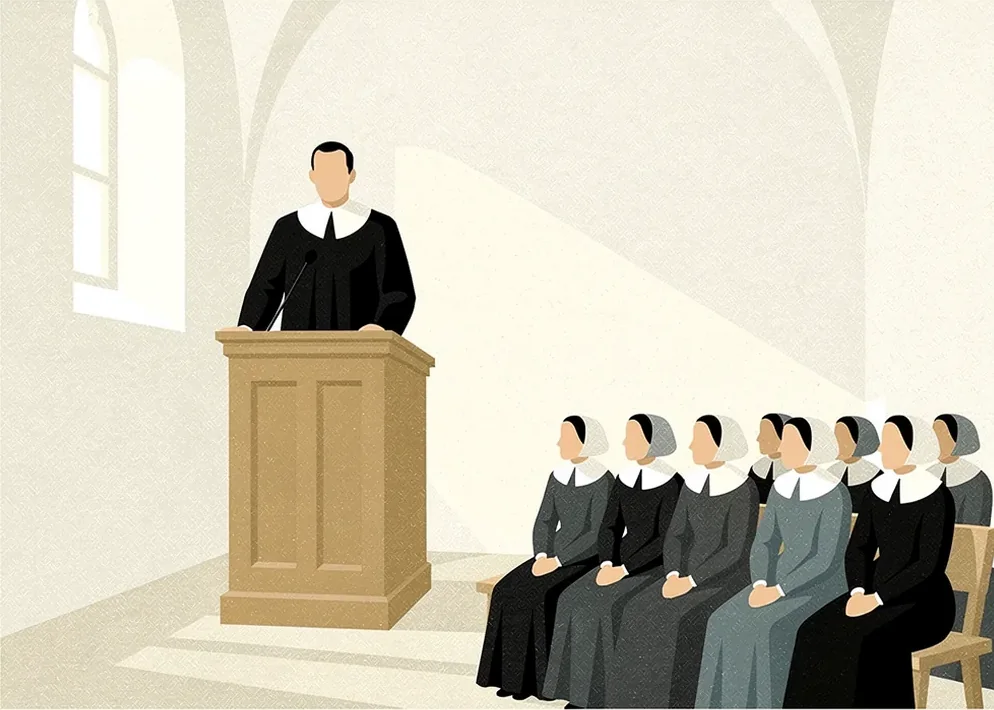
A congregation can hold the message about Christ, that he died and rose for sinners, and still be half built. The term behind setting things in order was a doctor's word for straightening a limb that healed crooked, so the work corrects something already alive.
What these congregations lacked was people: elders, in the plural, in every town, trusted to teach and watch over a church. The appointing follows directions already given, so leadership does not bend to one person's preference. Christ cares for his churches through those set over them to teach.
One line per lens.
In Lensightful, names, numbers and symbols light up in the text. Tap one to see what it means in each tradition you choose.
Get Lensightful on the App Store