
Bible symbol · 6 lenses
What Does Prayer Mean in the Bible Read through 6 lenses
who devour widows’ houses, and for a pretense make long prayers: these will receive greater condemnation.”
who devour widows’ houses, and for a pretense make long prayers: these will receive greater condemnation.”
Prayer: attention gathered and concentrated into focused energy, electrons excited so the light goes out
Esoteric lens · Matthew 17:21
But this kind doesn’t go out except by prayer and fasting.”
Let your ear now be attentive, and your eyes open, that you may listen to the prayer of your servant, which I pray before you at this time, day and night, for the children of Israel your servants, while I confess the sins of the children of Israel, which we have sinned against you. Yes, I and my father’s house have sinned.
Don’t deprive one another, unless it is by consent for a season, that you may give yourselves to fasting and prayer, and may be together again, that Satan doesn’t tempt you because of your lack of self-control.
Same symbol, 6 ways of seeing it. Tap one to jump to it.

Here the ego is shown feeding on the very ones it should shelter, taking from the defenseless while wearing the face of holiness. The widow is the part of the mind left undefended and alone, and to devour her house is to exploit that helplessness for gain. The long prayer made for show is guilt disguising itself as devotion, using the appearance of love to serve the belief in separation.
The heavier condemnation is not a sentence handed down from outside. It is what the mind does to itself when it hides attack inside the robes of piety, for pretended goodness deepens guilt rather than lifting it. What looks like reverence becomes a weightier darkness, because the mind has learned to attack in the name of the very love it is denying.
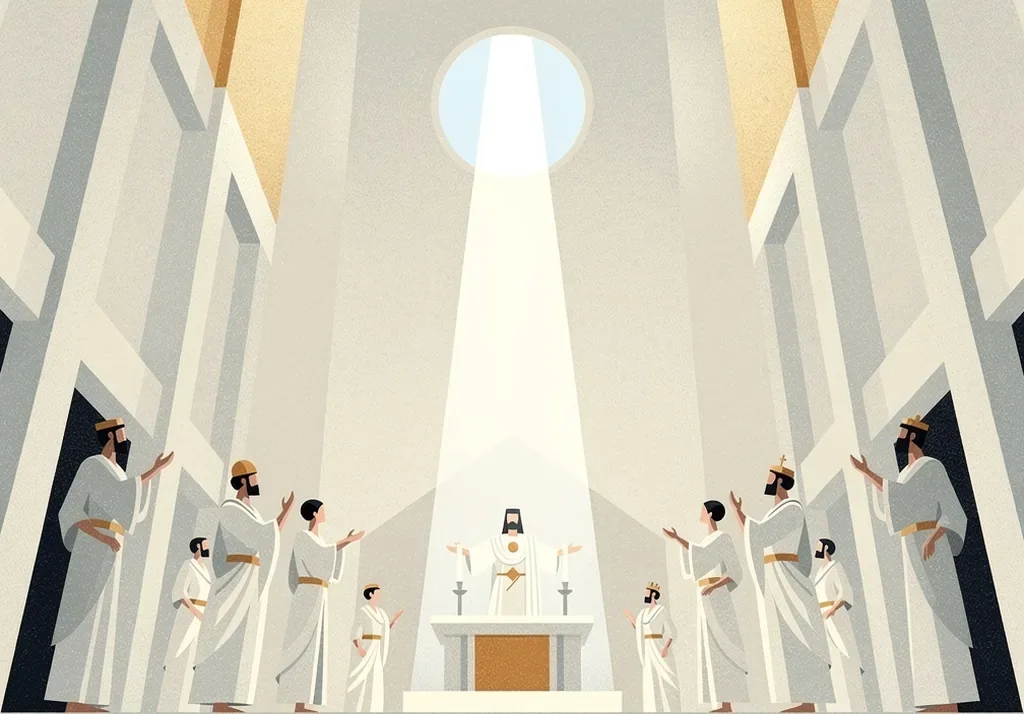
The stubborn kind that will not leave is a fixed disturbance of the lower mind, and it goes out by 2 inward acts. Fasting here has nothing to do with the mouth or with starving the body: it is the refusal to swallow the thoughts that come up from the lower mind, keeping the fearful and intrusive ones from being taken in at all. Prayer is focused energy, attention gathered and concentrated until the electrons are excited and the photons dispatched, the light sent out from within.
The hardest inner cases yield only to this pair: shutting the door on the lower thoughts, and turning concentrated energy toward the higher, until the disturbance loosens and is gone.
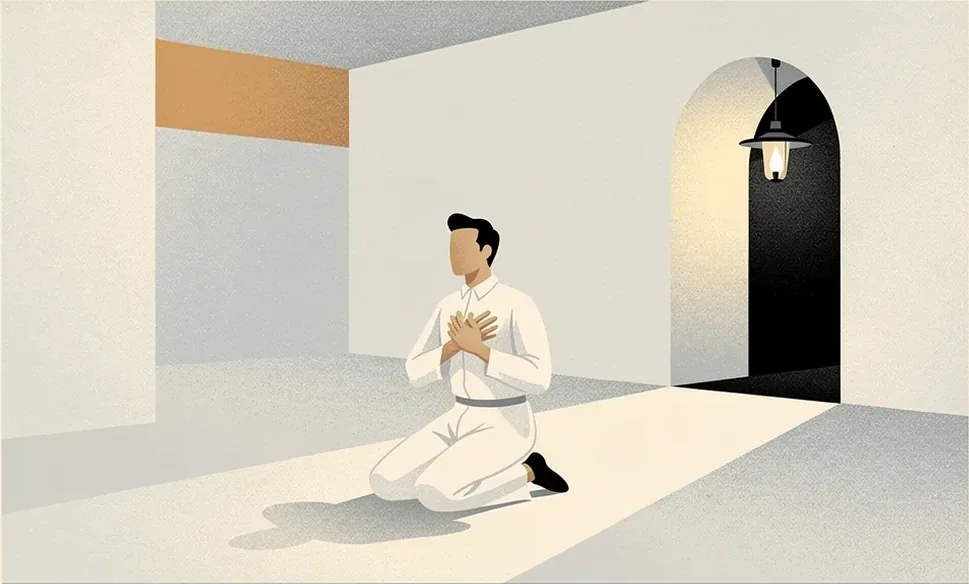
The prophet Nathan has just come to King David with the truth about Bathsheba, and David has nowhere to hide. He cries for mercy, not because of his own record but because of God's great kindness, and begs to be wiped clean and washed of his guilt. David says his sin is always in front of him, and that he has sinned against God alone.
He admits he has leaned toward sin since birth, and that God wants truth deep inside, in the hidden heart. God is not looking at the outward show but at the heart, and the heart is a mirror. Each sin is a breath of fog or a spot of rust on it, until it can no longer catch any light. So David asks to be scrubbed with hyssop, the small plant used in cleansing, and washed whiter than snow, so the bones God has broken can rejoice again.
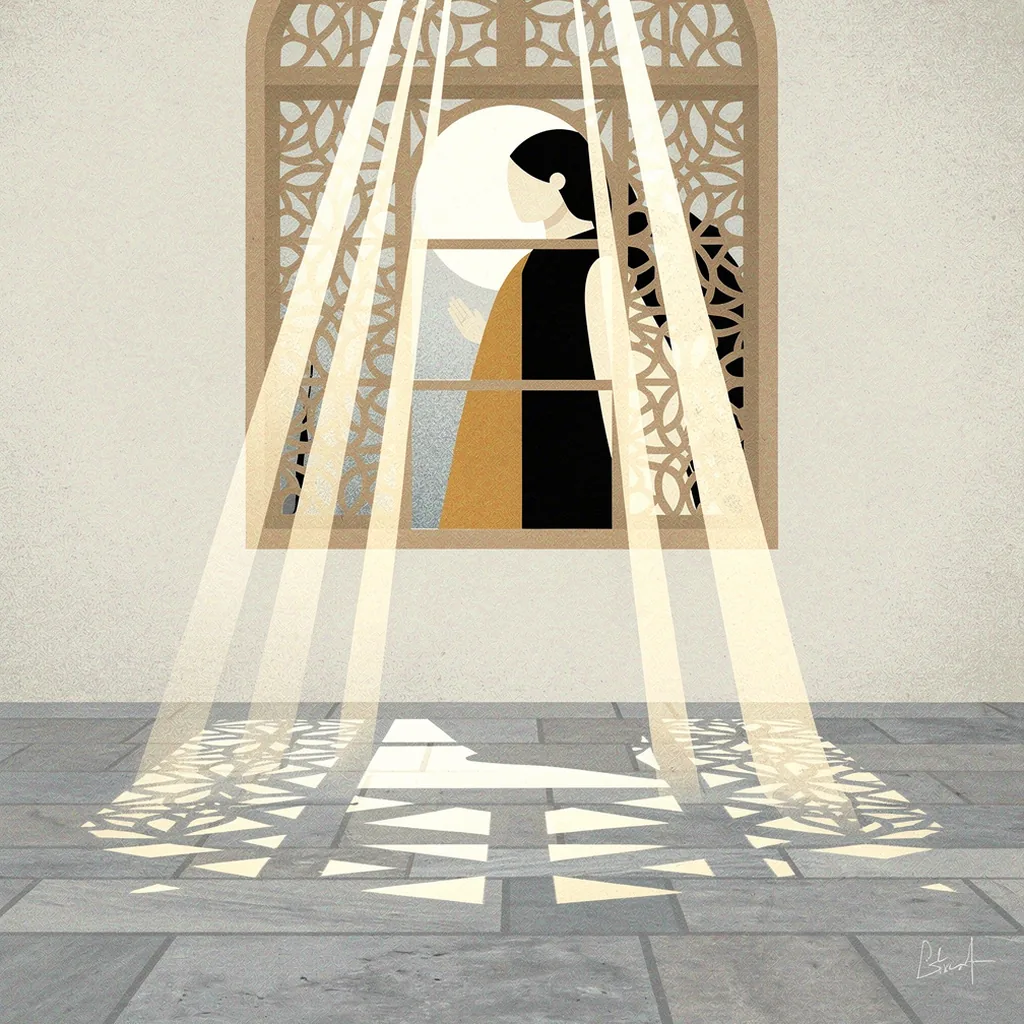
A man sits in chains under guard, dictating a letter to a town he has never walked through. He begins by thanking God for these strangers and saying he never stops praying for them. But the thanks is not his own property. Only one Being truly is, and everything else borrows its existence the way a room borrows light from a window. So the thanking is a gift handed back to the one who gave it, and the praying is not a small voice calling across a distance. The need inside the one who asks is already the answer, arriving.
He thanks God because he has heard of their trust, their love for the others, and a hope kept for them where they cannot yet see it. Hidden is where everything starts: a treasure that was not known and wanted to be known, so the world appeared as its mirror. The message reached them and began to bear fruit, and it bears fruit everywhere, taking in each place only what that place can hold. A wide cup holds more than a narrow one, and no cup makes the water. They heard it from a friend, Epaphras, which is how knowing always travels, through a face.

Owning a ruin a man did not personally cause is what gives him the standing to repair it.
Three decisions run underneath any prayer: what to focus on, what it means, and what to do about it. Most people make all three by default, and the default on inherited damage is that somebody else built it. Standing inside the word we, rather than beside it, converts a grievance into an assignment.
That meaning sets the state, the state produces resolve where complaint would have sat, and resolve keeps a man before God day and night over a problem he could have disowned. Confessing only other people's failures keeps the record clean and the hands empty, which is a life spent waiting for whoever caused the damage to come back and repair it.
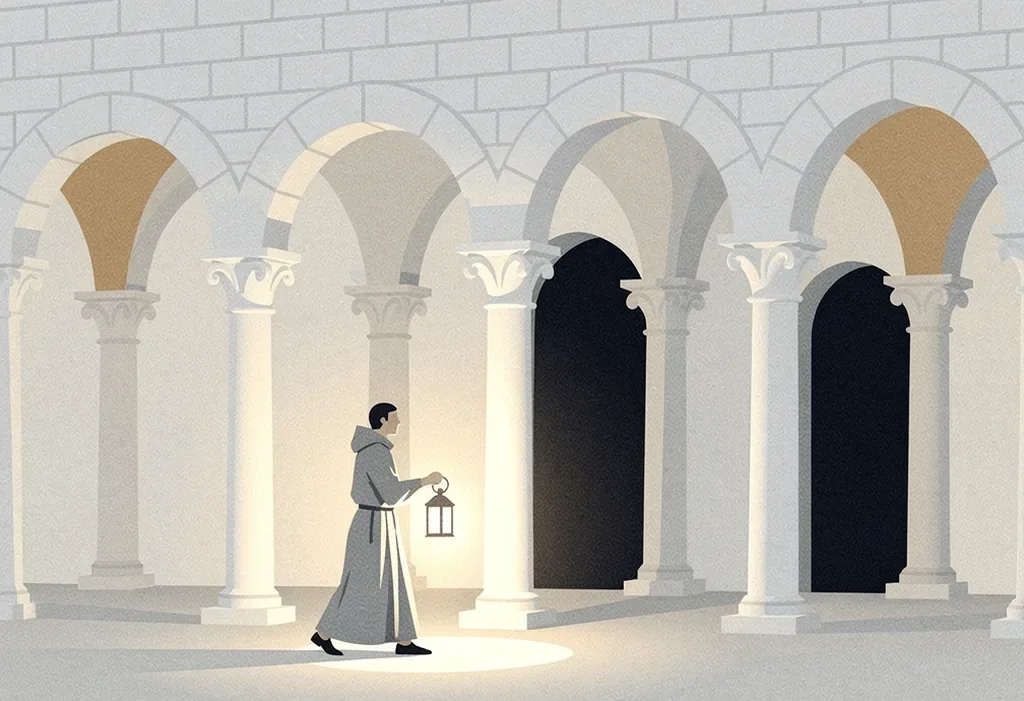
The people are prisoners far from home in Babylon, and a voice tells them to look at the rock they were cut out of: one old man and one barren old woman, Abraham and Sarah, who were promised a whole nation when they had nothing. God starts his work from almost nothing, so a small and beaten group of believers is never too small for him to build a people on. The voice promises the ruined city will be comforted and its wasteland turned back into a garden like Eden, loud with singing. What was thrown away in the first garden God means to give back, and more, in the new creation.
Then his teaching goes out as a light for all the nations, while the sky wears out like smoke and the earth like an old coat, and only his saving work lasts. This is the same light Simeon saw in the child in the temple, a light for peoples who were never Jewish, and a warning not to build a life on things that fray. So the exiles are told not to fear being insulted, since moths will eat their mockers like wool. That is the courage of the martyrs.
One line per lens.
In Lensightful, names, numbers and symbols light up in the text. Tap one to see what it means in each tradition you choose.
Get Lensightful on the App Store