
Bible symbol · 4 lenses
What Does Rest Mean in the Bible Read through 4 lenses
“Come to me, all you who labor and are heavily burdened, and I will give you rest.
“Come to me, all you who labor and are heavily burdened, and I will give you rest.
Rest: the stillness of the inner center, the quiet ground beneath the striving mind where effort ceases
Esoteric lens · Matthew 11:28
These are they whom David set over the service of song in Yahweh’s house, after the ark came to rest there.
But to the rest I, not the Lord, say, if any brother has an unbelieving wife, and she is content to live with him, let him not leave her.
But now Yahweh my God has given me rest on every side. There is no enemy and no evil occurrence.
Same symbol, 4 ways of seeing it. Tap one to jump to it.
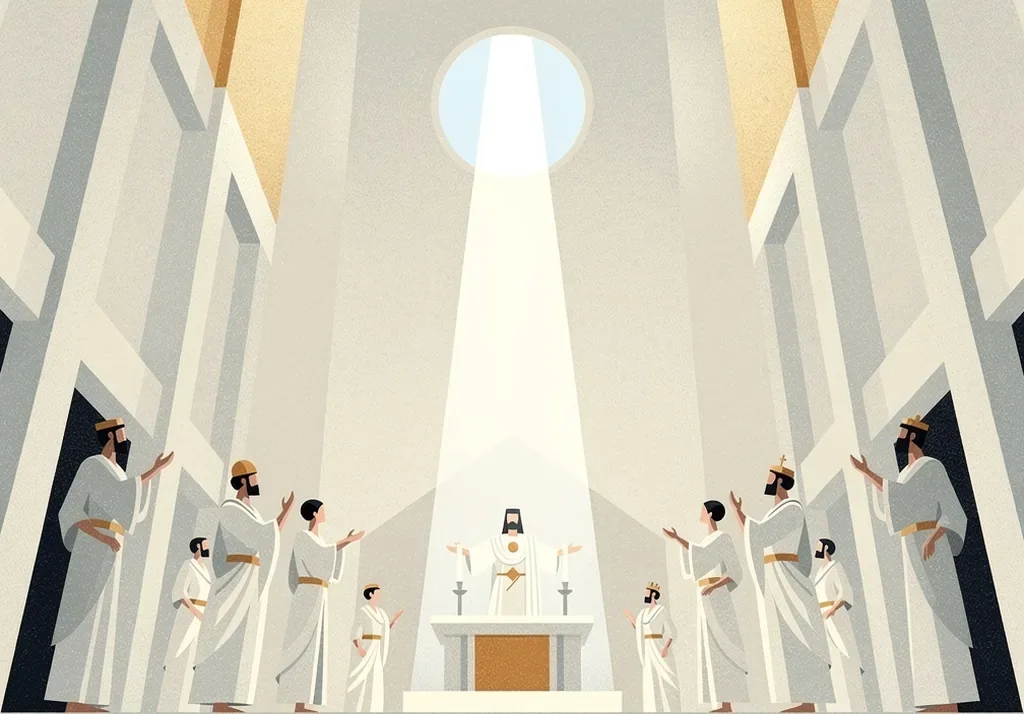
The call is the higher Self within a person addressing the worn faculties of the being, those bent under the weight of ceaseless striving. Labour is the exhausting effort of a consciousness driven by its lower demands, and the heavy load is the accumulated burden of care, appetite, and self-concern piled on the inner life. The rest offered is not idleness but the stillness of the center, the quiet ground beneath the churning mind where the striving finally stops. To come unto this is to turn attention inward toward that still awareness, away from the grinding outer effort. The one calling and the ones called are within the same person: the peaceful core inviting the tired powers home to it.
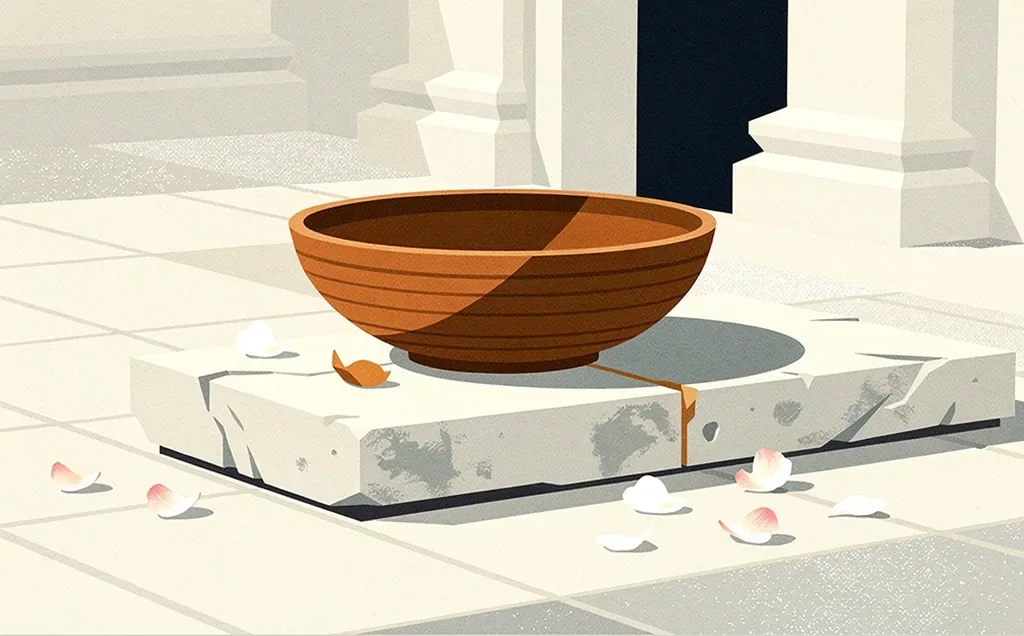
An oath is not just a promise; it is a signal of anxiety. When you swear by the earth or the great King's city, you are reaching outside yourself to make your word stick, because you fear your word alone will not be enough. That reaching is taṇhā: craving for trust, for approval, for a secured outcome. The Buddha taught that craving always points to a felt lack, and that borrowing authority from sacred places never fills it.
Māna is the habit of measuring and propping up the self, making oneself larger. Invoking earth and Jerusalem to back your word is a form of self-inflation: it claims your speech carries the weight of the cosmos behind it. The verse quietly deflates this by pointing out that earth and Jerusalem belong to the great King, not to the speaker. The Buddha named māna as one of the last fetters to fall, precisely because it hides in acts that feel like sincerity.
Sacca, one of the ten pāramī, is speech whose reliability is internal rather than borrowed from oaths or sacred backing. A person of sacca does not need to invoke heaven or a holy city to make yes mean yes, because the yes itself carries the weight. The verse's instruction to let your yes be yes and your no be no is exactly what sacca looks like in practice: speech that stands on its own, without ornament or guarantee.
Right speech is the third factor of the Noble Eightfold Path, and it covers more than avoiding outright lies. It includes speech that is direct and free of manipulation, offered plainly rather than loaded with pressure. Swearing by sacred cities is a way of trying to compel belief through external authority. Sammā vācā points the other way: words offered without machinery, trusted to land or not land on their own.
· · ·
An oath signals anxiety. Swearing by the earth or the holy city reaches outside yourself to make your word stick, because you fear your word alone will not be enough. That reaching is the thirst for trust, for a secured outcome (taṇhā). Borrowed authority never fills the lack beneath it.
Invoking earth and Jerusalem also props up the self, the habit of measuring yourself and making yourself larger (māna): your speech claims the weight of the cosmos behind it.
The earth "is his footstool," and Jerusalem is "the city of the great King." Nothing you would swear by is yours: there is no self that owns anything (anattā). The things we grip as mine slip through the hand, never ours to hold.
Truthful speech carries its own weight (sacca): the yes needs nothing behind it. Words offered plainly, with no pressure to compel belief, are right speech (sammā vācā).
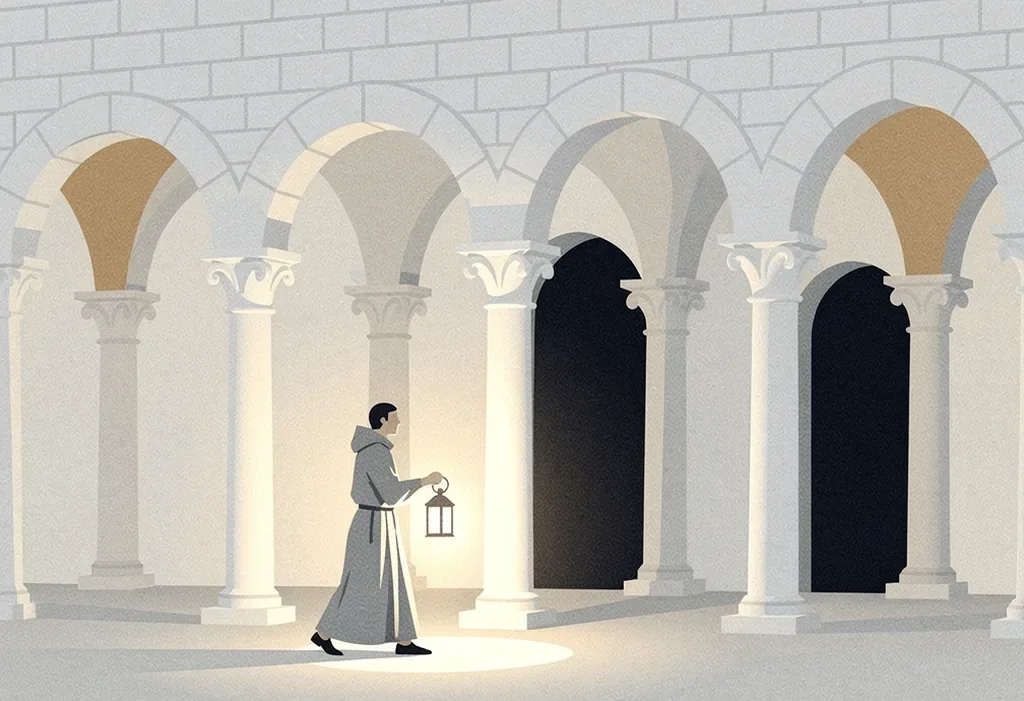
Faith is hardest when it is undramatic. A generation dies, the sun keeps rising, and the pull is toward concluding that the world runs itself. Waiting well belongs to Christian life, and it looks like keeping the same commitments in the twentieth quiet year as in the first.
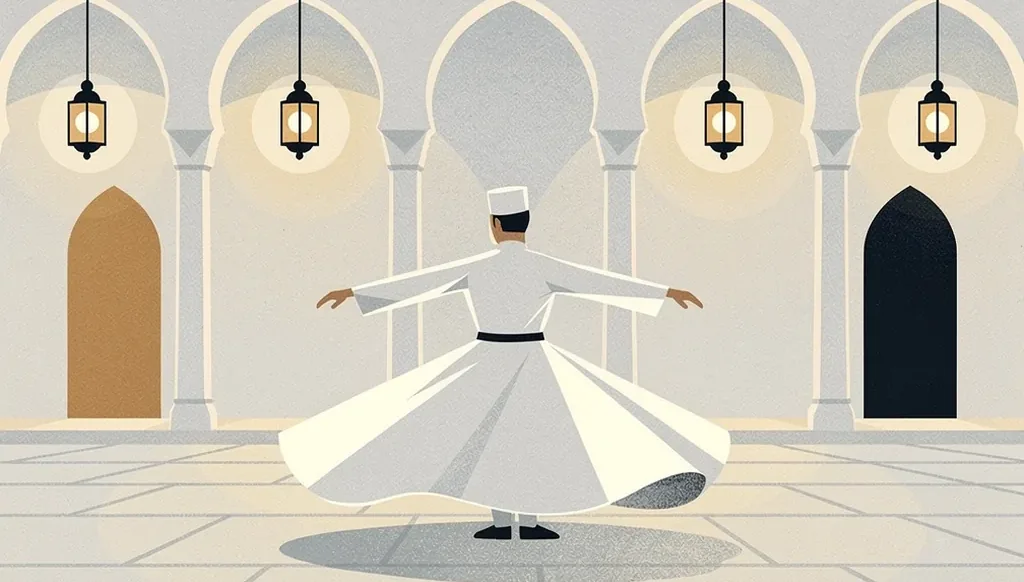
Tawakkul: Trust in God Trust sits alongside effort, which is why the Prophet told a man to tie his camel first and then trust God. Planning, saving, weighing the options: none of that counts against faith, and doing it carefully is a person's own part of the work. The shift comes at the end, when the hands come off the outcome and the mind stops running every version of how it could go wrong.
Give your self rest from managing: the whole load was never yours Ibn Ata Allah aimed that line at people worn out by their own arranging. Some plans get made once and then get made again at midnight, and again in the shower, as if going over them one more time will nail the future down. Relief arrives when a person sees that arranging every outcome was never in the job description, and the shoulders come down.
Qadar: God's measuring out of what happens Events arrive in a measure nobody set for themselves. Looking back, most people can name a door that closed for no reason they chose and a meeting that happened by accident, and those turned out to matter more than the plan did. Keeping that in view stops someone from reading every detour as proof they messed up.
Tawfīq: God's help that makes an effort land Two people can prepare with equal care and only one of them arrives. Whoever gets there usually knows the gap between the work they put in and the way things opened up, and that gap has a name. Holding onto it keeps success from curdling into self-congratulation, and keeps a person working without believing the result is theirs to manufacture.
Riḍā: peace with the way things turned out Plans fall through, and the first response is usually an argument with what already happened. That argument can run for years, replaying the version that never came, and it costs more than the loss did. Riḍā is where the arguing stops and a person starts living in the life they have instead of the one on paper.
One line per lens.
In Lensightful, names, numbers and symbols light up in the text. Tap one to see what it means in each tradition you choose.
Get Lensightful on the App Store