
Bible symbol · 3 lenses
What Does Thomas Mean in the Bible Read through 3 lenses
Then he said to Thomas, “Reach here your finger, and see my hands. Reach here your hand, and put it into my side. Don’t be unbelieving, but believing.”
Then he said to Thomas, “Reach here your finger, and see my hands. Reach here your hand, and put it into my side. Don’t be unbelieving, but believing.”
Thomas: the part of the mind that trusts only what the body's senses can verify, the doubt that mistakes physical proof for certainty
Christian Psychology lens · John 20:29
But Thomas, one of the twelve, called Didymus, wasn’t with them when Jesus came.
When they had come in, they went up into the upper room where they were staying; that is Peter, John, James, Andrew, Philip, Thomas, Bartholomew, Matthew, James the son of Alphaeus, Simon the Zealot, and Judas the son of James.
Matthew; Thomas; James, the son of Alphaeus; Simon, who was called the Zealot;
Same symbol, 3 ways of seeing it. Tap one to jump to it.

A mind that will trust only what the body's eyes report has already decided that truth must be small enough to touch. It waits for proof it can handle, and calls the waiting reason. Yet what is most real was never shown to the eyes at all, and cannot be, for the eyes were made to look on separation and report it back as fact.
There is another kind of sight that needs no evidence, because it looks past the body to what is always there. A mind that rests in this quiet certainty is at peace, not because it finally saw, but because it no longer needed to.
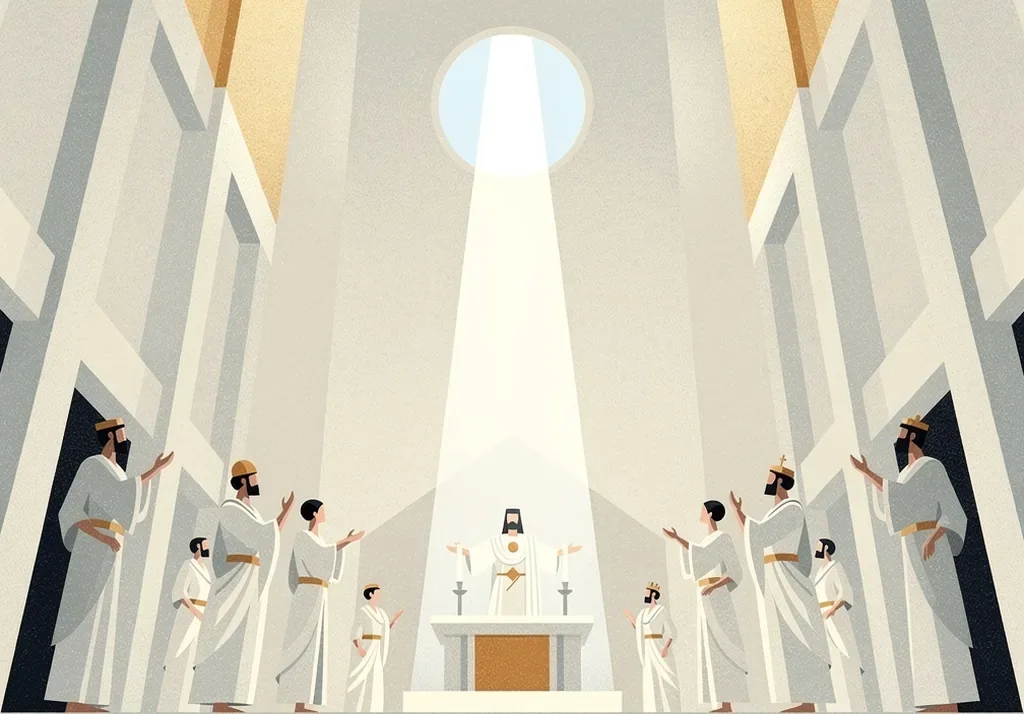
Thomas is the doubting faculty in a person, the reasoning part that demands to touch and measure before it will trust. The risen Christ meets this doubt not by rebuke but by offering the very wounds to be handled, the hands and the side made available to the finger and the palm. The higher self invites the skeptical mind to reach in and feel for itself the reality it cannot yet accept.
The side is the place of the deep opening, near the heart, where the inner life was pierced and poured out. To thrust the hand into it is for the doubting mind to enter the very center of feeling and find it living. When the reasoning power stops standing outside and reaches into the wound, doubt gives way to knowing, and a person passes from unbelief into direct inner certainty by contact with what was thought dead.
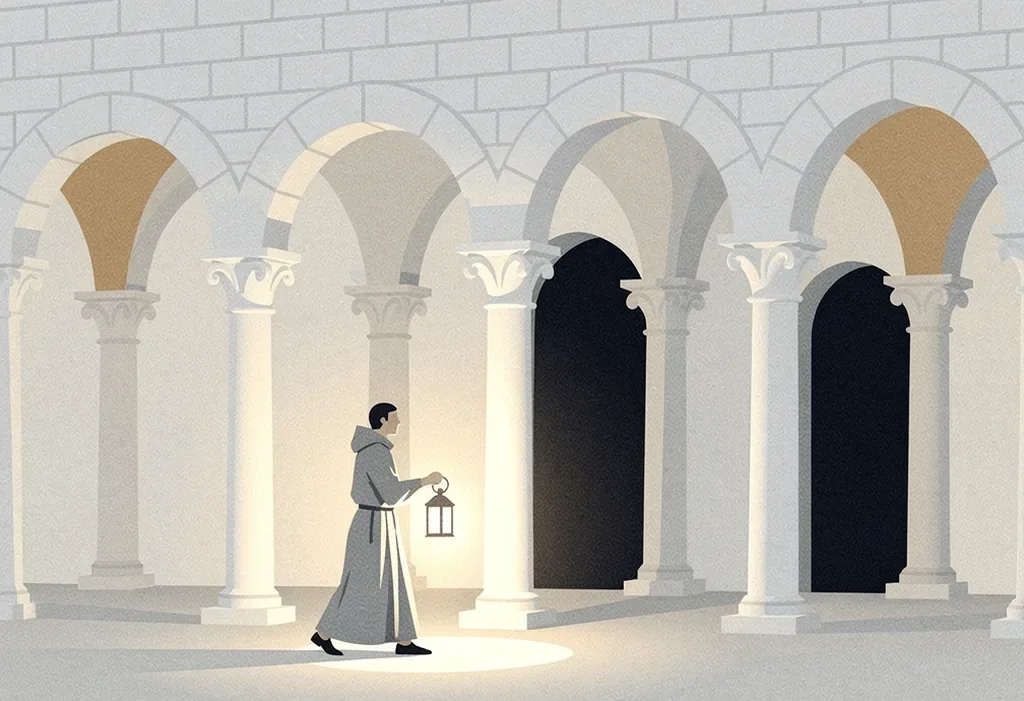
It is the evening of the first day of the week, and the disciples are shut inside a room with the doors locked because they are afraid. Jesus comes and stands among them, shows them his hands and his side, breathes on them and gives them the power to forgive sins. That breath is the beginning of confession in the Church: the risen Lord does not hand out forgiveness in the air, he entrusts it to men who will speak it out loud to people who need to hear it. But Thomas is not there. He is off on his own, and he misses it. Faith is not handed on privately. It comes through the gathered body, and the one who stays away is the one left in the dark.
The others tell him they have seen the Lord, and he says flatly that unless he puts his finger in the nail marks he will not believe. Eight days later, the same locked room, and Jesus comes again and says peace be with you, then turns straight to Thomas and offers him the wounds. Notice that the risen body still has them. Glory did not erase the scars, because the love that made them is the point. And Jesus does not scold him or shame him for needing proof. He stoops to the doubt and fills it.
a twin
joined; conjoined; doubled; twain; twin
In Lensightful, names, numbers and symbols light up in the text. Tap one to see what it means in each tradition you choose.
Get Lensightful on the App Store