
Bible symbol · 2 lenses
What Does Worship Mean in the Bible Read through 2 lenses
Ascribe to Yahweh the glory due to his name. Bring an offering, and come before him. Worship Yahweh in holy array.
Ascribe to Yahweh the glory due to his name. Bring an offering, and come before him. Worship Yahweh in holy array.
Worship: the inner service of stillness done before the gathered parts, not outward praise
Esoteric lens · Luke 14:10
And thus the secrets of his heart are revealed. So he will fall down on his face and worship God, declaring that God is among you indeed.
But if you turn away from following me, you or your children, and not keep my commandments and my statutes which I have set before you, but go and serve other gods, and worship them;
This man went up out of his city from year to year to worship and to sacrifice to Yahweh of Armies in Shiloh. The two sons of Eli, Hophni and Phinehas, priests to Yahweh, were there.
Same symbol, 2 ways of seeing it. Tap one to jump to it.
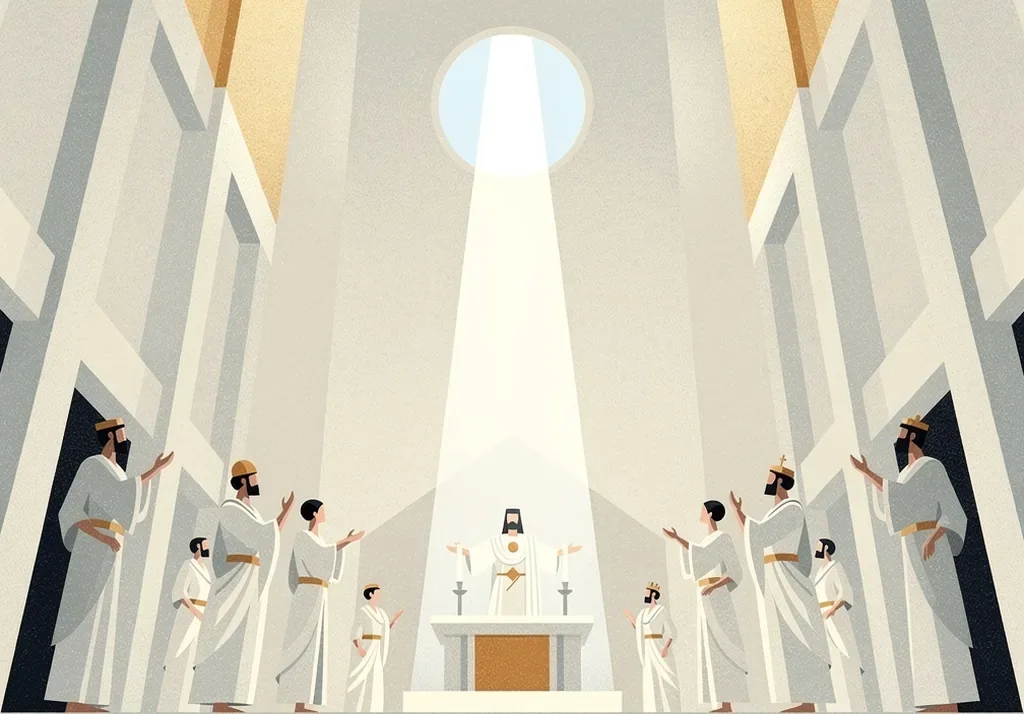
To sit in the lowest room is to sit down on the floor with the spine held straight and upright, the posture in which the inner medicine is made. Meditation taken low and disciplined this way lets the pineal gland release its healing light into the body, and the still, humbled sitting is exactly what draws the summons to rise. The going up higher is not a reward handed from outside; it is the current of that light lifting the seated self toward the crown, the fifth and finished state of consciousness.
The service done in the presence of the gathered faculties is the quiet inner work of sitting, which trains a person the way a fighter is trained to stand steady under the blows of life. The one who takes the low seat is the one carried up.
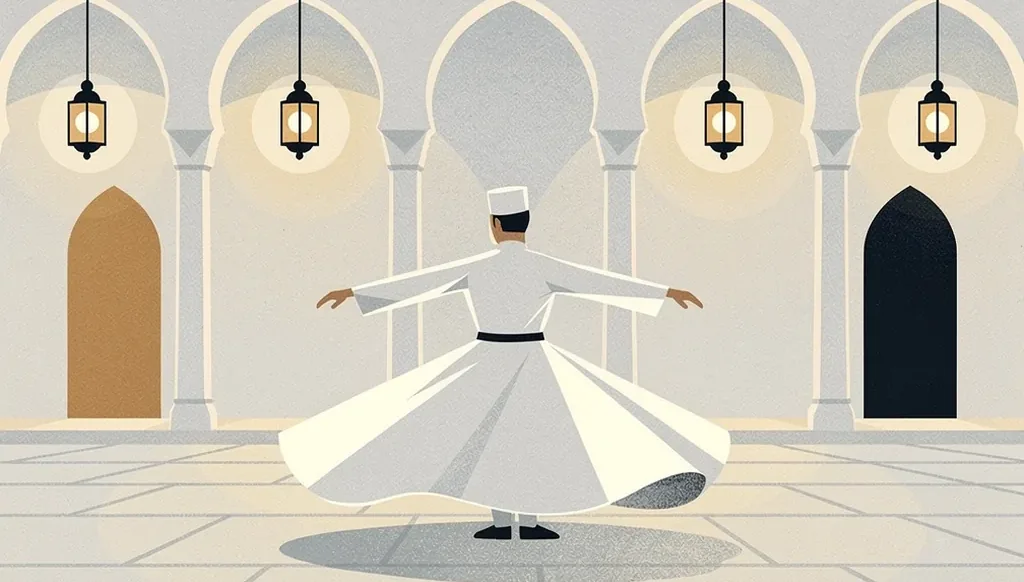
Faqr: Spiritual poverty Faqr is having nothing of your own to fall back on. The state shows up when every other source of help has dried up and asking is the only move left. The Quran calls all people the poor ones and God the rich one, which makes empty hands the ordinary human situation, so admitting them costs nothing.
ʿUbūdiyya: Servanthood ʿUbūdiyya is belonging to God rather than to yourself. When people are looking down on you, their opinion starts to feel like the final word on what you are worth. Belonging to God moves that verdict out of their hands. The sting stays, and it no longer decides what you are worth.
Tawakkul: Reliance on God Tawakkul is putting your whole weight on God. Al-Ghazali is careful in the Revival that this leaves your own effort in place; you still act, but the outcome is not yours to force. When only one direction is left to look, the mind stops running through backup plans, and the waiting gets quieter.
I am as My servant thinks of Me: expectation colors what you meet The Prophet passed these words on as God's own. A long silence slowly trains a person to read it as refusal, or as a sign of being written off. Expecting kindness at the end of the wait keeps the asking alive, and the same silence stops feeling like a closed door.
Waiting for relief is worship: the gap before an answer still counts The Prophet called waiting for relief an act of worship. Long stretches of no news usually feel like dead time, the part of life on hold until something finally changes. Taking the wait as time already spent with God gives those weeks weight, and the person waiting stops writing them off as nothing.
In Lensightful, names, numbers and symbols light up in the text. Tap one to see what it means in each tradition you choose.
Get Lensightful on the App Store