
Bible symbol · 3 lenses
What Does Wrath Mean in the Bible Read through 3 lenses
Now therefore leave me alone, that my wrath may burn hot against them, and that I may consume them; and I will make of you a great nation.”
Now therefore leave me alone, that my wrath may burn hot against them, and that I may consume them; and I will make of you a great nation.”
Wrath waxing hot: the purging fire of consciousness that rises to burn away the lower thoughts, not the anger of an outer god
Esoteric lens · Exodus 32:10
Joab the son of Zeruiah began to take a census, but didn’t finish; and wrath came on Israel for this. The number wasn’t put into the account in the chronicles of king David.
Because you didn’t obey Yahweh’s voice, and didn’t execute his fierce wrath on Amalek, therefore Yahweh has done this thing to you today.
and to wait for his Son from heaven, whom he raised from the dead: Jesus, who delivers us from the wrath to come.
Same symbol, 3 ways of seeing it. Tap one to jump to it.

Anger is its own sentence, because a mind committed to wrath is already living in the hell it thinks it is inflicting. The man of great wrath is that part of the self which has made attack its teacher, and rescuing him by soothing the outer quarrel changes nothing, for the same fury will find another occasion tomorrow. The trouble was never the offense outside. It was the choice to see through fear.
Only a change of teacher ends the cycle. Until the mind lays down attack itself, it will keep needing to be delivered from a fire it goes on lighting.
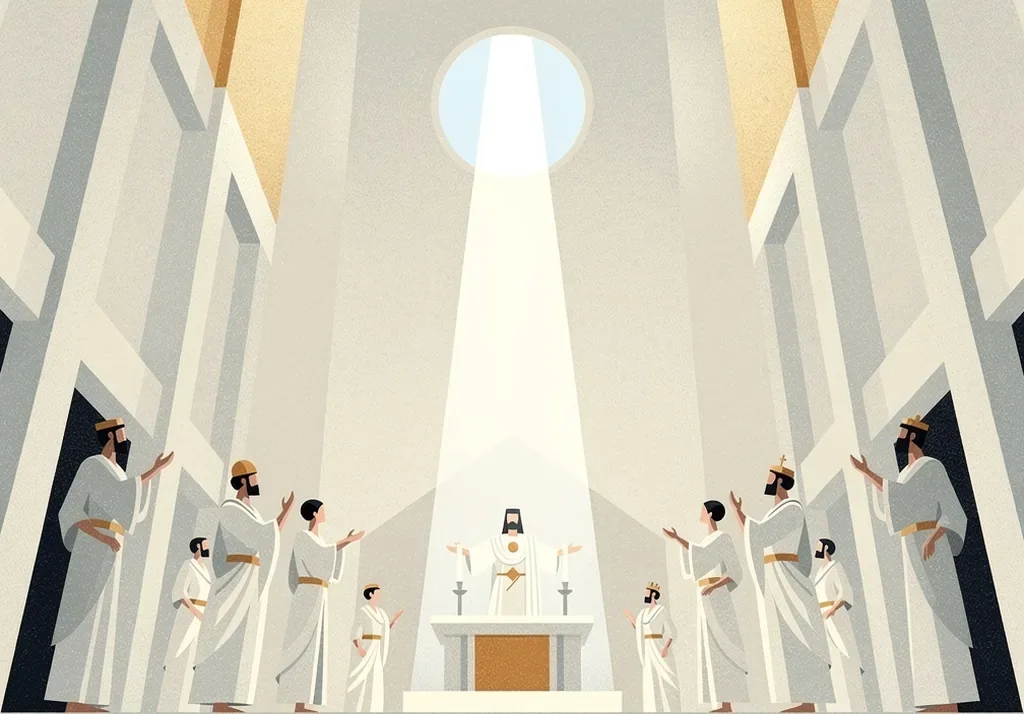
Scripture must be taken as an inner event, not an outer god losing his temper, so this heat that rises to consume is the burning away of the lower thoughts that have turned back to the molten idol while the higher self was on the mountain. The wrath is the purging fire of consciousness, not divine cruelty; it wax hot against the crowd of carnal impulses gathered below and reduces them.
What is promised in their place, a great nation raised from the one who stands apart, is the multiplied life that grows in a person once the base worship is burned out and the higher faculty is left to increase.

My mercy outstrips my wrath: mercy comes first God says this about himself in a saying the Prophet passed on. Someone who knows exactly what they have done expects the account to close against them, and they brace for the moment it does. Mercy arriving first means the blow they braced for was never on its way.
Faḍl: Bounty beyond what is owed Faḍl names giving past the point where the books are already settled. A person who adds up their own record honestly can predict the fair result, and the prediction is grim. Finding that the fair result never arrived tells them they are being handled by generosity rather than arithmetic.
Satr: The covering of faults God is called the one who covers, and Sufi teachers lean hard on that name. Much of the sting of doing wrong comes from the fear that it will all be laid out where people can see. Being covered means the fault was fully known and still never put on display.
ʿAfw: Pardon that clears the record The Prophet taught a short prayer calling God pardoning, and saying he loves to pardon. Ordinary forgiveness can leave the offense sitting there, remembered, ready to be brought up quietly years later. Pardon of this kind takes the entry off the page, so nobody is carrying a debt that keeps getting counted.
Rajāʾ: Hope Al-Ghazali writes at length about hope, and he means an expectation resting on what God has already done. A person who has been let off lightly often keeps flinching anyway, half expecting the bill to show up later. Hope settles that, since the leniency already shown is the clearest sign of how they will be met next time.
In Lensightful, names, numbers and symbols light up in the text. Tap one to see what it means in each tradition you choose.
Get Lensightful on the App Store