

Ecclesiastes 1:11 · World English Bible
Ecclesiastes 1:11 Meaning There Is No Memory of the Former
There is no memory of the former; neither shall there be any memory of the latter that are to come, among those that shall come after.
Ecclesiastes 1:11 · World English Bible
There is no memory of the former; neither shall there be any memory of the latter that are to come, among those that shall come after.
Memory was one of the few forms of permanence people could work at: a name carried by sons, an inscription in stone, a line in a king's annals. Both directions of that hope are closed off.
From the Protestant reading below.
The same verse, read by 2 traditions.
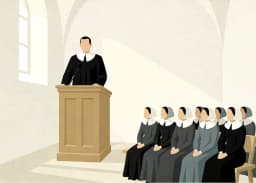
PROTESTANT
Memory was one of the few forms of permanence people could work at: a name carried by sons, an inscription in stone, a line in a king's annals.
Both directions of that hope are closed off. The dead already go unremembered, and the people alive now will fare no better with the generations after them. Hardly anyone can name a great-great-grandparent, and the same silence is already traveling toward everyone alive. So a life's weight cannot rest on being remembered by people. God remembers His own, and He knows them when every human memory of them has gone.

BUDDHISM
Anicca: Impermanence Impermanence is the passing of everything conditioned. It reaches all the way into memory itself: former things do not simply end, their traces in the mind are rubbed out too, the way footprints on a beach are smoothed flat by the next tide. Nothing holds still long enough to be kept, neither the deed nor the memory of it, and each new generation begins the erasing again.
Loka-dhammā: The worldly winds Fame and obscurity are two of the eight worldly winds that blow through every life. Being remembered is fame, and that wind always falls still, the way today's headline is old news within a week. Everyone who came before has already crossed from known to forgotten, and everyone who comes after will cross the same way.
Bhava-taṇhā: Craving to persist Craving for continued being is the hunger to keep existing in some form. The wish to be remembered by those who come after is that hunger gone quiet, and the engraved headstone puts it in stone: if the body must end, let the carved name outlast it. That grip tightens the moment oblivion comes into view, and loosening it is where the ache eases.
Dukkha: Unsatisfactoriness Unsatisfactoriness is the built-in ache that nothing graspable stays held for long. Reach for a lasting mark on the world, some proof you were here that later people will keep, and your hand closes on empty air, because being remembered can no more be held than a fistful of smoke. That ache is worth facing head on, since peace opens the moment you stop demanding a permanence the world cannot give.
Anattā: Not-self Not-self is the absence of any fixed, owned core inside a person. The one you hope will be remembered was already a shifting bundle of passing moments, closer to a candle flame than a stone, the same in name from hour to hour while never once the same. Oblivion then takes far less than it appears to, since no solid self was ever set down there to be lost.
Maraṇasati: Mindfulness of death Mindfulness of death is the steady practice of keeping your own ending in plain view. Sitting with how the former generations are gone and unremembered, you rehearse your own turn to be forgotten, and the fear slowly drains out of it. Kept up daily, the way you check the weather before leaving the house, it turns the sting of being forgotten into a reason to live today well.
Protestant lens
If no one remembers you in a hundred years, what would still make today worth living well?
He wrote that eternal remembrance is nothing, since the ones remembering will die too and the record goes with them. Fame has a shelf life and it is short.
The self we work so hard to make permanent is a passing arrangement, and clinging to its continuation is where the ache comes from. Letting it be temporary is relief, not defeat.
The great tree and the small weed both return to the same ground, and neither is keeping score. Nature does not maintain an archive.

Free · No account needed
Lensightful opens every verse of the Bible through the traditions you choose. Save readings, ask a follow-up question, and get one verse a day.
Get Lensightful on the App Store Protestant
 Buddhism