

Genesis 6:9 · World English Bible
Genesis 6:9 Meaning This Is the History of the Generations
This is the history of the generations of Noah: Noah was a righteous man, blameless among the people of his time. Noah walked with God.
Genesis 6:9 · World English Bible
This is the history of the generations of Noah: Noah was a righteous man, blameless among the people of his time. Noah walked with God.
Righteous is a courtroom word for the man who comes out in the right when his dealings are weighed. Blameless means whole and without defect, not a man who never sinned.
From the Protestant reading below.
The same verse, read by 4 traditions.
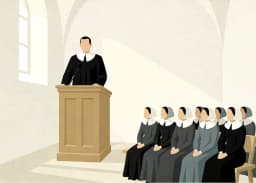
PROTESTANT
Righteous is a courtroom word for the man who comes out in the right when his dealings are weighed. Blameless means whole and without defect, not a man who never sinned. Both words are spoken over Noah rather than claimed by him, and they rest on the favor God had already shown him.
Measured among the people of his own generation, where wholeheartedness toward God had gone rare, that standing left him alone. Walking with God carries steady company rather than a single visit. That company is what trusting God looked like, year after year.

CHRISTIAN PSYCHOLOGY
To be perfect while everything around seems fallen is not the boast of a better ego; it is what any mind becomes when it stops projecting its own guilt onto the world. A mind at peace with its Source has laid down the belief in separation, and having laid it down, it finds no fault in itself and none to accuse outside.
Consider a mind that walks beside its Creator rather than fleeing from Him. It is whole because it no longer believes it left. Wholeness here is simply the absence of the dream of exile, the quiet knowing that the mind and its Source were never truly apart.
Noah: the mind that has released guilt and so appears blameless, the self that walks in step with love instead of in flight from it. Generations: the succession of thoughts a mind produces, the offspring of its chosen teacher, either fearful or loving according to which it heeds.

CLINICAL PSYCHOLOGY
Character is the thing that holds when the flood comes for everyone else. Noah is called just and perfect in his generations, and that perfection is not moral spotlessness but integration, a man whose word and act and family line up into a single ordered whole. Such a man has built something the water cannot dissolve. When the world around him rots, he is not carried off with it, because what he is was assembled honestly, plank by plank, over years.
Maybe the only misfortune that counts is to let yourself become corrupted. Everything else can be survived. To walk with God is to subordinate your small group and your appetites to a principle above them, one that keeps remaking you as you follow it. Noah does not merely escape the deluge. He carries the seed of the world across the ruin, because a person put together right becomes the one thing worth saving.

SUFISM
Ṣidq: Truthfulness, inside matching outside Ṣidq is the state where a person's inside and outside are one piece. Being called upright by others counts for little if the private hours run a different way, and most people feel that gap in themselves long before anyone else names it. Someone with nothing hidden has nothing to keep track of, and the ease that comes from that shows up in how they act when no one is around.
Ikhlāṣ: Sincerity, acting for God alone Ikhlāṣ means doing something for God with nothing else mixed in. When the people around you have all gone another direction, no praise is coming and no reputation is being built, so the only thing holding you up is who you are answering to. Conduct that keeps going with no audience at all has been cleaned of the smaller motives that usually prop it up.
Blessed are the strangers: standing apart from your own time The Prophet said that Islam began as a stranger and would become strange again, and he called the strangers blessed. Being the odd one out in your own generation wears on a person; the loneliness is heavy, and doubt creeps in, because it seems impossible that everyone else could be wrong. The saying tells such a person that the oddness itself is no proof of error, and that standing nearly alone has happened before.
Istiqāma: Staying straight Istiqāma is keeping the same direction day after day without swerving. Most of a long life is unremarkable, and the pull to drift arrives in small pieces: one compromise that looks harmless, then another. Someone who holds steady through those small moments ends up dependable over decades, and almost none of it looked like much while it was happening.
Murāqaba: Living aware of God's gaze Murāqaba is moving through the day knowing God sees you, which the Prophet described as worshipping as though you could see Him. That awareness fills the hours nobody else watches, so a person stops keeping one self for company and another for private time. After long enough it stops feeling like being observed and feels more like steady company.
Protestant lens
What good habit of mine would survive if nobody was watching?
He told himself to stay upright even when no one around him was, because a straight life does not need a crowd to agree with it.
The sage walks a road most people find dull and keeps walking it, unhurried and unapplauded, because the walking itself is the point.
The sages said not to separate yourself from people, and also that where there is no one else doing the right thing, you be that one.

Free · No account needed
Lensightful opens every verse of the Bible through the traditions you choose. Save readings, ask a follow-up question, and get one verse a day.
Get Lensightful on the App Store Protestant
 Christian Psychology
 Clinical Psychology
 Sufism