
Job 10:1 · World English Bible
Job 10:1 Meaning My Soul Is Weary of My Life
My soul is weary of my life. I will give free course to my complaint. I will speak in the bitterness of my soul.
Job 10:1 · World English Bible
My soul is weary of my life. I will give free course to my complaint. I will speak in the bitterness of my soul.
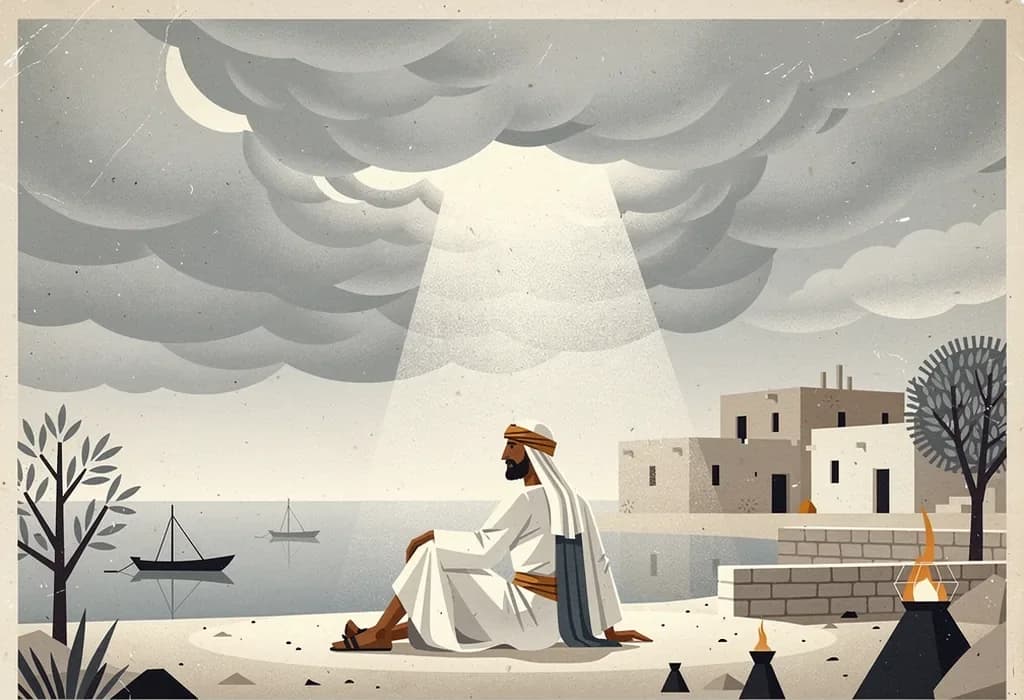
Nibbidā: Weariness with Existence Nibbidā is the turning away from what once held appetite. Sitting in the ashes and scraping his sores, Job has had life go flat on him, and this same flatness, met with clear seeing, is what loosens a person's grip on being alive at all.
From the Buddhism reading below.
The same verse, read by one tradition.

BUDDHISM
Nibbidā: Weariness with Existence Nibbidā is the turning away from what once held appetite. Sitting in the ashes and scraping his sores, Job has had life go flat on him, and this same flatness, met with clear seeing, is what loosens a person's grip on being alive at all. Weariness that sours only on one's own portion stays a dead end; weariness that stops reaching for any portion opens a door.
Vibhava-taṇhā: Craving for Non-Existence Craving runs toward oblivion as readily as toward pleasure. Weary of his life, Job goes on in this same speech to wish he had been carried from the womb straight to the grave, and that wish pulls with the same force as any hunger for more. Wanting out is still wanting, and it binds just as tightly.
Parideva: Lamentation Parideva is grief that has found a voice. Giving free course to his complaint, Job unstoppers what his three comforters would rather keep decent and quiet, and speaking does clear something: pain said aloud is at least pain looked at. Lament is honest ground, though a person can also settle there for years, telling the same story to the same walls.
Domanassa: Mental Pain Domanassa is pain in the mind, distinct from pain in the body. Job's boils are one arrow; the bitterness he tastes in his own soul is a second arrow he fires himself into the same wound. Two men can carry identical sores, and only one of them lies awake hating the night.
Kamma-vipāka: The Fruit of Action Kamma-vipāka is the ripening of past deeds, and the Buddha denied that it accounts for everything a person feels: bile, weather, rough handling, and plain accident all produce their share. Job's friends read his sores backward as a bill come due, and their arithmetic fails. His refusal of the ledger is not stubbornness; it is accuracy, and it deserves the free course he gives it.
Anattā: Not-Self Anattā is the absence of an owner standing behind experience. My soul, my life: the possessives carry the weight here, because a life held as property can be defaulted on, and every loss lands as theft. Loosen the my and the weariness has less to grip; the days still arrive, and no one is being robbed of them.
Buddhism lens
How much of the weight is the day itself, and how much is the sense that it was supposed to be yours?
Seneca said it is a mark of weakness to be worn out by life itself, and that the cure is not escape but turning to look squarely at what you are carrying.
Rumi said the ache itself is the messenger, and that the crying out is not a failure of faith but the sound of something opening.
The Tao says a life held as property makes every change a theft, while the one who holds nothing as their own has nothing that can be taken.

Free · No account needed
Lensightful opens every verse of the Bible through the traditions you choose. Save readings, ask a follow-up question, and get one verse a day.
Get Lensightful on the App Store Buddhism