
Job 10:15 · World English Bible
Job 10:15 Meaning If I Am Wicked
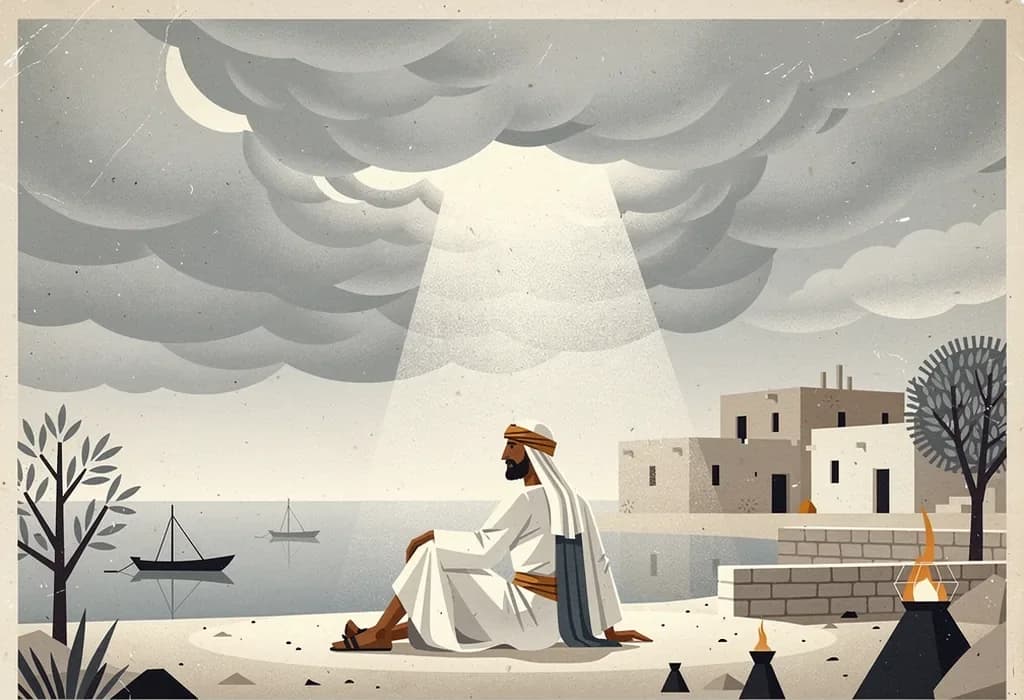
If I am wicked, woe to me. If I am righteous, I still will not lift up my head, being filled with disgrace, and conscious of my affliction.
Job 10:15 · World English Bible
If I am wicked, woe to me. If I am righteous, I still will not lift up my head, being filled with disgrace, and conscious of my affliction.
The mind that measures you as wicked or righteous keeps you in the same prison. Condemned or crowned, you are still bound to a story of "me" that can never rest, and this is the root of the confusion you feel.
From the Ego v. Being reading below.
The same verse, read by 3 traditions.

EGO & BEING
The mind that measures you as wicked or righteous keeps you in the same prison. Condemned or crowned, you are still bound to a story of "me" that can never rest, and this is the root of the confusion you feel. You are asking thought to tell you who you are, and thought knows only opposites, only this against that.
The affliction is not your circumstance but your identification with that restless judging. When you stop waiting for the mind to weigh your worth and simply notice the awareness that is already here, the confusion settles, because you are no longer standing trial before your own thoughts.

BUDDHISM
Dukkha: Suffering Dukkha is the pressure built into having a body and a mind, ache included in the terms. Job has tried both doors, guilt and innocence, and the same weight sits behind each one. Scraping his sores in the ashes, he finds that being in the right buys him no lighter load.
Domanassa: Mental pain Domanassa is the sting in the mind, running on its own track apart from bodily hurt. The boils are one arrow; being looked at as a man God has struck is a second arrow, and the second goes deeper. Filled is the right word for it: shame rises like water in a cup until no room is left for anything else.
Sakkāya-diṭṭhi: Identity view Sakkāya-diṭṭhi is taking the shifting bundle of body and mind as one solid self. Both halves of Job's sentence begin by fixing a permanent someone who then wears the label, wicked or righteous. His whole argument with his comforters is over which label sticks, and no one asks whether there is an owner underneath to carry either one.
Māna: Conceit Māna is the habit of measuring oneself against others, higher, lower, or level. A lifted head is a rank, and Job once held the best seat at the city gate; now he can find no rung at all, since even righteousness was a rung he hoped to stand on. Relief comes from stepping off the ladder rather than climbing back to the top of it.
Kamma-vipāka: The ripening of deeds Kamma-vipāka is the fruit that actions bear in their own time. Job's friends keep a simple ledger, woe for the wicked and reward for the upright, and he is being squeezed inside it. Deeds do ripen, though the accounts cannot be read off a man's skin from the outside, since illness, weather, and other people's choices also land on him. His protest that the columns do not balance is honest reporting rather than impiety.
Sampajañña: Clear knowing Sampajañña is knowing what is happening while it happens. Being conscious of his affliction is that knowing in its rawest form: Job neither looks away from his condition nor dresses it up for visitors, but keeps it in plain view and names it. Steady looking of that kind is where the work begins, because suffering has to be understood before anything can be done with it.

AWARENESS
Guilt and virtue are two faces of the same self-obsession. Whether the mind reports failure or reports goodness, it goes on measuring, and the measurer is the trouble. A man crushed by his sin and a man proud of his purity are equally busy with themselves, equally absent from this moment.
Something honest begins when both verdicts stop working. Neither confession nor merit lifts the head, because the head belongs to an image that must be maintained. Set the image down and there is nobody left to be disgraced, only awareness looking out of a body, watching the affliction come and pass.
Ego v. Being lens
Can you be here without being either guilty or impressive?
The moment you call one thing good and another bad, the mind splits and the trouble begins. Peace is not winning the judgment, it is stepping out of the courtroom.
Beautiful and ugly arise together, each inventing the other. Whichever side you stand on, you are still held by the pair.
The one who is steady is the same in praise and in blame. Both are weather; neither is the sky.

Free · No account needed
Lensightful opens every verse of the Bible through the traditions you choose. Save readings, ask a follow-up question, and get one verse a day.
Get Lensightful on the App Store Ego v. Being
 Buddhism
 Indian Guru