
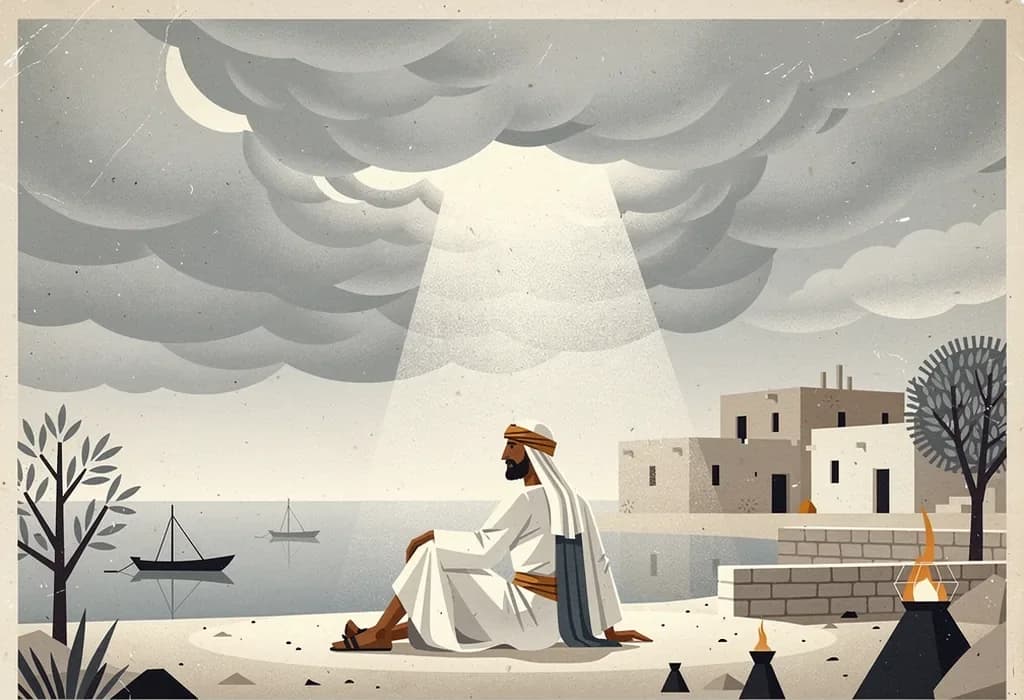
Job 14:14 · World English Bible
Job 14:14 Meaning If a Man Dies
If a man dies, will he live again? I would wait all the days of my warfare, until my release should come.
Job 14:14 · World English Bible
If a man dies, will he live again? I would wait all the days of my warfare, until my release should come.
Job speaks worn down, staring at his own death and waiting out his term for the change he longs for. Five threads from the early teachings run straight through the line.
From the Buddhism reading below.
The same verse, read by one tradition.

BUDDHISM
Job speaks worn down, staring at his own death and waiting out his term for the change he longs for. Five threads from the early teachings run straight through the line.
Maraṇasati: Mindfulness of death Keeping death steadily in view. To ask "if a man die" already holds your own ending in plain sight, and that unflinching look is the whole of the practice, the honest facing of what most people turn away from. Watch the end draw closer the way you notice how little daylight is left before dark, and the sight, far from darkening the hours, presses you to spend each one well.
Punabbhava: Renewed becoming Being reborn into a further existence. "Shall he live again?" is exactly this question, and the longing inside it, the thirst to keep on being, is the spark that lights the next life the way a flame catches dry wood. So the hope of living again is itself the fuel that keeps the wheel of births turning, and freedom lies the other way, in letting that fire burn down instead of feeding it on.
Āyusaṅkhāra: The life-span The vital force that sustains a life for its set length. "All the days of my appointed time" are the grains still to fall, a fixed span emptying while you wait it out. Watch them the way you watch sand slip through an hourglass, and the appointed time stops being a far date on the calendar and turns into something spending itself this very hour, each hour of waiting a little more drained away.
Khanti: Patient endurance The strength to bear what cannot yet be changed. "Will I wait" turns from idle sitting into a labor of its own, the way a hired hand works every hour of a long shift without walking off the job. Held like this, waiting out the appointed days becomes an active steadiness you keep up, the one work still left when nothing can be done but stay.
Anicca: Impermanence The truth that everything assembled keeps shifting and passing. "Till my change come" rests on this certainty, because whatever grips you now is already loosening its hold, the way winter always gives way to spring. The change awaited is promised by the same law that dissolves every settled thing, so the endless-seeming wait is only one more turning in a world that never holds still.
Buddhism lens
What are you waiting for, and could the waiting itself be the work right now?
You are a guest at a table, and you do not grab at the dish before it comes round or storm out before you are called. Waiting your turn is part of being here at all.
It is not your job to finish the work, and you are not free to walk away from it either. That is what keeps the long wait from turning into either panic or quitting.
Muddy water clears if you leave it alone and let it stand. The stillness is doing the work, not your stirring.

Free · No account needed
Lensightful opens every verse of the Bible through the traditions you choose. Save readings, ask a follow-up question, and get one verse a day.
Get Lensightful on the App Store Buddhism