
Job 16:16 · World English Bible
Job 16:16 Meaning My Face Is Red with Weeping
My face is red with weeping. Deep darkness is on my eyelids.
Job 16:16 · World English Bible
My face is red with weeping. Deep darkness is on my eyelids.
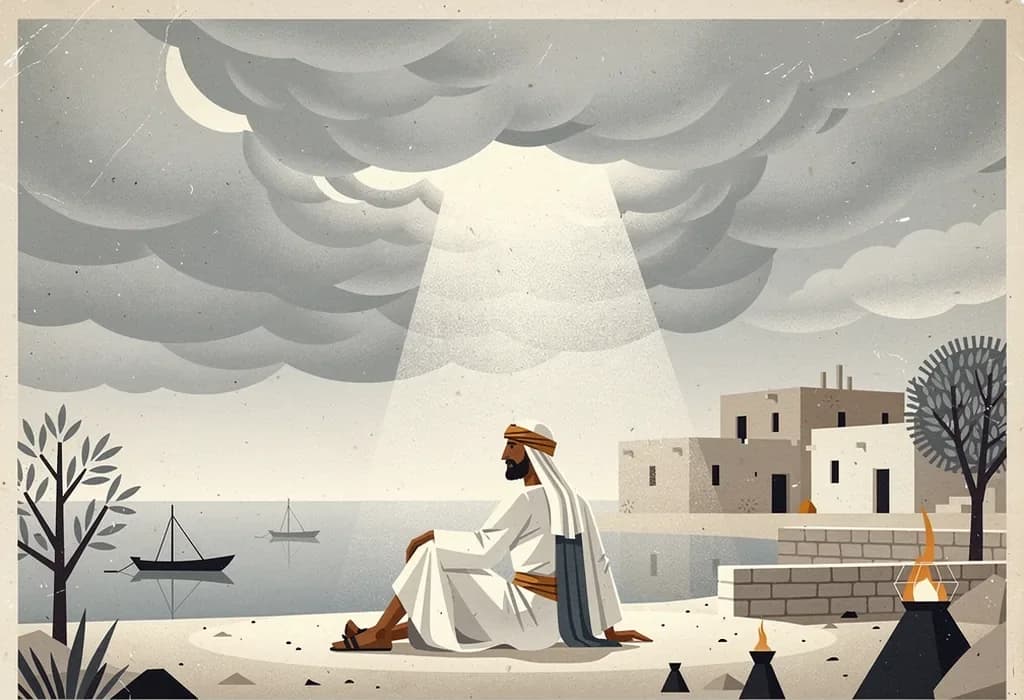
Dukkha-vedanā: Painful feeling This is the raw bodily register of hurt, before any thought about it. Job's face is inflamed because tears have been running for days, and skin does what skin does under salt and heat; no record of righteousness holds that back.
From the Buddhism reading below.
The same verse, read by one tradition.

BUDDHISM
Dukkha-vedanā: Painful feeling This is the raw bodily register of hurt, before any thought about it. Job's face is inflamed because tears have been running for days, and skin does what skin does under salt and heat; no record of righteousness holds that back. Sitting in ashes covered in sores, he lets the hurt be exactly the size it is, which is the only place an honest account of suffering can begin.
Parideva: Lamentation Grief that breaks into sound. He keeps his swollen face in plain view of the three men who came to comfort him, and the crying is part of his case, evidence he refuses to wipe away. Counted among the forms of suffering in its own right rather than treated as a lapse, weeping asks to be witnessed and left alone.
Salla: The dart The dart names how one hurt becomes two. Job says elsewhere that the arrows of the Almighty are lodged in him, and the first is plain enough: sores, sleeplessness, a face rubbed raw. The second is the one the mind fires after it, the settled certainty that nothing will ever lift, and that one can loosen in a way the first will not.
Upāyāsa: Despair The last and heaviest name in the old sequence of sorrow, weeping, pain, and grief. The darkness pressing on his eyelids carries death inside the word itself; he shuts his eyes and finds the dark has moved from around him onto him, with no inside left to retreat to. Even this weight stands on causes, and whatever stands on causes comes apart when they do.
Karuṇā: Compassion The heart's movement toward another's pain. Three men sit in front of a swollen, weeping face and go on explaining why he has earned it, which is why he has just called them miserable comforters. Their first seven days of silence beside him in the ashes came far nearer the mark than everything they have said since.
Buddhism lens
Can I let today be as bad as it is without deciding it is the rest of my life?
The first hurt is what happened. The second is the story you tell yourself that it will be like this forever, and only the second one is yours to put down.
Do not hide the wound. Grief has its own voice, and sealing it in does not make it smaller, it only makes it lonelier.
No storm blows all day. Even the heaviest weather rests on conditions, and when they shift, it lifts.

Free · No account needed
Lensightful opens every verse of the Bible through the traditions you choose. Save readings, ask a follow-up question, and get one verse a day.
Get Lensightful on the App Store Buddhism