
Job 2:13 · World English Bible
Job 2:13 Meaning So They Sat Down with Him
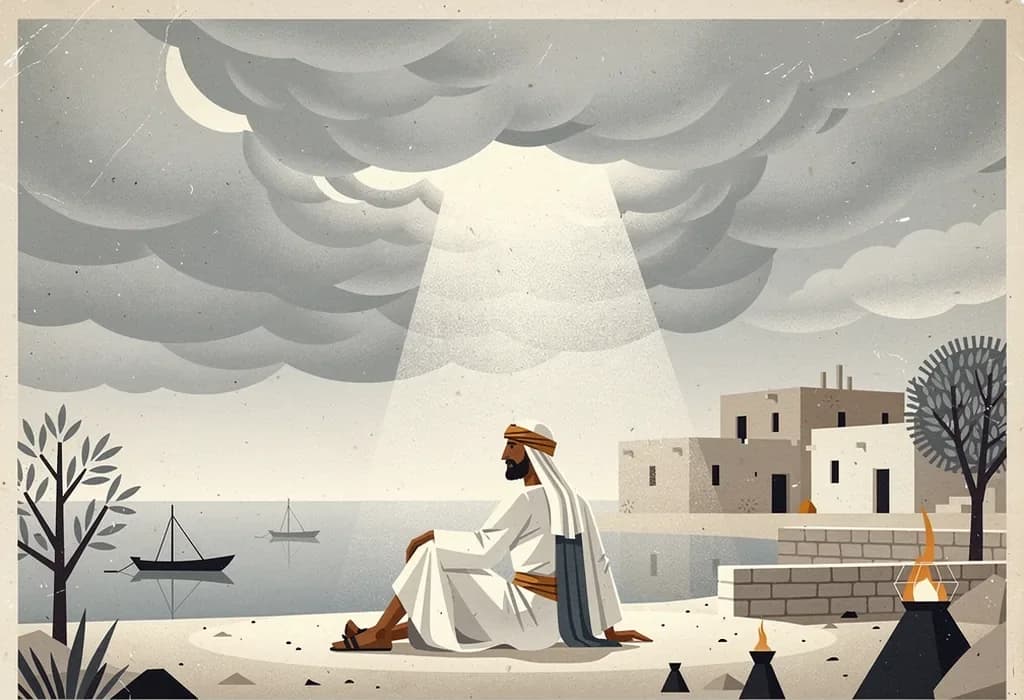
So they sat down with him on the ground seven days and seven nights, and no one spoke a word to him, for they saw that his grief was very great.
Job 2:13 · World English Bible
So they sat down with him on the ground seven days and seven nights, and no one spoke a word to him, for they saw that his grief was very great.
Dukkha: Suffering Dukkha is the pressing weight of a life come apart. Job's is very great: ten children buried in one day, the herds gone, sores from the sole of his foot to the crown of his head, and he sits in ashes.
From the Buddhism reading below.
The same verse, read by one tradition.

BUDDHISM
Dukkha: Suffering Dukkha is the pressing weight of a life come apart. Job's is very great: ten children buried in one day, the herds gone, sores from the sole of his foot to the crown of his head, and he sits in ashes. His friends do not measure it or ask how he brought it on; they see the size of it, and seeing is all they can manage at first.
Saṃvega: Urgent shock Saṃvega is the jolt that goes through a person who sees how fast a life can break. They lifted their eyes from a distance and could not recognize the man they had come to comfort, and the sight knocked the prepared speeches out of them. Anyone who has walked into a hospital room with something cheerful ready knows how quickly that shock empties the mouth.
Karuṇā: Compassion Karuṇā is the heart's trembling at another's pain. Here it takes the shape of a body on the ground: they come down into the dust where Job already sits, level with him, close enough to smell the ash. Sitting costs more than helping does, which is why so few stay for it.
Ariya tuṇhībhāva: Noble silence Noble silence is the choice to say nothing when nothing is worth saying. No one speaks a word to him, and that empty space holds Job without explaining him and without asking him to be better by morning. It gives way only when Job himself opens his mouth first, which is the right order.
Khanti: Patient endurance Khanti is the capacity to stay with what is hard without needing it to end. The count includes the nights: cold hours with nothing to look at, when any of the three could have walked home and come back at sunrise. Staying through those nights is the offering, and it asks more of them than advice ever would.
Papañca: Runaway thinking Papañca is thought breeding thought until a story stands where the person used to be. The friends hold it off while they sit; once the talking starts they cannot, and out comes a long theory that Job must have earned this. Grief presses the mind to explain it, and the explaining is what turns a companion into a prosecutor.
Buddhism lens
Who needs me to stay longer than I am comfortable staying?
You do not speak first to someone in mourning. You sit with them, and you wait until they open their own mouth.
The one who knows does not go on talking. Presence does the work that explanation keeps interrupting.
Silence is the language of the one who has understood. Words arrive later, and often they arrive only to cover up what the quiet was already saying.

Free · No account needed
Lensightful opens every verse of the Bible through the traditions you choose. Save readings, ask a follow-up question, and get one verse a day.
Get Lensightful on the App Store Buddhism