
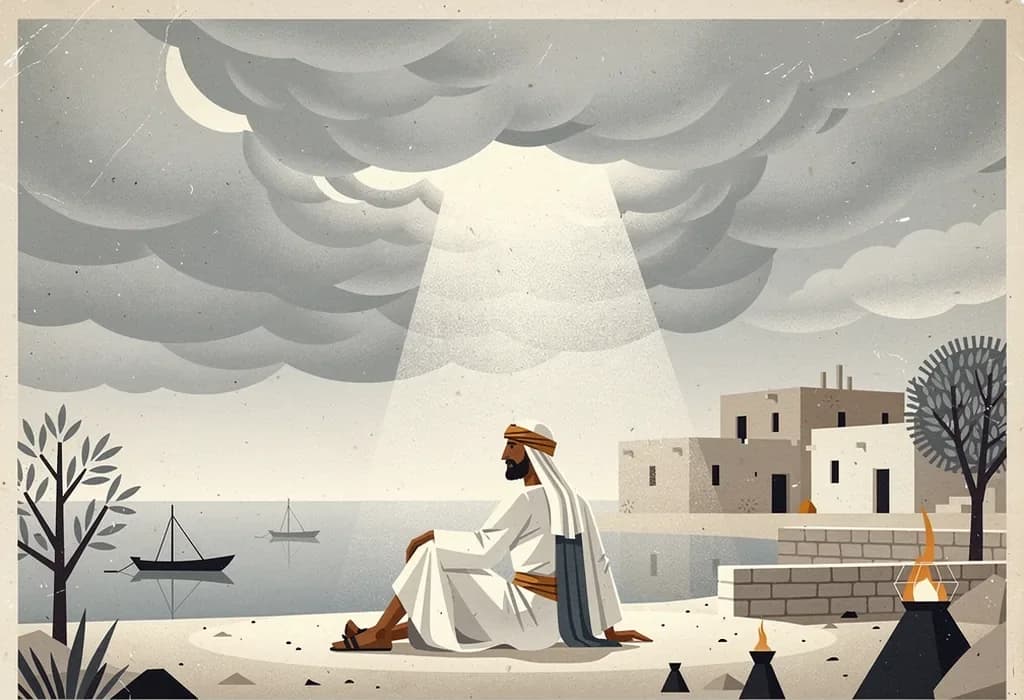
Job 20:15 · World English Bible
Job 20:15 Meaning He Has Swallowed Down Riches
He has swallowed down riches, and he will vomit them up again. God will cast them out of his belly.
Job 20:15 · World English Bible
He has swallowed down riches, and he will vomit them up again. God will cast them out of his belly.
Taṇhā: Craving Craving is the thirst that keeps reaching for the next thing. Swallowing is exactly the right word for it: nothing gets tasted, it only goes down fast so another mouthful can follow.
From the Buddhism reading below.
The same verse, read by one tradition.

BUDDHISM
Taṇhā: Craving Craving is the thirst that keeps reaching for the next thing. Swallowing is exactly the right word for it: nothing gets tasted, it only goes down fast so another mouthful can follow. A man eating that way stands up from the table still hungry, because the wanting was never about the food.
Macchariya: Stinginess Stinginess is the grip that will not let a thing pass to anyone else. Riches sent down the throat land where no one else can reach them, which is the whole point of swallowing them instead of handing them around. Old Buddhist stories picture the miser reborn as a hungry ghost with an enormous belly and a throat the width of a needle, swallowing forever and never fed.
Ādīnava: The drawback inside a pleasure Every enjoyment carries a cost that arrives later, and looking for that cost ahead of time is ordinary practice. Wealth going down is sweet; the same wealth coming back up is sour and humiliating, and the second taste is the honest one. Anyone who has eaten too much of something rich knows both halves, and knows the second half comes on its own schedule.
Kammavipāka: Deeds ripening into results Actions ripen in their own time. Vomiting says it well: what was taken in comes back out still recognizable, carrying the flavor of how it was got. Zophar has the mechanism roughly right and the timing badly wrong, since he is reading a ruined man's losses as an itemized bill for hidden sin. The Buddha refused that accounting, because present pain is not a receipt anyone can read backward into another person's past.
Anicca: Impermanence Nothing stays where it is put. The belly makes a poor vault, since whatever goes in is already on its way out, and the body doing the holding is traveling the same road. Being cast out is the ordinary end of any fortune, whether by theft, by fire, or by the day its owner leaves it behind, and Job's own herds went in a single morning.
Buddhism lens
What have I been swallowing fast because I was afraid to find out it would not fill me?
Store up treasure and the loss is already written into it. Enough is the only amount that does not come with a bill attached.
It is not the person with little who is poor, it is the one who always wants more. No fortune has ever once said that it was finished.
More possessions, more worry. Each thing added to the pile is one more thing to guard, and the guarding never gets shorter.

Free · No account needed
Lensightful opens every verse of the Bible through the traditions you choose. Save readings, ask a follow-up question, and get one verse a day.
Get Lensightful on the App Store Buddhism