
Job 22:24 · World English Bible
Job 22:24 Meaning Lay Your Treasure in the Dust
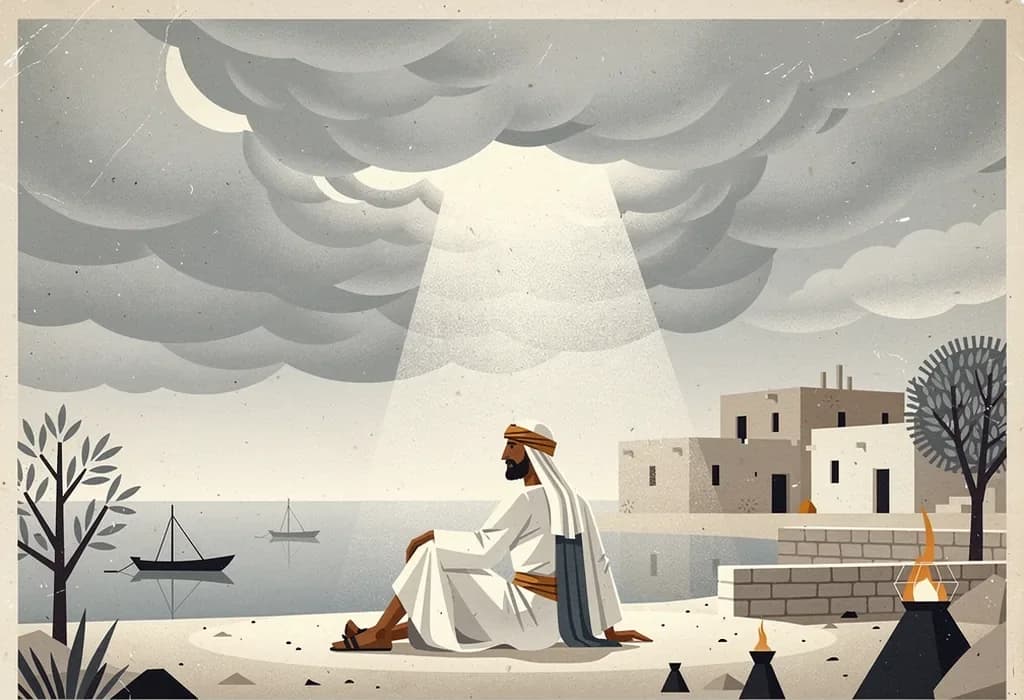
Lay your treasure in the dust, the gold of Ophir among the stones of the brooks.
Job 22:24 · World English Bible
Lay your treasure in the dust, the gold of Ophir among the stones of the brooks.
Lobha: Greed Greed is the mind's reaching to hold. Ophir gold was the finest on the market, hauled by ship from the far end of the sea, and its worth sits in that distance as much as in the metal.
From the Buddhism reading below.
The same verse, read by one tradition.

BUDDHISM
Lobha: Greed Greed is the mind's reaching to hold. Ophir gold was the finest on the market, hauled by ship from the far end of the sea, and its worth sits in that distance as much as in the metal. Hands that carried something that far do not open easily, so the weight in this instruction falls on the arm, not on the gold.
Nekkhamma: Renunciation Renunciation is the going out from what one owns. Laying is the operative motion here: no smashing, no hurling into the sea, only setting the bars down where dust already is and walking on. Practice starts in that stoop, because a hand that can lower one thing can also stop closing around the next.
Dhātu: Elements Elements are the earth, water, fire and air that any object comes down to. Gold set among the stones of the brook loses nothing it ever had; it lies among its own relatives, nugget and pebble having come out of the same ground. Water runs over both without preference, and so does an eye that has quit reading price into ore.
Sīlabbata-parāmāsa: Clinging to Rites This fetter treats an outward act as the thing that purifies. Eliphaz's arithmetic shows in his next breath, where the Almighty becomes your gold once yours is buried, so the dust is a deposit and the interest is guaranteed. Wealth dropped in order to be repaid was never dropped, and Job, already scraped bare in the ashes, is being sold a bargain he has no coin left to make.
Ariya-dhana: Noble Wealth Noble wealth is the inner store of confidence, virtue, giving, learning and wisdom. Anything set down in a riverbed can be lifted out by the next person along the bank, which is precisely what marks it as treasure of the ordinary kind. The stones guard gold from nobody, while the character a person has built travels with them through every flood, and that is the only sense in which a buried fortune could ever come back.
Buddhism lens
What am I holding so tightly that I have not felt the weight of it in years?
The more you hoard, the heavier the loss you are setting up for yourself. Knowing when enough is enough is its own kind of wealth that nobody can take.
He wrote that a person is rich not by what they own but by what they can calmly do without. The test is whether your hand can open, not how full it is.
Act, and then let go of the fruit of the acting. Giving in order to be repaid is not giving, it is a trade with a longer wait.

Free · No account needed
Lensightful opens every verse of the Bible through the traditions you choose. Save readings, ask a follow-up question, and get one verse a day.
Get Lensightful on the App Store Buddhism