
Job 3:21 · World English Bible
Job 3:21 Meaning Who Long for Death
Who long for death, but it doesn’t come; and dig for it more than for hidden treasures,
Job 3:21 · World English Bible
Who long for death, but it doesn’t come; and dig for it more than for hidden treasures,
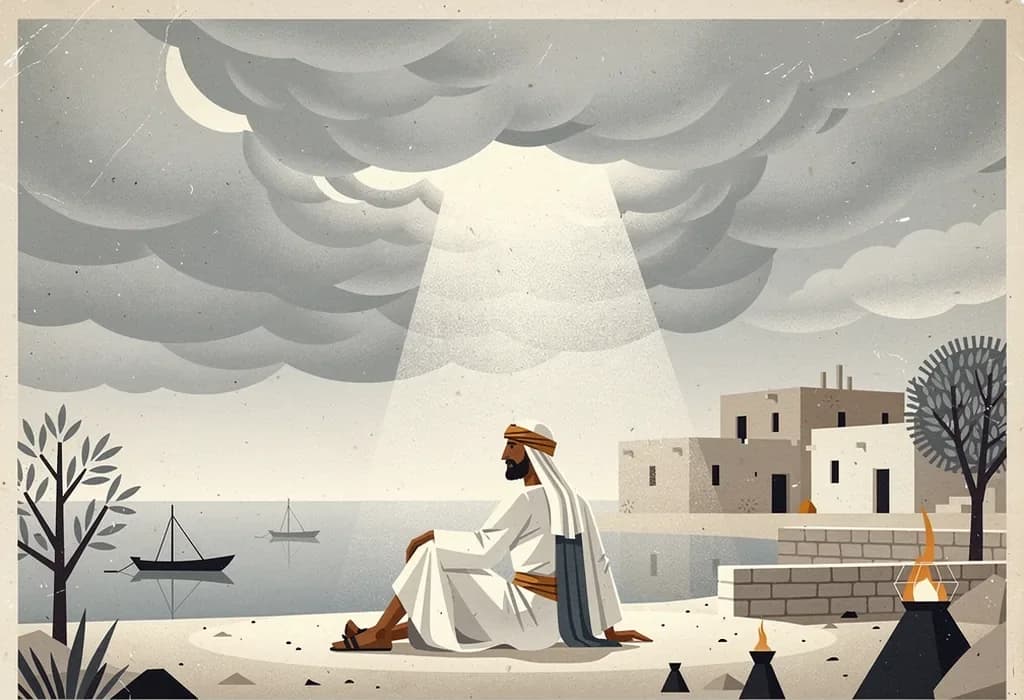
Domanassa: Grief Mental pain, distinct from the body's ache. Sitting in ashes scraping his sores, Job has lost children, herds, and health, and the wound doing the talking here is the one no bandage reaches.
From the Buddhism reading below.
The same verse, read by one tradition.

BUDDHISM
Domanassa: Grief Mental pain, distinct from the body's ache. Sitting in ashes scraping his sores, Job has lost children, herds, and health, and the wound doing the talking here is the one no bandage reaches. Grief at this weight makes longing for death feel like the only sane wish left, and seeing it as a feeling that has arisen, and not as a verdict about life, is the first foothold anyone gets.
Vibhava-taṇhā: Craving for non-existence Thirst aimed at being wiped out. Digging for death the way a man digs for buried silver is thirst working the same shovel as the man digging for gain; the direction reverses, the grip does not. The dig also cannot reach what it wants, since dying sets down the body while leaving the craving that reaches for another one.
Anattā: Not-self Nothing in a person is owned in the way an owner would expect. Job calls for death and it does not come, which shows plainly that this life was never his to start or stop at will. A man can command his hand to open and cannot command his breathing to close.
Nibbidā: Turning away Weariness with the whole business of existing. Job's weariness has fully arrived: he sits with nothing further to want from the world, which is most of the distance covered. The remaining work is to aim it, because the same fatigue that digs toward a grave can turn toward loosening the grip instead, and then it is no longer despair.
Nibbāna: Unbinding The going out of craving's fire. Hidden treasure is the right instinct at the wrong dig site: an ending does exist that deserves searching with exactly that hunger, and it is the ending of the thirst rather than of the man. Such treasure is reachable while alive, sores and losses and ash heap included, which puts it within Job's grasp on the worst day of his life.
Buddhism lens
If the thing I am worn out from is the wanting, what would it mean to loosen my grip instead of leaving?
A man travels far chasing a dream of buried treasure and is told it lies under the floor of his own house. The hunger was right; the digging was aimed at the wrong ground.
What you are searching the world for is in the small space of your own heart. People walk over it for a lifetime, looking out.
Mastering others takes force; mastering yourself takes something stronger. The second one is the harder dig and the one that actually pays.

Free · No account needed
Lensightful opens every verse of the Bible through the traditions you choose. Save readings, ask a follow-up question, and get one verse a day.
Get Lensightful on the App Store Buddhism