
Job 30:25 · World English Bible
Job 30:25 Meaning Didn’t I Weep for Him Who Was
Didn’t I weep for him who was in trouble? Wasn’t my soul grieved for the needy?
Job 30:25 · World English Bible
Didn’t I weep for him who was in trouble? Wasn’t my soul grieved for the needy?
Karuṇā: Compassion The heart's trembling at another's pain. Weeping for the man in trouble came unbidden back then, the way you flinch when someone beside you is cut, and it asked for nothing while it lasted.
From the Buddhism reading below.
The same verse, read by one tradition.

BUDDHISM
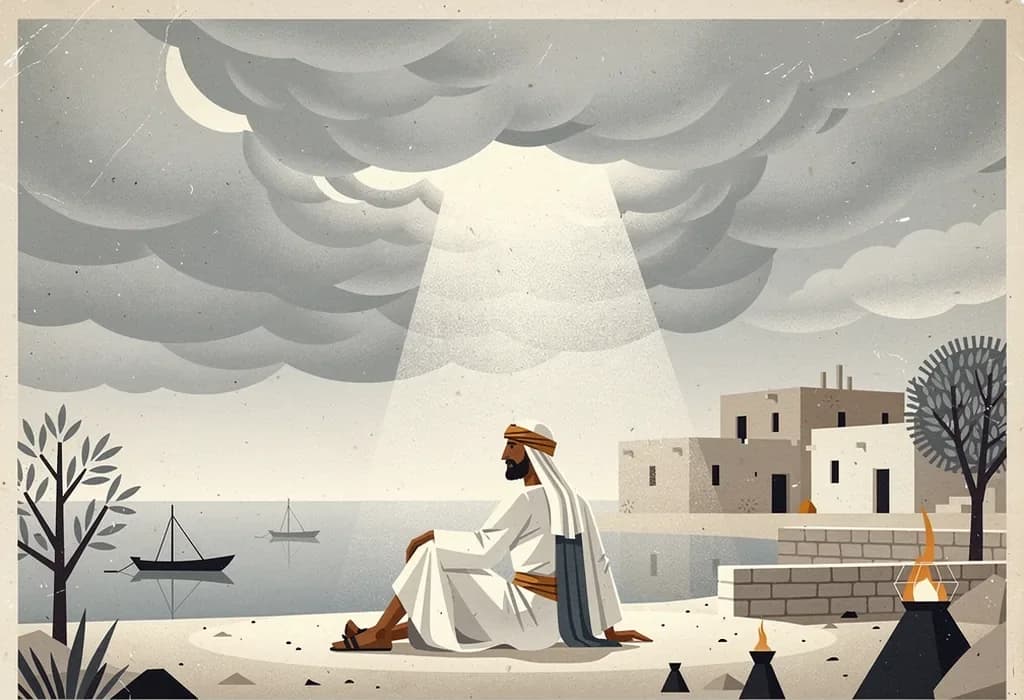
Karuṇā: Compassion The heart's trembling at another's pain. Weeping for the man in trouble came unbidden back then, the way you flinch when someone beside you is cut, and it asked for nothing while it lasted. Sitting in the ashes now, those same tears get held up as evidence in a case, which is a different thing from the tears themselves.
Domanassa: Grief of mind Painful feeling in the mind. A grieved soul weighs more than a wet eye: the sorrow goes in and settles, and it can pass for compassion while quietly wearing a person down. Scraping at his own sores, Job finds that grief has turned around and taken him as its object, and from inside it feels the same as the sorrow he once spent on the needy.
Puñña: Merit A store of good deeds. Tears wept for the troubled go into an account, and that account is now being read aloud to the sky: I gave, so where is my return? Merit does ripen, though on its own schedule rather than the one a person sets for it, and reading the ledger during a bad season brings no payment forward.
Taṇhā: Craving Thirst for things to be otherwise. Under both questions lies a plainer ache: someone should be weeping for me now. The ache is fair and it still burns, since no one owes an answering tear, and standing by the door waiting for one keeps the wound from closing.
Anattā: Not-self No fixed owner standing behind experience. "My soul grieved" sets a keeper over the grief, one who did the weeping and now holds the receipt for it; loosen that keeper and the weeping remains while the claim quietly drops. The tears given to the needy were good as they fell, and they need nobody behind them presenting a bill.
Buddhism lens
Whose tears am I still waiting on, and what would ease if I stopped?
He told himself the deed is its own payment and to stop standing around waiting for gratitude. A kindness that keeps a receipt has quietly turned into an invoice.
Do the good action and release your claim on what it earns you. The giving stays good; the bill you were planning to present was never part of it.
The sages said the work is not yours to finish, and you are not free to walk away from it either. You give without the accounting coming out even in your lifetime.

Free · No account needed
Lensightful opens every verse of the Bible through the traditions you choose. Save readings, ask a follow-up question, and get one verse a day.
Get Lensightful on the App Store Buddhism