
Job 31:1 · World English Bible
Job 31:1 Meaning I Made a Covenant with My Eyes
I made a covenant with my eyes, how then should I look lustfully at a young woman?
Job 31:1 · World English Bible
I made a covenant with my eyes, how then should I look lustfully at a young woman?
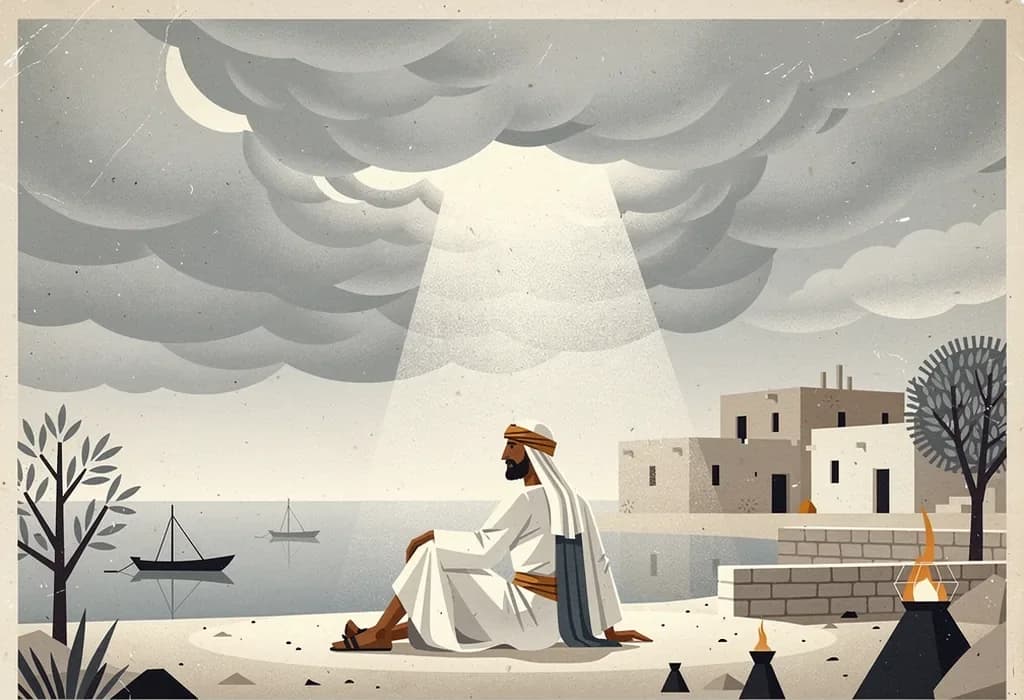
Adhiṭṭhāna: Firm resolve A determination settled in advance and left standing. The covenant is struck once, in a quiet hour, so that when a young woman crosses the courtyard there is nothing left to negotiate.
From the Buddhism reading below.
The same verse, read by 3 traditions.

BUDDHISM
Adhiṭṭhāna: Firm resolve A determination settled in advance and left standing. The covenant is struck once, in a quiet hour, so that when a young woman crosses the courtyard there is nothing left to negotiate. Locking the door at nightfall costs a moment; arguing with yourself at midnight can cost the whole night. A promise made to the eyes is a promise made to the man who will have those eyes tomorrow.
Indriyasaṃvara: Guarding the sense doors The watch kept at eye and ear, where the world comes in. Job binds his own eyes, not the world he has to walk through, which sets the guard at the gate where a gatekeeper belongs. Fields, roads, and neighbors stay exactly as they are; the sorting happens at the opening, and that is the only place it can be done.
Kāmacchanda: Sensual desire The tug toward a pleasing sight, one of the five clouds over a mind. A glance turns lustful the moment it stops passing over and settles in to feed, the way a small flame only becomes a fire if someone stands there adding sticks. The covenant catches it early, at the second look rather than at the deed it would take months to reach.
Cetanā: Intention Action begins in the intending, which is why a look weighs anything at all. His friends keep hunting for a hidden crime, something with hands in it, and he answers them from further in than their questions can reach, where no witness could have followed. A man can keep his hands clean for a lifetime and still spend that lifetime looking.
Hiri: Self-respect, shame at what is low The inward recoil from what is beneath you. "How then should I" comes out as a question with an obvious answer, asked by someone measuring one cheap glance against the whole man he has been. Sitting in ashes with his herds gone and his children buried, this is the one thing left that nobody took from him, and it is the thing he offers as evidence.

SUFISM
Mushāraṭa: Setting terms with yourself in advance Al-Ghazali describes a person laying down conditions with themselves early, before anything has tested them. In the moment of wanting something, a person argues their own case and wins every time. A choice made in a quiet hour still holds when the pull arrives, because the answer was already given and the argument never gets started.
Ghaḍḍ al-baṣar: Lowering the gaze The Quran asks believing men and women to lower their gaze. The instruction lands on the eyes because that is where the whole thing starts, and the eyes stay under a person's control longer than the heart does. Once an image is taken in and turned over, the wanting is already running; before that, stopping costs only a turn of the head.
The first look is yours, the second is against you: the harm sits in the lingering A saying of the Prophet, spoken to a young man who asked about the glance that arrives on its own. No one controls what crosses their field of vision, and no blame attaches to the accident. Blame begins with the second look, the one a person chooses, and that is a small decision anyone can spot in themselves.
Murāqaba: Living aware that you are seen The Prophet described the highest worship as serving God as though you see Him, since He sees you either way. That awareness covers the hidden hours, when nobody would ever find out and the only witness is a person's own memory. Someone who carries it stops needing locks or onlookers, because the private moment and the public one start to feel like the same room.
Waraʿ: Staying well back from the edge The old teachers praised holding back from what is allowed when it sits too close to what is not. The thinking is practical: someone who walks right up to the line crosses it on a bad day, tired or lonely. Keeping a margin costs little, and it spares a person from fighting the same battle over and over.

SELF-HELP
A decision made once in advance costs less than a battle fought fresh every time the moment comes.
Every appetite runs on an image, and the image arrives through the eyes before any feeling shows up to be argued with. Look first, feel second, negotiate third, and by the third step the stronger side already has the floor. A covenant made with the eyes moves the whole contest upstream to the one place where leverage is still cheap.
It is a decision with the retreat cut off, made once while calm, so the moment gets no vote. A person who fights at the point of desire loses often enough to build an identity out of the losses, and that identity does more damage than the appetite did. What never enters the frame never has to be defeated, and the hours that would have gone into resisting come back for something else.
Buddhism lens
What have you been deciding over and over, late and tired, that you could settle once in a quiet hour?
Decide the rule while you are calm, then the moment of temptation has nothing to decide. A man who has rehearsed his answer in advance is not arguing with himself when the thing he wants walks past.
The senses drag an unsteady mind the way wind shoves a boat off course. The one who can draw them back in, like a turtle pulling in its limbs, keeps his own direction.
The eye is the door the heart is robbed through, so the watch is set at the door and not in the street. Lowering the glance is a small discipline that saves a large one.

Free · No account needed
Lensightful opens every verse of the Bible through the traditions you choose. Save readings, ask a follow-up question, and get one verse a day.
Get Lensightful on the App Store Buddhism
 Sufism
 Self-Help