
Job 36:8 · World English Bible
Job 36:8 Meaning If They Are Bound in Fetters
If they are bound in fetters, and are taken in the cords of afflictions,
Job 36:8 · World English Bible
If they are bound in fetters, and are taken in the cords of afflictions,
Saṃyojana: Fetter A saṃyojana ties a being to birth after birth. A smith can strike iron off an ankle; the pull toward comfort, the flash of ill will, and the grip on being someone stay clamped on through every change of fortune.
From the Buddhism reading below.
The same verse, read by one tradition.

BUDDHISM
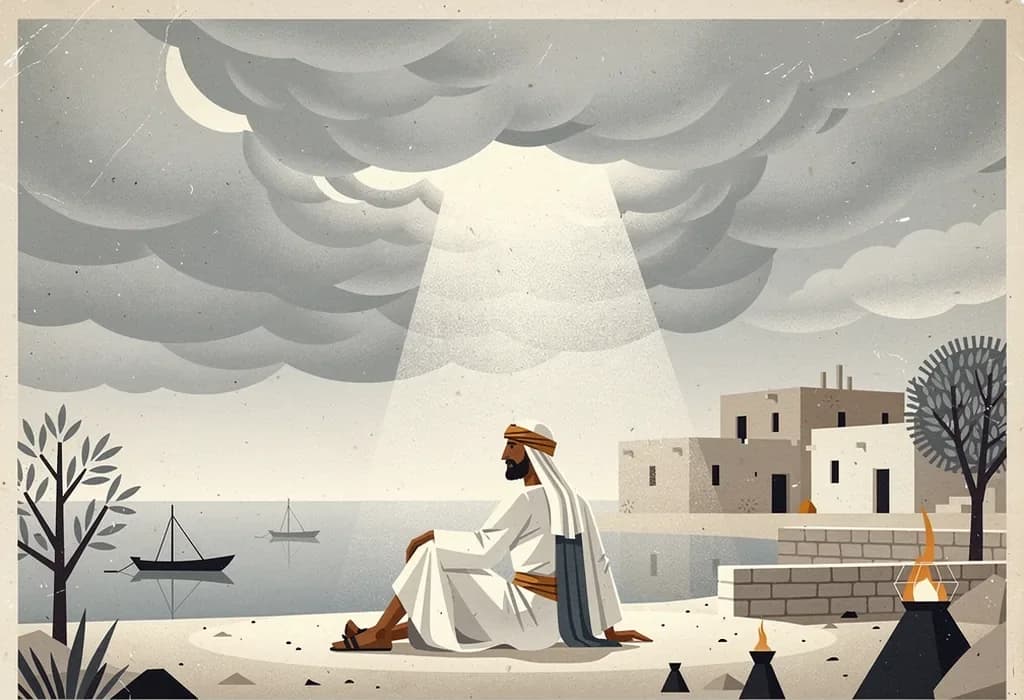
Saṃyojana: Fetter A saṃyojana ties a being to birth after birth. A smith can strike iron off an ankle; the pull toward comfort, the flash of ill will, and the grip on being someone stay clamped on through every change of fortune. Job sits in the ashes stripped of herds, house, and children, bound still, so the binding was never in the things that were taken.
Upādāna: Clinging Upādāna is the grip that will not open. A cord holds only where something pulls back on the other end, and a hand closed around health, standing, and the life that was supposed to keep going keeps the rope taut, though the rope burn feels like the rope's doing. Slack comes from the hand, not from the knot.
Dukkha: Suffering Dukkha is the ache running through anything that can be lost. Affliction comes braided: sickness pulls in money trouble, which pulls in shame, which pulls in sleeplessness, each strand thin and the finished cord strong enough to hold a person down. Job's messengers arrive one on the heels of the last, no strand waiting its turn.
Kamma: Deed and its fruit Kamma is intention ripening into result. Elihu reads the fetters as a ledger and expects prisoners to be shown their own handwriting in them, yet illness, weather, injury, and the acts of others bring a person low as well, so a chain is weak evidence about the hand that fastened it. How someone bears the chain is fresh kamma, made right there in the cell.
Saṃvega: The urgency a shock brings Saṃvega is the jolt that turns a person toward practice. Fetters end the running that ease permits, and anyone held in one place starts noticing what a person striding about never has to look at: how quickly the borrowed things go back. Elihu is right that a cord can open an ear, though the opening is done by the one wearing it.
Buddhism lens
What are you gripping so hard that you have mistaken the rope burn for someone else's doing?

Free · No account needed
Lensightful opens every verse of the Bible through the traditions you choose. Save readings, ask a follow-up question, and get one verse a day.
Get Lensightful on the App Store Buddhism