
Job 42:3 · World English Bible
Job 42:3 Meaning You Asked
You asked, ‘Who is this who hides counsel without knowledge?’ therefore I have uttered that which I didn’t understand, things too wonderful for me, which I didn’t know.
Job 42:3 · World English Bible
You asked, ‘Who is this who hides counsel without knowledge?’ therefore I have uttered that which I didn’t understand, things too wonderful for me, which I didn’t know.
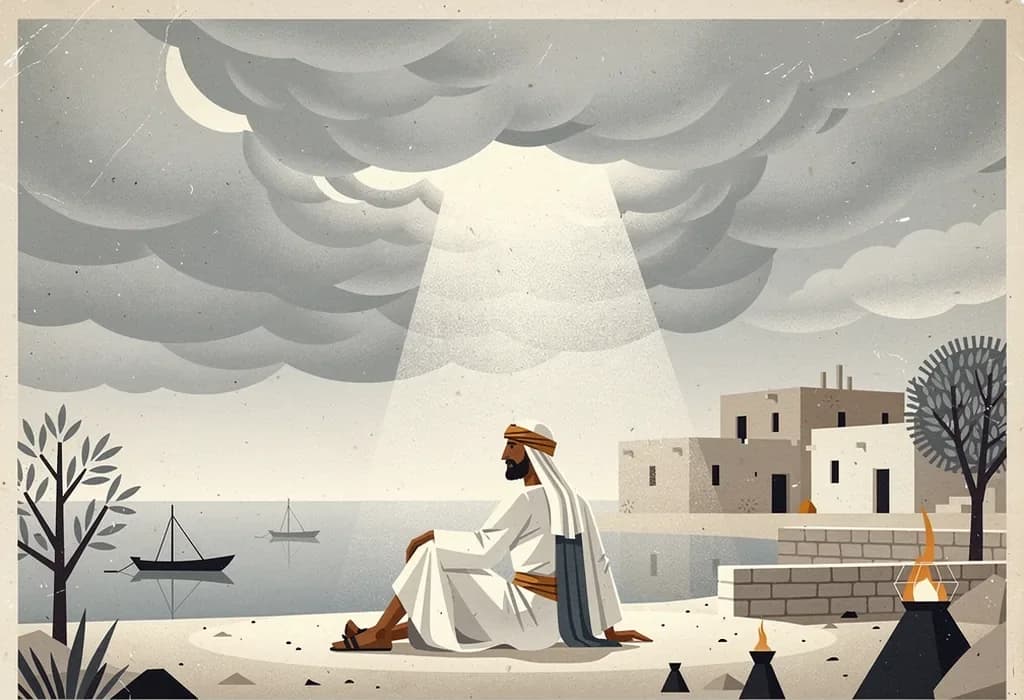
Ḥayra: Bewilderment Ibn Arabi counts bewilderment among the stations on the road to God, not a wrong turn off it. Someone who has argued long and carefully can meet a response that does not answer the argument at all, and every handhold goes at once.
From the Sufism reading below.
The same verse, read by one tradition.

SUFISM
Ḥayra: Bewilderment Ibn Arabi counts bewilderment among the stations on the road to God, not a wrong turn off it. Someone who has argued long and carefully can meet a response that does not answer the argument at all, and every handhold goes at once. Standing there dizzy comes from having met something far larger than the ideas brought to it.
Being unable to grasp Him is itself grasping: the limit is the knowledge Abu Bakr's line gets repeated whenever knowledge runs out. A person who has spoken with confidence about God's reasons reaches the edge of what they can hold, and the honest move is to say so plainly. Nothing is lost by admitting it, because the edge was always there and only the pretending ends. Owning that limit becomes the one piece of understanding that holds.
Tanzīh: Holding God beyond all comparison Tanzīh is Ibn Arabi's guard against shrinking God to a manageable size. Long arguments about God's conduct tend to picture him as a judge with a schedule, an opponent in a case, someone whose reasons fit on one page. Meeting him at full scale makes those pictures fall apart, and the falling apart is felt as being overwhelmed. The overwhelm comes from finding out God is far larger than the figure the argument had in mind.
Adab: Right manner in God's presence Adab is the Sufi word for the manners of the heart before God. Someone in pain often addresses God the way they would address anyone who owes them an explanation, and in the moment that feels only fair. When the scale of who is being addressed finally lands, the tone shifts on its own, with no one shaming them into it. The words start to fit the one they are aimed at.
Dhawq: Tasting, knowing firsthand Al-Ghazali compared knowing the definition of drunkenness to being drunk. A person can repeat correct things about God for years, borrowed from teachers and books, without once being touched by what the words point at. When the thing itself arrives, the old sentences sound thin, and past confidence sounds like talk. The facts stay the same, and the same words now carry weight, because the person has met what they describe.
Sufism lens
What have you been speaking about confidently without ever having touched it?
The teachers prized the mind that admits it does not know, because a cup already full has no room for tea. Not knowing is where learning can finally start.
To know that you do not know is the healthy place to stand. Thinking you already know is the actual sickness.
He reminded himself constantly how small his part was and how brief. Holding the real scale of things in view kept his own opinions from swelling.

Free · No account needed
Lensightful opens every verse of the Bible through the traditions you choose. Save readings, ask a follow-up question, and get one verse a day.
Get Lensightful on the App Store Sufism