
Job 5:9 · World English Bible
Job 5:9 Meaning Who Does Great Things That Can’t Be
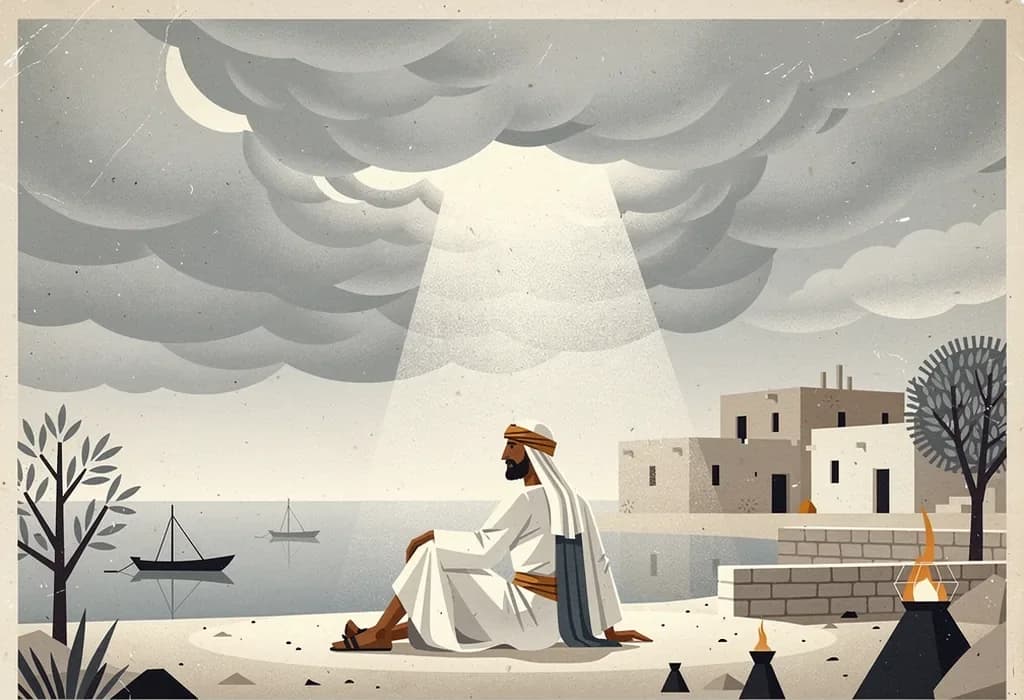
who does great things that can’t be fathomed, marvelous things without number;
Job 5:9 · World English Bible
who does great things that can’t be fathomed, marvelous things without number;
Tafakkur: Reflection on what God has made Al-Ghazali gave a whole book of the Revival to this slow looking at ordinary things. A person worn down by one hard stretch tends to have their whole attention pinned to that single spot.
From the Sufism reading below.
The same verse, read by one tradition.

SUFISM
Tafakkur: Reflection on what God has made Al-Ghazali gave a whole book of the Revival to this slow looking at ordinary things. A person worn down by one hard stretch tends to have their whole attention pinned to that single spot. Counting what else is quietly at work, and never coming to the end of the count, loosens that grip.
Tajallī: God showing himself in what happens Ibn Arabi held that no two of these showings are ever alike, so the world never repeats itself. Someone worn thin often feels their days have collapsed into one grey stretch, the same thing over and over. Under this teaching, tomorrow has never happened before, however familiar it looks from here.
Ḥayra: Bewilderment Ibn Arabi treated this as the top of the climb rather than a stumble near the bottom. When a person keeps asking for an explanation and keeps not receiving one, the mind starts to feel broken. Bewilderment names the opposite situation: the mind is working fine and has simply reached the edge of what any mind holds.
The inability to comprehend is itself comprehension: the limit counts as knowledge Abu Bakr said this, and teachers have repeated it ever since. Coming up empty feels like failure, especially to someone who has been searching hard and honestly. Empty hands count for something here, since the search has at least shown a person the size of what they are facing.
Riḍā: Contentment with what comes Al-Ghazali set this among the last stages in the Revival, one of the hardest things a person learns. Someone who cannot get an accounting for what has happened to them usually keeps pressing for one, and the pressing wears them out further. Contentment is what settles in when a person stops requiring the explanation first, before they are willing to go on.
Sufism lens
What else has been going on while my attention was pinned to one spot?
Laozi said the way that can be fully spoken is not the way. What holds everything up stays past the reach of any account we give of it.
Arjuna asks to see the whole of God and what he sees cannot be held by his eyes or his words. He is left shaking, having learned the size of what he was talking to.
Zhuangzi said the small cannot measure the great, and that trying to is like a summer insect reasoning about ice. Coming up short is not a defect in the insect.

Free · No account needed
Lensightful opens every verse of the Bible through the traditions you choose. Save readings, ask a follow-up question, and get one verse a day.
Get Lensightful on the App Store Sufism