
Job 9:28 · World English Bible
Job 9:28 Meaning I Am Afraid of All My Sorrows
I am afraid of all my sorrows, I know that you will not hold me innocent.
Job 9:28 · World English Bible
I am afraid of all my sorrows, I know that you will not hold me innocent.
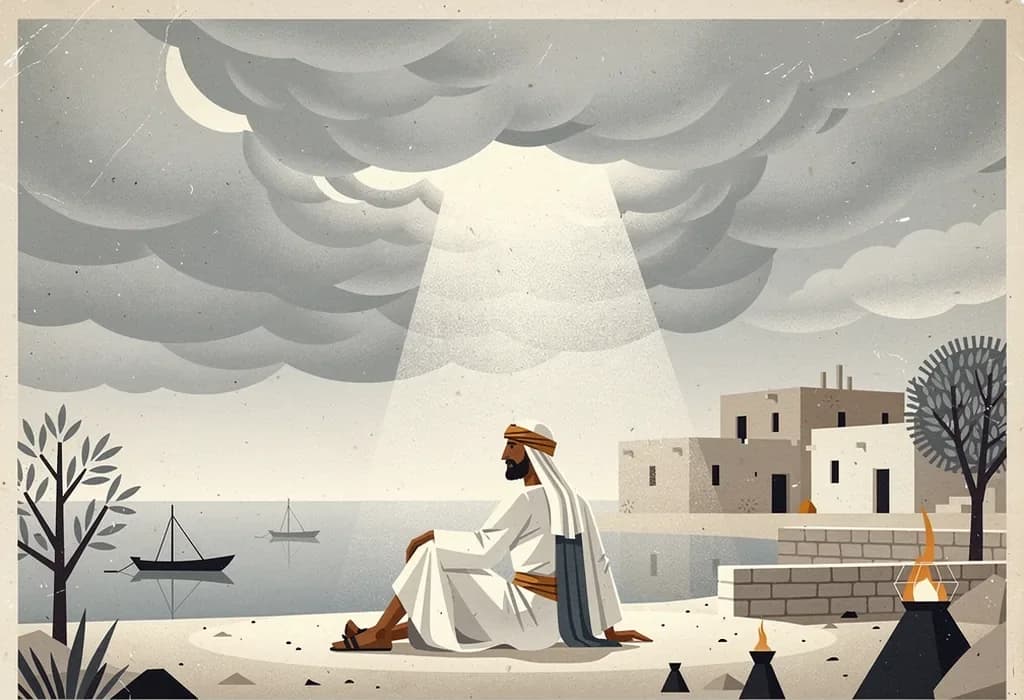
Dukkha: Suffering Dukkha is the ache built into a changing life. Job, scraping his sores with a piece of broken pot, has lost the padding that keeps this hidden from most people.
From the Buddhism reading below.
The same verse, read by one tradition.

BUDDHISM
Dukkha: Suffering Dukkha is the ache built into a changing life. Job, scraping his sores with a piece of broken pot, has lost the padding that keeps this hidden from most people. The path opens with the same admission he makes here: the pain is present, and dressing it up in explanations helps no one.
Bhaya: Fear Bhaya is the mind's flinch away from harm. His sorrows have already landed, yet the fear runs ahead to the ones still coming, so he suffers tomorrow's losses tonight. A man braced all day for a blow is worn out before the blow arrives.
Salla: The Dart Salla is the dart, and the teaching counts two of them. Boils and dead children are the first; being afraid of the boils is the second, and Job is the one throwing it. Removing the second does not heal the skin, it stops the wound from being reopened every hour.
Kamma: Deeds and Their Ripening Kamma is action bearing fruit, with no judge reading out a sentence. Job and his friends share one assumption, that his sores are a ruling on his character, and that assumption is doing more damage than the sores. The Buddha rejected the notion that every present ache is payment for an old crime; illness, weather, and other people's cruelty account for plenty of it.
Anattā: Not-Self Anattā finds no fixed owner sitting behind experience. An acquittal requires a defendant, and Job wants his day in court so badly that he goes on to cry out for an umpire to stand between him and God. Look for the man in the dock and you find shifting feelings, thoughts, and a body covered in sores, nothing that holds still long enough to be condemned or cleared.
Buddhism lens
What have you already lived through ten times that has not happened once?
Seneca wrote that we suffer more in imagination than in reality, since the mind runs ahead and lives through blows that may never arrive.
Rumi said to meet each arriving feeling at the door like a guest, even grief and fear, rather than bracing against the knock all day.
The Upanishads say the fear of loss belongs to the one who believes there is a separate self to lose, and that looking closely for that self is where the fear starts to come apart.

Free · No account needed
Lensightful opens every verse of the Bible through the traditions you choose. Save readings, ask a follow-up question, and get one verse a day.
Get Lensightful on the App Store Buddhism