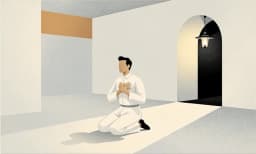
Mid-century illustration of Jesus teaching the crowd on a hillside above the sea

Matthew 5:32 · World English Bible

Matthew 5:32 Meaning But I Tell You That Whoever Puts

but I tell you that whoever puts away his wife, except for the cause of sexual immorality, makes her an adulteress; and whoever marries her when she is put away commits adultery.

What does Matthew 5:32 mean?

There is a teaching hidden beneath the letter of the law, and it concerns the whole field of human relationship. When you cast another out of your life carelessly, you do not simply end the entanglement.

From the Ego v. Being reading below.

Matthew 5:32 through 7 lenses

The same verse, read by 7 traditions.

EGO & BEING

Ego v. Being

There is a teaching hidden beneath the letter of the law, and it concerns the whole field of human relationship. When you cast another out of your life carelessly, you do not simply end the entanglement. You set suffering in motion, and it moves outward from one life into the next.

The old mind counts offenses and calls this justice. Yet every act committed in unconsciousness leaves a wound that goes on wounding, in her, in the next union, in all who are touched by it. What is asked is a deeper faithfulness, not to a rule but to the living presence in the one before you. When you honor that bond instead of severing it in reactivity, you stop handing your pain to others, and the spreading of harm comes to rest.

Ego v. Being lensGo deeper in the app

PSYCHOANALYSIS

Psychoanalysis

A marriage ended without facing the inner break becomes a wound that keeps repeating, not because the law demands it, but because the soul never paid its full debt. To cast off a partner without facing what you buried inside leaves the disowned part undigested, a snag that twists good intentions into harm.

The wife, set aside with no inner reckoning, is forced to carry a sin that was never hers alone. Her so-called unfaithfulness is not a moral failure but the quiet echo of a bond left unhealed. To marry her only repeats the mistake: taking what was broken without first paying the cost of the break. The 'cause of fornication' is no loophole for blame but a sign the bond was already poisoned by a refusal to see one's own hidden faults in the other.

Love loses its savor when it stops protecting the living whole and hardens into empty form. When the few who carry insight no longer hold the strain between opposites, and love becomes a legal act instead of a living change, everything decays. The joining of man and woman is not merely social. It is the hidden center of wholeness, a union meant to be lived, not legislated.

Psychoanalysis lensGo deeper in the app

CLINICAL PSYCHOLOGY

Clinical Psychology

The bond between two people is a real structure, and a man who dissolves it lightly does not merely end his own arrangement; he sets loose consequences that fall on her and on everyone drawn into the wreckage afterward. Your choices ripple outward into lives you told yourself were no longer any of your concern.

A marriage is a commitment made before reality itself, not a contract to be voided the moment the mood shifts. To treat it as disposable is to injure the person who trusted you and to weaken the very thing that made such trust possible. What you break does not stay broken for you alone.

Clinical Psychology lensGo deeper in the app

BUDDHISM

Buddhism

Paṭicca-samuppāda: Dependent arising

One man's choice to put away his wife does not stop with him, it sets her circumstances turning so that her next act is already half-shaped by his. Each deed leans on the one before, and the chain runs from his hand to her life to the next man who marries her. Nothing here stands alone, every link pulls the one after it into being.

Kamma: Action and its unseen return

He imagines the divorce ends his part, yet the strict word here lays the later wrong at his own feet, because he caused it. A stone dropped upstream muddies water far below, where the thrower cannot see. The doer owns not only the act but its reach, the whole fall of consequences it loosens.

Sīla: Ethical restraint that steadies a life

The hard line drawn here fences the marriage bond so it cannot be broken on a whim, holding the ground firm under those who stand on it. Restraint works as a wall that keeps a household from collapsing into harm. Where each person guards the vow, no one is pushed by another's carelessness into a fall.

Ahiṃsā: Not harming

To set a woman up for ruin, even without lifting a hand against her, still breaks the vow of doing no harm. The injury travels through her exposed position rather than a blow, yet it wounds all the same. Guarding another from the harm your choices might cause her sits at the heart of harmlessness.

Anattā: No fixed, owning self

The old habit treats a wife as property a man may keep or discard, as if she were his to spend. Loosening the grip of a self that owns and rules lets her be seen as a life in her own right, not an extension of his will. When the clutching 'mine' relaxes, another person stops being a possession and becomes a person.


CYBERNETICS

Cybernetics

A man who casts off his wife lightly does not end the matter at his own doorstep; the injury travels outward and reshapes the life and self-image of everyone it touches. What looks like a private, tidy exit sets loose consequences in others that he cannot call back once they are moving.

The point is that our closest bonds are not sealed compartments. The picture a person carries of himself is bound up with the people he is joined to, and a wound dealt there spreads. Treat a marriage as disposable and you deform far more than your own life.

Cybernetics lensGo deeper in the app

SUFISM

Sufism (Ghazali)

A man may discard his wife with the correct paperwork and walk off sure the harm ends at his own door, but the wound he opens spreads into her life and beyond it. He was taught to count only his own steps and never the ruin left in his wake. This is the pride that imagines its choices touch no one else.

The disease is a heart so centered on itself that it cannot see the damage it hands to others. The cure is to hold the weight of what a careless act does downstream, feeling responsible for the harm rather than excused by the rules. Carry the cost your choices place on another, and the cold hardness gives way to a caring uprightness.

Sufism (Ghazali) lensGo deeper in the app

SUFISM

Sufism (Ibn Arabi)

It seems the whole fault lands on the woman and those around her. But the reading turns back on the man who sent her off, showing that the harm he set loose keeps spreading through every life the broken bond touches. A tie cut carelessly does not end; it goes on tearing.

So the marriage is treated as one reality that binds the two, and breaking it lightly wounds far more than one person. God is met here in how seriously that union holds, teaching the man that the bond he thought was only his to end is a joining he is answerable to, because it reflects the deeper oneness he lives inside.

Sufism (Ibn Arabi) lensGo deeper in the app

Ego v. Being lens

Live Matthew 5:32 today

  1. Before you mute, block or quietly drop someone, give yourself one night. Ask whether you are ending something or just handing your anger somewhere else.
  2. When you are about to say the sharp line that would really land, say the plain true one instead. The sharp one keeps traveling long after the conversation ends.
  3. In a tense group chat or meeting, when the pile-on starts, be the one who does not add to it. Silence or one fair sentence is enough to break the momentum.

Whose pain am I still passing along without meaning to?

The same truth in other traditions

Dhammapada

Hatred answered with hatred never ends. The one who sets it down is the place where it stops.

Tao Te Ching 31

Even force used rightly is no cause for celebration. The one who has struck a blow should grieve it, because something living was broken.

Judaism · Mishnah Sanhedrin

Harm done to a single person is harm done to a whole world, because every life carries generations inside it.

Mid-century illustration of Jesus teaching the crowd on a hillside above the sea

Free · No account needed

Read all of Matthew 5 through 17 lenses

Lensightful opens every verse of the Bible through the traditions you choose. Save readings, ask a follow-up question, and get one verse a day.

Get Lensightful on the App Store