

Matthew 6:26 · World English Bible
Matthew 6:26 Meaning See the Birds of the Sky
See the birds of the sky, that they don’t sow, neither do they reap, nor gather into barns. Your heavenly Father feeds them. Aren’t you of much more value than they?
Matthew 6:26 · World English Bible
See the birds of the sky, that they don’t sow, neither do they reap, nor gather into barns. Your heavenly Father feeds them. Aren’t you of much more value than they?
Look at what lives without hoarding and is sustained anyway. The birds neither store nor strain against tomorrow, and their being provided for is held up as a picture of a mind that has stopped believing its life depends on its own anxious gathering.
From the Christian Psychology reading below.
The same verse, read by 11 traditions.
 Christian Psychology
 Ego v. Being
 Psychoanalysis
 Clinical Psychology
 Buddhism
 Cybernetics
 Sufism (Ghazali)
 Sufism (Ibn Arabi)
 Sufism
 Indian Guru
 Self-Help

CHRISTIAN PSYCHOLOGY
Look at what lives without hoarding and is sustained anyway. The birds neither store nor strain against tomorrow, and their being provided for is held up as a picture of a mind that has stopped believing its life depends on its own anxious gathering. What keeps them is the same Love that keeps a mind, once fear is set down.
So the barns a mind builds against the future are monuments to a lack that was never true. A mind of far greater worth than the birds spends its strength defending against a scarcity love does not know. To be fed like them is simply to trust that supply was never the mind's burden to manufacture alone.
Fowls of the air: minds that live without storing against fear, sustained by a Love they do not have to earn. Barns: the stores a mind piles up against tomorrow, the anxious hedging that assumes it must provide for itself. Father: the Love that already sustains all things, which a mind leans on the moment it stops hoarding.

EGO & BEING
The birds move through the day without a plan for it. They do not hoard against tomorrow or lie awake bargaining with a future that has not come, and still the life that made them holds them and feeds them. Their ease carries no laziness in it. What they lack is the anxious mind that turns each present hour into a worry about the next one.
A person carries that worry as the ego's constant insistence that survival depends on its scheming. Yet the same life that sustains a sparrow already moves through the one who watches it. When a person feels how held they already are, the frantic gathering loosens, and enough is quietly seen to be enough.

PSYCHOANALYSIS
Worry about daily bread is the ego admitting it has cut itself off from the deep, whole self.
Birds carry no barn as they fly, and in that image a person recognizes what they have not yet reached: a life anchored not in hoarding but in the steady center that makes you whole. The sky is not just a physical backdrop. Old imagination read the blue heaven as an outer mirror of an inner space, where the divine holds life up from within, and the inner picture of the soul places that same blue sky at the center, with the true self shining through every part of the person. Wholeness does not mean sitting back and doing nothing; it asks the ego to loosen its anxious grip and trust the source it never made.

CLINICAL PSYCHOLOGY
The birds are held up not as models of idleness but as evidence that the world is built to sustain the creatures that live rightly within it. They do their part, which is to fly and forage and be exactly what they are, and the deeper structure of things meets them halfway. Nothing hoards its way to security.
A person who trusts that reality is fundamentally supportive can act with courage rather than clinging in terror to every scrap. When you believe the ground beneath you will hold, you can walk forward instead of crouching over your barns, and that trust is itself part of what makes a good life possible.

BUDDHISM
"Sow, reap, gather into barns": the thirst that reaches past every satisfaction (taṇhā) turns "I need food today" into "I must fill every barn before I can rest." The rest never comes.
Underneath sits the fog that makes the gathering look wise (moha). The barn looks like security, the worry looks like prudence, and it cannot see that rust eats every stockpile.
"See the birds" is an imperative to stop and look at what is in front of you (sati), rather than next season's weather. The bird eating this morning is invisible to a mind deep in winter's calculations.
The bird takes what the day provides and carries nothing forward. "Your heavenly Father feeds them": it receives with no ledger-keeping, no audit of tomorrow (santuṭṭhi).
It seeks seed but does not brace against finding none, a mind still and upright in what is here (upekkhā).

CYBERNETICS
The birds live without a mental storehouse of dread. They do not run the tape of famine in the theater of the mind, and so they move through the day fed, light, unhurried. Worry is the picture a person paints of a future that has not come, and the body braces against that painted danger as if it were real.
A man who trusts that provision will meet him walks differently than one rehearsing loss. His self-image carries worth, and the success mechanism inside him works best when it is not jammed by fear. The sparrow is small and still cared for. A person who holds the same quiet certainty stops squandering strength on tomorrow, and the strength stays where the living is done.
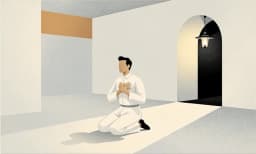
SUFISM
The anxious heart believes that unless it grips tightly and stores endlessly, nothing will be provided. A man ruled by this cannot rest, because he feels the whole weight of his survival rests on his own arms alone. He works not from duty but from fear.
Yet the birds are fed without barns, kept by a hand they never worry about. To watch them is to be shown that the same care reaches further and higher toward a person, who is worth far more. So the cure for the grasping fear is to remember you are held by One who already feeds the smallest things, and the heart that sees this loosens its clutch and grows calm.
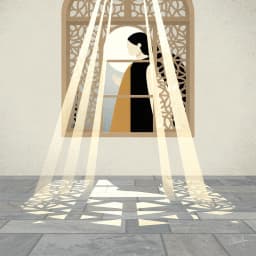
SUFISM
A bird is a small, plain mirror. It holds no barn and makes no plan, yet it is fed, and in that being-fed you can read a generosity that was pouring out before any creature thought to ask. What looks like the bird finding a seed is really the Provider showing His care in the shape of a wing and a beak.
If that same open hand keeps the sparrow, it is already turned toward you, and more fully, since a heart that can know the Giver reflects more of Him than a bird can. Watch the sky being fed, and you are watching your own keeping made visible.

SUFISM
Tawakkul: Trust in God Most people know the 2 a.m. version of this: lying awake running numbers. Al-Ghazali describes tawakkul as the heart leaning on someone dependable, and it begins when a person admits the outcome was never fully theirs. The clenching loosens first, that sense that if you stop watching for one hour, everything collapses.
If you trusted God as He deserves, He would feed you as He feeds the birds: they still go out every morning The Prophet said this, and he added that they leave empty at dawn and come home full. Trust of this kind doesn't mean sitting still; a person still shows up, still asks, still applies for the job. The shift happens inside, where the day stops feeling like it rests on one pair of shoulders.
Rizq: The share of provision assigned to each creature Sufis hold that every living thing has a portion coming to it, and one of God's names is the Provider. Rizq is that portion, and holding it changes what work feels like: going out to meet what is already on its way. A person still plans and saves, but the voice insisting everything depends on me loses its footing.
You chase what is already guaranteed and neglect what is asked of you: effort pointed the wrong way Ibn Ata Allah put it this way. He names a strange habit: working hard on what is already handled, while the thing in front of you sits untouched. Anxiety feels like effort, so it passes for effort. Seeing that frees up energy for the parts of life that do rest on you, like honesty and attention to the people nearby.
We have honored the children of Adam: the human being is held in high regard The Quran says this, and Sufis return to it constantly. Ibn Arabi holds that the human being was made to reflect all of God's qualities, so a person's worth is settled before they earn a thing. Money fears often sit on top of a quieter doubt about whether you matter enough to be looked after. That doubt is the one getting answered.

AWARENESS
Anxiety about tomorrow is the one thing a bird has been spared. It eats when hunger comes and sleeps when the sun goes, and existence has made no special arrangement for it, yet it is fed. Man alone invented barns, and with barns came the whole trembling about a future that never arrives.
Being of more value is not a compliment to the ego. Consciousness has come to a peak in man, and the same trust the bird lives without knowing can be lived here knowingly. That knowing trust is what no bird can have, and it costs nothing except the dropping of calculation.

SELF-HELP
So much suffering is manufactured inside, in a mind rehearsing scarcity that has not arrived and may never come. A creature with far less than a person carries no such weight, because it simply acts on what the day requires and trusts the larger order to hold.
The belief that life is against you and there will never be enough is a fence the mind mistakes for the horizon. Trade that story for one of abundance and resourcefulness, and the anxious grasping loosens its grip. When a person truly believes they will find a way, they act with a boldness fear could never allow, and life tends to meet that faith.
Christian Psychology lens
What am I storing up, and what fear is it really guarding against?
What bends is not broken, and what does not grasp is not emptied. Life keeps itself without being clutched.
The creatures live without storehouses or plans and are carried anyway. Watch them and the whole apparatus of hoarding starts to look like a story about lack.
Nature does not forget to supply what it made. The anxiety is not a measurement of real scarcity, it is just a habit of mind.

Free · No account needed
Lensightful opens every verse of the Bible through the traditions you choose. Save readings, ask a follow-up question, and get one verse a day.
Get Lensightful on the App Store