

Proverbs 31:7 · World English Bible
Proverbs 31:7 Meaning Let Him Drink
Let him drink, and forget his poverty, and remember his misery no more.
Proverbs 31:7 · World English Bible
Let him drink, and forget his poverty, and remember his misery no more.
This speaks to how heavy real suffering can be, so heavy that a person longs just to forget it for a while. It is an honest look at human pain, not an ideal to chase.
From the Protestant reading below.
The same verse, read by 14 traditions.
 Protestant
 Catholic
 Orthodox
 Christian Psychology
 Ego v. Being
 Psychoanalysis
 Clinical Psychology
 Buddhism
 Cybernetics
 Sufism (Ghazali)
 Sufism (Ibn Arabi)
 Hinduism
 Indian Guru
 Self-Help

PROTESTANT
This speaks to how heavy real suffering can be, so heavy that a person longs just to forget it for a while. It is an honest look at human pain, not an ideal to chase. Forgetting is only a brief relief, never a cure for what is broken.
God does not shame the hurting for their struggle. Yet the deeper answer to misery is not escape but hope, the kind of comfort that outlasts the moment. Real mercy meets people in their pain and points them toward a peace that lasts.

CATHOLIC
Compassion longs to lift a heavy burden, even for an hour. To wish that a suffering soul might forget his misery is to feel his weight as our own and want it lightened. This is the tender face of love, aching to give the crushed a moment's rest.
Yet lasting relief is more than forgetting. The deepest answer to human misery is not a cup that numbs but a mercy that heals, and while we ease pain wherever we can, we point the grieving toward the peace that outlasts every sorrow.

ORTHODOX
There is a tenderness in wanting a suffering person to have even a moment's rest from the weight they carry. To forget misery for a while is a small mercy offered to those the world has ground down. Compassion does not demand that the poor stay awake to every pain.
Still, a passing comfort is not a cure. The deeper hope is that misery would be lifted, not merely numbed. Kindness gives relief now while longing to see the causes of grief truly healed.

CHRISTIAN PSYCHOLOGY
The poverty and misery a mind carries are memories of guilt, the ego's ledger of every wrong it believes it has done or suffered. To forget them is not to bury the truth but to release a fiction, because those debts were entries in a dream and were never owed.
A mind heals when it stops rehearsing its own misery. Forgiveness lets the record go, not by pardoning something real but by seeing that the wrong was a figure in sleep. When the ledger closes, what remains is the innocence that was always there beneath the tally of remembered pain.

EGO & BEING
The mind holds suffering in place by rehearsing it, returning again and again to the story of lack. Poverty here is not only empty hands but a psychological weight, the constant remembering that keeps yesterday's pain alive in this moment.
To forget misery, even briefly, is to be released from that repeating story. The truest relief is not another substance but presence itself, which sets down the past because the past exists only as thought. When the mind stops carrying its old wound forward, the suffering it kept alive simply loosens its grip, and there is peace in the moment as it is.

PSYCHOANALYSIS
There are burdens so heavy that a brief forgetting is a genuine kindness, not an escape to be scorned. The one worn down by lasting hardship is not asked to feel every ounce of it at all times. Sometimes the humane thing is simply relief.
This is not a cure, and it does not pretend to be. It is a pause in suffering for someone who has suffered enough. To let the poor and grieving set down their misery for a while is to recognize that not every pain must be fully faced in the same hour it is felt.

CLINICAL PSYCHOLOGY
There is a mercy in this, and also a warning. A man crushed by suffering will reach for anything that dulls the edge of his awareness, and who can blame him? To be conscious of your own poverty, your own failure, your own smallness, is a genuine agony, and oblivion offers relief. That is exactly why it is so dangerous.
The drink lets him forget, but forgetting is not the same as repair. His poverty remains in the morning, only now he is weaker, and the ground he must climb is steeper. Real relief comes not from erasing the pain but from confronting the disorder that produced it. Numbing the signal keeps you comfortable while your life quietly falls apart.

BUDDHISM
Vibhava-*taṇhā*: Craving for non-existence:** The thirst to blot out and be rid of painful being. Forget his poverty, remember his misery no more, this is that thirst exactly, the wish for the ache simply to stop. Drink offers the shape of that vanishing, a door to a room where nothing hurt
Soka: Sorrow, grief: The inward burning of loss and lack. Forget his poverty and remember his misery no more name that grief plainly, the heat a heavy heart carries all day. Drink lays a wet cloth on the burn without putting out the fire.
Moha: Delusion: The clouding of clear sight. To forget by drinking is to pull a curtain over the trouble rather than see it, dimming the mind until the pain blurs. The debt still stands behind the curtain, unpaid.
Anicca: Impermanence: The truth that nothing stays, not even misery. His grief was already passing on its own, changing hour by hour like weather. Drink promises to end it, yet relief was always coming through the plain turning of things.
Nirodha: Cessation, the ending of suffering: The true stilling of pain at its root. Forgetting misery in the cup is a thin copy of this ending, gone by morning when the ache returns. Craving quenched is misery that never comes back, and no bottle reaches that deep.

CYBERNETICS
Forgetting misery for a night can be a mercy, yet the mind keeps whatever picture it rehearses most, and a man who only replays his poverty will keep on living inside it. The images we return to in imagination become the walls of the life we feel trapped in.
Real relief is not merely blotting out the old scene but painting a new one clearly enough to believe. When a person stops picturing himself as poor and begins seeing himself as capable, the automatic mechanism starts moving him that way. Escape numbs the pain for an evening. Changing the inner picture is what actually changes tomorrow.
SUFISM
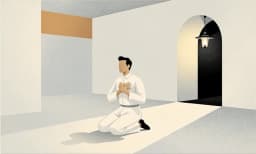
To wish a suffering man a moment's forgetting is an act of tenderness, seeing his pain and longing to lift even a little of it. This is the heart turned outward, feeling another's misery as if it were near.
The disease that keeps a man from such kindness is a soul absorbed in itself, too full of its own concerns to feel another's. The cure is to let the suffering of others reach you and move you to relieve it. When a man's heart softens toward the poor and the grieving, he begins to want their ease as naturally as he once wanted his own.

SUFISM
The gift is a moment of forgetting, a brief release for a person crushed by want. Even this small mercy is a faint taste of the great forgetting, the moment when a soul loses itself in the nearness of God and its old wounds simply stop mattering.
Every real comfort is a window, small or large, onto the same peace. The cup handed to a poor man says, without a word, that his misery is not the final truth about him. Here God is showing Himself as the ease that meets a person at the bottom, and the sufferer learns that the sorrow filling him now is not the whole of who he is.
HINDUISM
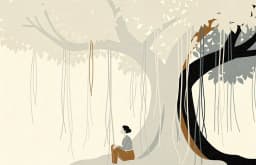
Shiva is called the destroyer, but what he destroys is illusion. He drank the world's poison and held it, turning blue in the throat. He shows that even the darkest state can be met and dissolved. Misery, in the deep teaching, is not the final truth about you. It is a passing cloud over a sky that was always clear.
To drink and forget misery is a picture of relief from a weight that felt endless. The poverty and the pain both fade. What seemed permanent turns out to be a mood.
A thought arises: "I have always been this miserable." The mind grabs it. Old grooves, called samskaras, stretch the misery across your whole life until it feels like your name. But watch closely. The misery rose one day and will fade another. You were here before it and will remain after. What forgets its poverty is remembering something older: your own untouched nature. That which never was poor and never suffered is Shiva, awareness, the Atman, the sky behind every cloud.

AWARENESS
The mother's counsel to numb the perishing points to the whole strategy of the sleeping mind. Poverty, misery, the ache of what is missing: these belong to the false center that measures itself against what it lacks and finds itself wanting. The wine is anything the mind reaches for to blur that ache, to forget for an hour that it is not at rest.
But forgetting is not freedom. To drown the wound is to keep it. The one who drinks to forget is still being lived by the very misery he flees. Turn instead and simply watch the ache, without running. In that watching, without any wine, the one who was suffering is seen to be only a passing thought, and the awareness holding it was never poor at all.

SELF-HELP
See how much of suffering lives in memory and meaning, not just in circumstance. A man in deep pain replays his losses until the replaying itself becomes the wound. Sometimes the kindest thing is a moment of forgetting, a pause from the story that torments him.
But a mother offering this to the broken is warning her son to keep it far from himself. Escape is medicine for the one who has hit bottom and poison for the one still holding the reins. The relief that heals a dying man would slowly destroy a king who must stay awake to his purpose.
Protestant lens
What are you trying to forget, and what would it take to face it with someone beside you?
Start by admitting plainly that there is suffering, without dressing it up or looking away. Honesty about pain is where any real healing begins.
Grief is real, and pretending otherwise only pushes it underground. Feel it fully, then let time do its slow work rather than numbing your way past it.
The wound is where the medicine goes in. What you keep running from has something to give you if you can stay with it.

Free · No account needed
Lensightful opens every verse of the Bible through the traditions you choose. Save readings, ask a follow-up question, and get one verse a day.
Get Lensightful on the App Store