
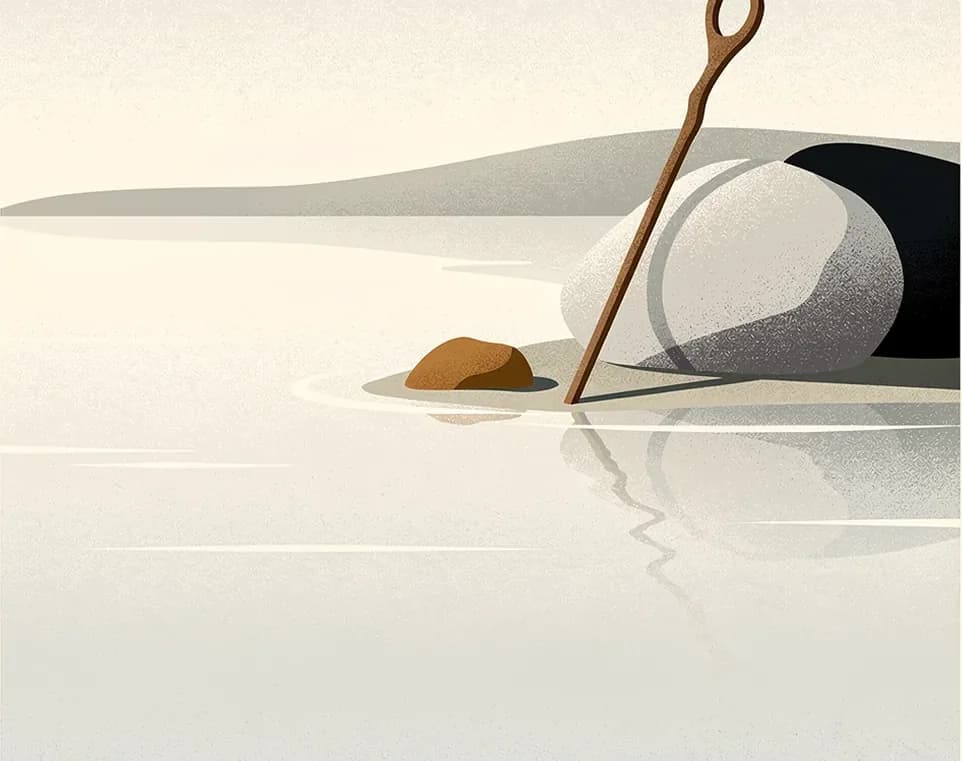
Psalms 46:10 · World English Bible
Psalms 46:10 Meaning Be Still
“Be still, and know that I am God. I will be exalted among the nations. I will be exalted in the earth.”
Psalms 46:10 · World English Bible
“Be still, and know that I am God. I will be exalted among the nations. I will be exalted in the earth.”
The stillness commanded means letting the hands drop, not the calm of a settled mind. Knowing follows that release, and the one speaking is the God of Jacob, refuge of His people while nations rage.
From the Protestant reading below.
The same verse, read by 11 traditions.
 Protestant
 Ego v. Being
 Manifestation
 Esoteric
 Psychoanalysis
 Clinical Psychology
 Buddhism
 Cybernetics
 Sufism
 Indian Guru
 Self-Help
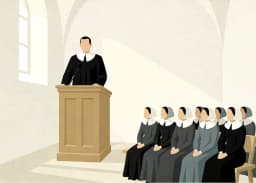
PROTESTANT
The stillness commanded means letting the hands drop, not the calm of a settled mind. Knowing follows that release, and the one speaking is the God of Jacob, refuge of His people while nations rage. Hands busy securing an outcome keep a person from seeing whose hands hold it.
The lifting high is His own act, promised and not yet seen in full: high among nations, high over the earth. Their rage will not decide it, and His people's trust does not grant Him the height. Even people who never agreed that He rules will end up showing it.

EGO & BEING
Stillness is not merely the absence of external noise. It is the cessation of the relentless thinking mind. In that inner space of silence, you step out of the illusion of time. You do not come to know God conceptually as an object of knowledge. Rather, you recognize the divine presence as the very essence of who you are, the timeless 'I am' beneath all forms.

MANIFESTATION
Stillness here is not silence for its own sake. Stillness is the moment a person stops wrestling with the outer picture and rests in the awareness that runs the whole show. That awareness, the plain sense of being, is what the old writers called God. Nothing stands beside it.
When a person grows quiet and knows this, the awareness lifts itself into view. It shows its hand among the outsiders, the doubting parts of the mind, and it shows its hand in the earth, the visible facts of the day. The exalting is no favor granted from far off. What already sits at the center of a person simply takes its rightful place once the noise dies down. Awareness comes first, and the world it wears follows after.

ESOTERIC
Stillness is the condition in which the divine center is found, because the racing surface mind drowns out the one presence seated within. When the inner chatter falls quiet, the pure awareness at the core of a person is recognized as God, the very being that names itself as God from inside, not far off in a sky but present in the body's own ground. The heathen are the unconverted, animal levels of the self, and the earth is the body itself. The divine is lifted up and made supreme even there, among the lowest drives and in the physical frame, once stillness lets it be known.
When a person quiets the noise of thought, the living awareness at the center is recognized as the divine, ruling even in the body and its lowest appetites.
The heathen: the unconverted, animal levels of the self, the drives not yet brought under the inner presence The earth: the physical body, the ground in which the divine is lifted up and made supreme

PSYCHOANALYSIS
Be still, the voice says, and only then will you know. The knowing does not come through more effort or louder striving. It comes when the restless surface of the mind finally grows quiet.
We spend our days managing and controlling, sure that grasping harder will bring understanding. But the deepest reality within cannot be seized that way. It shows itself only in stillness, when the anxious self lets go and stops trying to run everything. In that quiet a person meets the vast center that was always there beneath the noise, and comes to recognize a greatness far larger than the small self that had been so busy holding on.

CLINICAL PSYCHOLOGY
There is a frantic quality to a man who believes everything depends on his own striving, as though the whole order of being would collapse if he stopped moving for a moment. The instruction to be still is a demand that he stop and confront something larger than himself, an order he did not author and cannot control. In that stillness he is asked to recognize that he is not the highest thing, and that recognition is not a defeat but a relief.
To know that there is something above you is to be freed from the exhausting delusion that you must carry the world alone. You quiet down, you look up, and you finally accept your proper place within an order you did not make.

BUDDHISM
Read as a meditation cue, "Be still, and know" already names the two wings of the path, calm first and then insight.
Samatha: Calm Samatha is the stilling of a stirred-up mind. "Be still" is where every teacher of calm starts, letting the churn settle the way mud sinks to the bottom of a shaken jar until the cloudy water runs clear again. Nothing can be seen while the water still swirls, so growing quiet always comes before any knowing.
Vipassanā: Insight Vipassanā is clear seeing. "And know" is what opens the moment the water turns clear, the settled mind looking straight down to the bottom and seeing things exactly as they sit. "Be still, and know" keeps both halves in one breath, steady the mind first, then look with it.
Nibbāna: The unconditioned "That I am God," a Theravādin reads as a pointer past any maker on a throne toward the unmade and the deathless. Nibbāna is that ultimate, an unconditioned peace never born and beyond all dying. Coming to know it firsthand, tasting it for yourself rather than hearing of it, is why a person grows still at all.
Anattā: Not-self Anattā is the emptiness of any fixed self. "I will be exalted" pictures no small self climbing higher, only the self stepping aside, and once your own "I am" falls quiet, the ego you assumed shows up hollow, no owner seated behind the eyes. The "I" then lifted high belongs to no private person, which is how it can be raised in every corner of the earth.
Upekkhā: Equanimity Upekkhā is the balance that praise and blame cannot tip. Setting the stillness "among the heathen" drops it into a world of raging nations, where the even mind meets their fury like rain on a wide roof, letting it run off without shifting an inch. Being exalted "in the earth" turns into this steady calm reaching every corner, unmoved whether the ground underfoot is friendly or hostile.

CYBERNETICS
The mind does its best creative work not in frantic striving but in stillness, when the anxious effort finally lets go. A man who grips the wheel too tightly blocks the very success mechanism meant to carry him, like a swimmer who thrashes and sinks. There is a wisdom that works below the noise, and it needs a quiet mind to reach us.
A nervous patient once found his answer only after he stopped chasing it. Sit still long enough to feel that something larger is already at work, and the solution you were straining for arrives on its own.

SUFISM
Rest yourself from managing what has already been handled: the scrambling stops Ibn Ata Allah wrote that line for students who could not stop planning. When everything around a person feels unsteady, the first instinct is to grab the controls and start arranging outcomes. That grip burns through a person's strength and rarely changes much. Loosening it is where stillness begins, before any calm feeling arrives.
Tawakkul: Trust in God Al-Ghazali describes trust as putting your whole weight on someone who will not move. The trouble does not vanish the moment a person trusts; the danger sits exactly where it sat before. The change happens inside, in the running commentary that stays up at night rehearsing outcomes nobody controls. Trust hands the ending over and frees a person for the small part that belongs to them.
Maʿrifa: Knowing God firsthand The tradition separates knowing about something from tasting it, like reading about honey versus eating it. Hearing that God is in charge rarely settles anyone in a bad week, because the words stay on the surface. Firsthand knowing arrives in the quiet, once a person stops arguing with the situation long enough to feel who is holding them. The quiet comes first, and the knowing settles in after.
Tawḥīd: God's oneness For al-Ghazali, oneness means seeing one hand at work behind events, however many hands appear to be moving. Governments, movements and powerful people each believe they are writing the story themselves. Someone who has seen otherwise treats all of them as borrowed and short-lived, which drains most of the dread out of them. The noise stays loud, but it stops looking like the thing deciding the future.
Greatness is My cloak and majesty My robe: no one else wears them A saying of the Prophet, with God speaking in the first person. Powerful people spend their lives trying to look untouchable, and something in the rest of us half believes them. The saying draws a line: that height belongs to one, and everyone else is wearing borrowed clothes. Seen that way, the figures who looked enormous shrink back to their size, and the fear of them loosens.

AWARENESS
Stillness is not something to be practiced; it is what remains when the mind stops its mechanical running between what happened and what may happen. And in that gap, knowing arrives without a knower gathering information. The divine is not met as an object standing before you. It is recognized as the awareness that was watching all along, which is why the command to be still and the promise of knowing are one movement, not two.
Greatness spreading through the nations and the earth points to the same silence widening outward. A man who falls quiet inside stops fighting the world, and the world stops being an enemy. Nothing has been conquered. The one who needed to conquer has simply dissolved.

SELF-HELP
In the middle of chaos, the most powerful thing a person can do is stop thrashing and get still. Stillness is not weakness; it is the state where clarity returns, where the noise drops and a person can finally hear what actually matters. The scattered mind reacts, the settled mind decides.
Come back to something steadier and larger than the crisis, and the panic loses its grip. Strength is found in the pause. When a person quiets the storm inside, they see the way through the storm outside.
Protestant lens
What are you holding so tightly that you cannot see who else might be holding it?
Stop forcing and things settle on their own. Grasping at an outcome is exactly what keeps it out of reach.
Do the work in front of you and release your grip on how it turns out. The letting go is not giving up. It is where the peace comes from.
You cannot see the bottom of a pond while you are stirring it. Put your hands down and the water clears itself.

Free · No account needed
Lensightful opens every verse of the Bible through the traditions you choose. Save readings, ask a follow-up question, and get one verse a day.
Get Lensightful on the App Store