
Bible symbol · 6 lenses
What Does Name Mean in the Bible Read through 6 lenses
The memory of the righteous is blessed, but the name of the wicked will rot.
The memory of the righteous is blessed, but the name of the wicked will rot.
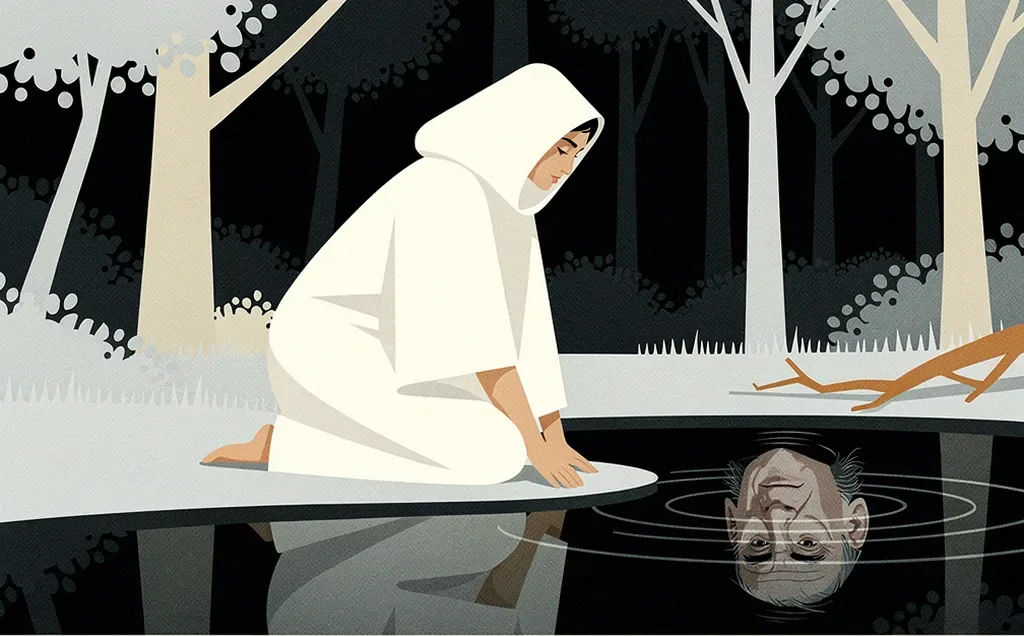
Name: the identity the mind builds for itself, either a memory of love that endures or a self made of guilt that dissolves like a dream figure
Christian Psychology lens · Proverbs 10:7
“In that day you will ask me no questions. Most certainly I tell you, whatever you may ask of the Father in my name, he will give it to you.
To Eber were born two sons: the name of the one was Peleg, for in his days the earth was divided; and his brother’s name was Joktan.
to the assembly of God which is at Corinth, those who are sanctified in Christ Jesus, called saints, with all who call on the name of our Lord Jesus Christ in every place, both theirs and ours:
Same symbol, 6 ways of seeing it. Tap one to jump to it.

Do not love the world or the things in the world. World here is not the planet, the trees or the people. It is the egoic realm of identification with form: looking for who you are in what you have, what you feel and how you are seen.
The world is passing away, and its desires with it. This is simple impermanence of form. Everything the three drives reach for is already dissolving, which is why none of them can ever satisfy.
But whoever does the will of God remains. What remains is whatever was never identified with form: the awareness beneath the wanting, the presence that does not need anything to be complete.
At Ophrah, Gideon's son Abimelech takes silver from a pagan temple, hires a gang of empty men, and kills his seventy brothers on one stone so that one man can stand where many stood. Where the hunger for power takes over, love is already gone; and a mind that wants a single ruling idea has to kill off everything in itself that disagrees. One brother, the youngest, hides and lives. Something small always survives the purge, and it comes back later as a voice.
The men of Shechem crown Abimelech by the old oak, and Jotham climbs Mount Gerizim and shouts a story down at them. The trees go out to find a king. The olive refuses: it will not give up the oil that honors God and people. The fig refuses: it will not trade away its sweetness. The vine refuses: it will not leave its wine. Whatever carries real substance of its own has no need of a crown. The craving for the throne belongs to what is hollow. So the trees ask the thornbush, which has no fruit and no shade worth sitting in, and it agrees instantly, invites them under its nothing, and threatens that fire will come out of it and burn even the cedars. A small thing swollen with a role too big for it stops being itself and becomes the role, and the role burns.

Second night of wine in the queen's rooms. The king is relaxed and full, Haman is sitting right there smiling, and the only person who knows what the evening is actually about is the woman between them. The king asks again what she wants and offers her half the kingdom, and instead of grabbing the gift she asks first for her own life. That is not selfishness. She could have played the humble servant and pleaded for her people while keeping herself hidden and safe, but a person who will not value their own being has no ground to stand on when they speak. You treat yourself like someone you are responsible for helping, and then you can stand up straight and say something true.
The king, who sealed that order himself and never bothered to read it, wants to know who would dare, and where he is. Evil is never a fog. It has an address. So she lifts her hand and points across the table at the man sharing her bread and calls him what he is, the enemy, this wicked Haman. And Haman is suddenly terrified, because that is what bullies do when someone finally speaks straight at them.

What a loving mind leaves behind is a blessing, because forgiveness is the only thing that endures once the dream of separation is set aside. The memory of a mind that saw innocence stays alive in others as peace, for love creates nothing that can decay, and what it gives is simply true.
The identity the ego builds, by contrast, falls apart on its own. A self assembled out of guilt and attack has no reality to hold it together, so it dissolves the way a figure in a dream fades when the dreamer wakes, leaving nothing real behind.
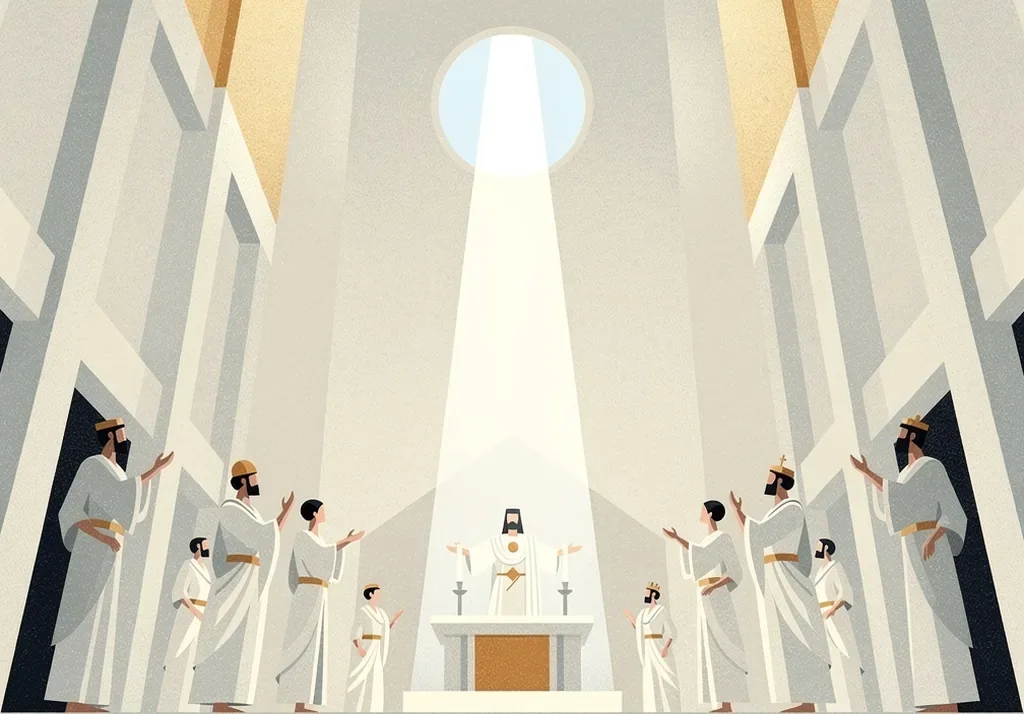
That day is the state of union in which the questioning outer mind falls silent, having nothing left to ask because it has become one with what it sought. To ask in the name is to ask from the level of the inner Christ-consciousness, using its nature, not merely repeating a word. What is asked from that height is given, because at that level the asker and the source are no longer divided. When a person prays from the higher self rather than the lower, the answer is already inside the asking.
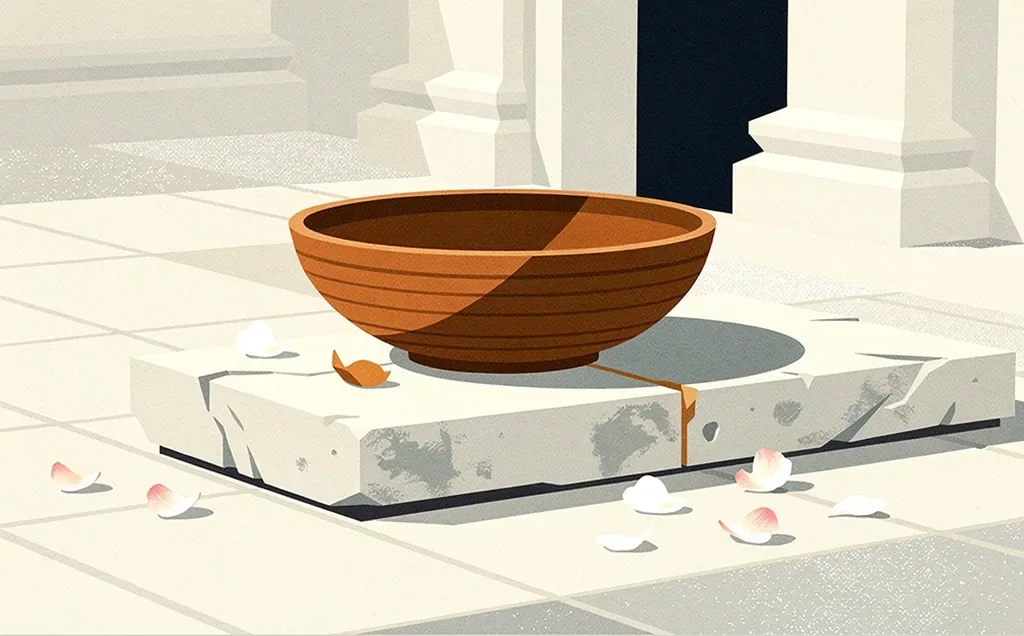
The brothers who sold Joseph now beg the very man they wronged to release the trespass. Forgiveness here is the choosing to let the old harm dissolve rather than collect on it, though every right to collect is his. He holds the whole account in his hand and opens his fingers.
Joseph does not answer their fear with the payback they expect. In him the grudge has already died, so there is nothing coiled and waiting to strike back. Like a well that has run clear, no bitterness rises when the bucket goes down.
His weeping is not injury reopening but a heart moved by the terror of frightened men. He feels their dread of him and it softens him toward them rather than hardening him. The strong brother's tears fall for the weak brothers who tremble before him.
Years of slavery and prison have worked on Joseph until the wound has become the thing that can now feed a whole family. What began as betrayal has slowly turned, like fruit that needed the long season, into the power to save. The evil done to him has ripened into good he can pour back on them.
· · ·
The brothers who sold Joseph beg the man they wronged to release the trespass. Letting the old harm dissolve rather than collecting on it (khama) is chosen while every right to collect is still his. He holds the account in his hand and opens his fingers.
He does not answer their fear with the payback they expect. The grudge has already died in him (averā). Nothing waits coiled to strike back.
Slavery and prison worked on him until the wound ripened by long stages (anupubbī) into the power to save a whole family.
One line per lens.
In Lensightful, names, numbers and symbols light up in the text. Tap one to see what it means in each tradition you choose.
Get Lensightful on the App Store