
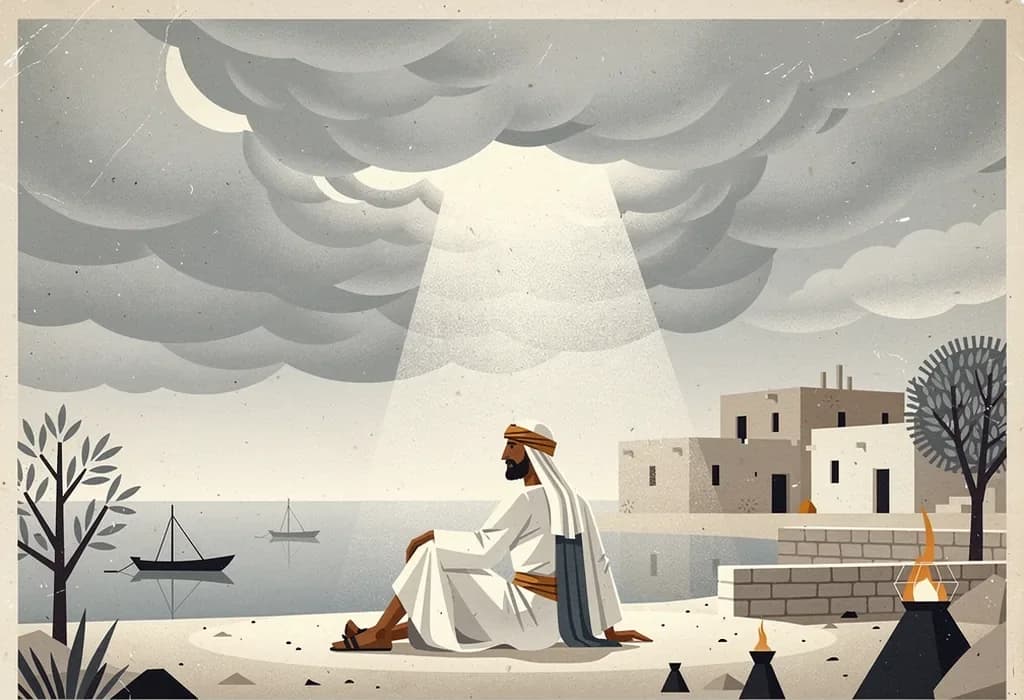
Job 3:25 · World English Bible
Job 3:25 Meaning For the Thing Which I Fear Comes
For the thing which I fear comes on me, That which I am afraid of comes to me.
Job 3:25 · World English Bible
For the thing which I fear comes on me, That which I am afraid of comes to me.
Fear is itself a creative act. To be afraid of a thing is to imagine it vividly and to feel it as already touching you, and that inward feeling is the seed from which the outer event grows.
From the Manifestation reading below.
The same verse, read by 3 traditions.

MANIFESTATION
Fear is itself a creative act. To be afraid of a thing is to imagine it vividly and to feel it as already touching you, and that inward feeling is the seed from which the outer event grows. Job speaks plainly here about a law that runs both ways: what a person dwells on with feeling arrives, whether he wants it or not. The dread did not summon bad luck from outside. It supplied the very picture that hardened into fact.
A settled fear is not weaker than a settled hope; it works the same machinery in the other direction. The awareness in you that says I am, the one power that answers every assumption, cannot tell a feared state from a wished one. It gives back whatever is genuinely felt to be so. That is why a person keeps meeting the thing he rehearsed in dread.

BUDDHISM
## Job 3:25: "For the thing which I greatly feared is come upon me, and that which I was afraid of is come unto me."
Bhaya: Fear Bhaya is the mind's flinch from harm. He "greatly feared," and that fearing already bruised him while the danger was still only ahead. A body braced for a punch aches before any fist lands, and that ache was his to carry long before the blow. By the time the thing arrived, he had already suffered it a hundred times in the dark.
Anāgata: The Future Anāgata is tomorrow, the day not yet arrived. Job's dread lived entirely there; he "was afraid of" what was still only possible, and by fearing it he moved into that dreaded day ahead of time. Rehearsing a funeral for someone still breathing, weeping now over a grief with no cause yet, is exactly where he stood. Among all the tomorrows that might have come, he had already chosen to live inside the darkest one.
Papañca: Runaway Thinking Papañca is thought breeding more thought, spilling past the plain fact. That "greatly" gives it away: a single worry branched into a hundred pictures of ruin, each feeding the next. One small crack races across a whole windshield, and his mind split along the same widening lines. Every new branch made the disaster feel more certain, until fearing it and expecting it became the same thing.
Vibhava-taṇhā: Craving for It Not to Be Vibhava-taṇhā is the thirst for a thing to not exist. Beneath "the thing which I greatly feared" sits a clenched demand: let this never reach me. Wanting to hold back the tide with bare hands is that craving wearing a frightened face, and the tide came in over him regardless. The wanting could not move the water an inch; it only wore him out before the flood.
Appiyehi sampayoga: Union with the Disliked Appiyehi sampayoga is the ache of being tied to what you cannot stand. "Come unto me," and there it is: the dreaded thing has crossed his threshold and sat down to stay. The guest he barred the door against now lives in his house and eats at his table, and every hour he must share the room with it. There is no lock left to turn against a thing already inside.

SELF-HELP
Fear and faith run on one faculty. Both are total certainty about a future that cannot be seen, and only the aim differs. Someone who rehearses the loss they dread is not short on faith, they are already using it, pointed at what they do not want.
Certainty of that kind sets the state, the state narrows what a person can even see, and the narrowed view produces the small actions that arrange the very outcome they swore to avoid. Nothing has to be acquired here, only turned around. Left aimed backward, a life gets spent building in detail the thing it was running from.
Manifestation lens
What have I been rehearsing in dread as if practice would keep it away?
What we dwell on, we become. The mind rehearses a thing until the thing wears the mind's shape, and the life follows.
We suffer more in imagination than in reality. The dreaded thing is lived through many times before it ever appears, if it appears at all.
The man who fears the shadow runs from it, and the running is what exhausts him. The shadow never had any power of its own.

Free · No account needed
Lensightful opens every verse of the Bible through the traditions you choose. Save readings, ask a follow-up question, and get one verse a day.
Get Lensightful on the App Store Manifestation
 Buddhism
 Self-Help