
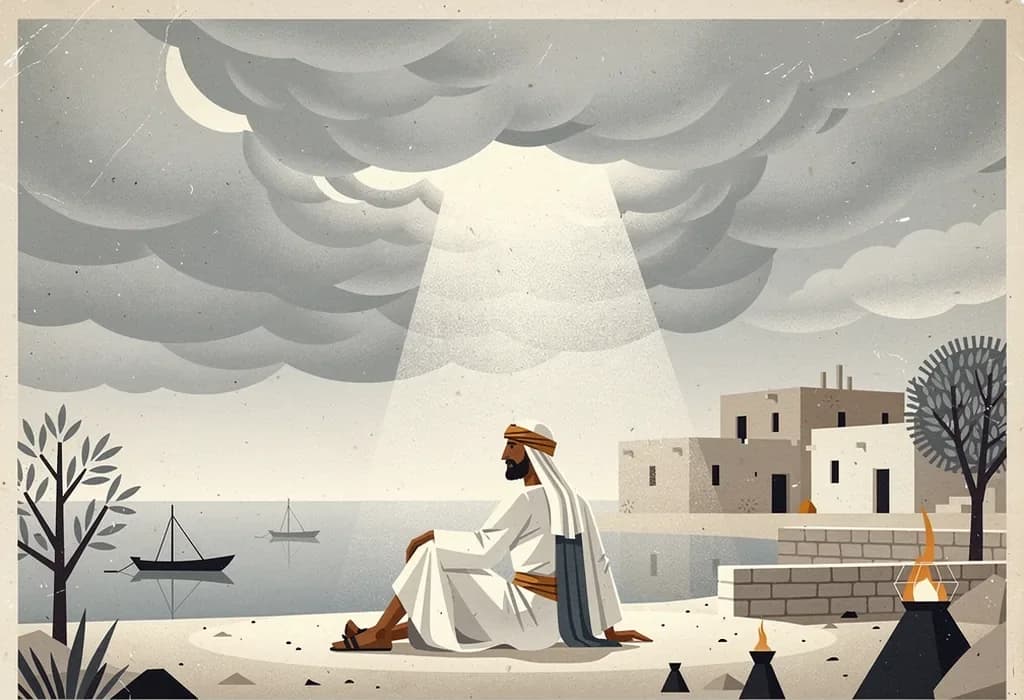
Job 34:19 · World English Bible
Job 34:19 Meaning He Doesn’t Respect the Persons of Princes
He doesn’t respect the persons of princes, nor respect the rich more than the poor; for they all are the work of his hands.
Job 34:19 · World English Bible
He doesn’t respect the persons of princes, nor respect the rich more than the poor; for they all are the work of his hands.
God does not look at your appearance or your wealth, but at your hearts: the measure is inward A saying of the Prophet, aimed at people who sorted each other by clothes and money. Around someone impressive a person shrinks or performs, and around someone with less the same person quietly swells.
From the Sufism reading below.
The same verse, read by one tradition.

SUFISM
God does not look at your appearance or your wealth, but at your hearts: the measure is inward A saying of the Prophet, aimed at people who sorted each other by clothes and money. Around someone impressive a person shrinks or performs, and around someone with less the same person quietly swells. The saying moves the measure to the one place money and position cannot reach, what a person is when nobody is watching.
Faqr: Poverty, the need every creature carries The Quran tells people flatly that they are the poor ones and God is the rich. Someone with a full bank account and someone with none both need air, sleep, and health, and neither arranged any of it. Held against that, the distance between them shrinks to almost nothing.
Tawḥīd al-afʿāl: seeing a single doer behind everything that happens Al-Ghazali describes a stage where a person traces every event back to one source. Nobody picked their own birth, face, health, brains, or the century they landed in. When someone follows their advantages back far enough, those advantages stop feeling like something they earned.
Kibr: Pride, the swelling that comes with rank Al-Ghazali writes about pride as the illness that makes a person look down from above. It builds quietly: a good position, then the habit of being deferred to, then the sense that ordinary rules bend for you. Correction starts to feel like an insult from someone smaller, and the door a person could learn through swings shut.
ʿUbūdiyya: Servanthood, the standing shared by everything made Sufis treat being a servant as the highest place a person can stand. Under a title, a fortune, or nothing at all, one fact holds steady: someone was made and did not make themselves. A person who settles there stops chasing a rank other people hand out, and treats the important and the overlooked the same way.
Sufism lens
Who did I shrink around this week, and who did I quietly feel taller than?
The Tao works like a bent bow, taking from what has too much and giving to what has too little. It does not favor the one who is already full.
Nobody is noble because of birth, family, or money, but only because of how they actually live. The labels people sort each other by do not decide anything.
Epictetus, born into slavery, taught that rank and fortune are costumes handed out by chance. What a person does with their own choices is the only thing that measures them.

Free · No account needed
Lensightful opens every verse of the Bible through the traditions you choose. Save readings, ask a follow-up question, and get one verse a day.
Get Lensightful on the App Store Sufism