

Luke 9:23 · World English Bible
Luke 9:23 Meaning He Said to All
He said to all, “If anyone desires to come after me, let him deny himself, take up his cross, and follow me.
Luke 9:23 · World English Bible
He said to all, “If anyone desires to come after me, let him deny himself, take up his cross, and follow me.
Deny himself uses the word for disowning a person. Turned inward, it means disowning your own claim to run your life.
From the Protestant reading below.
The same verse, read by 9 traditions.
 Protestant
 Orthodox
 Christian Psychology
 Ego v. Being
 Esoteric
 Clinical Psychology
 Buddhism
 Sufism
 Indian Guru
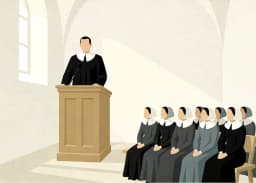
PROTESTANT
Deny himself uses the word for disowning a person. Turned inward, it means disowning your own claim to run your life.
Condemned men carried the crossbeam to the execution ground, and shouldering it meant the sentence was already passed. Daily spreads that march across every ordinary morning. The condition governs coming after him and what that costs, not the rescue, which he supplies. He set the terms for anyone who wants them, not for a trained few. Both the denying and the carrying happen behind him, on a road he chooses, which is what keeps this from being self-punishment.
ORTHODOX
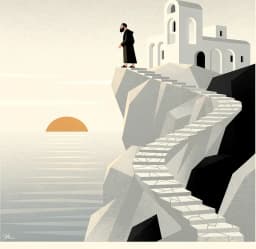
Denying yourself means breaking with the small tyrant inside that insists on having its own way. The person God made is not the enemy; the appetite to be your own god is, and when that appetite goes quiet the real person underneath is finally free to move.
Being handed suffering is not the same as taking up a cross. It gets picked up, on purpose, which makes it a decision offered again every morning rather than a weight dropped on you. And it is carried toward something: the road runs into union with God, so the daily dying is the slow beginning of a life that does not end.

CHRISTIAN PSYCHOLOGY
The self to be denied is not the true one but the ego, the whole belief that one is a separate body with private interests to defend. To deny it is not to punish oneself but to withdraw belief from the thing that was never real, and this is daily work, because the mind that chose love in the morning is asked to choose it again each time the day tempts it to see an enemy.
The cross carried daily is that steady willingness to overlook attack rather than return it, to meet each seeming injury with forgiveness instead of blame. It is called a cross only because the ego feels the laying down of grievance as a loss, when in truth it is the one release, and to follow is simply to keep choosing the teacher who leads out of fear.
Cross: the daily willingness to forgive rather than condemn, felt as loss by the ego and known as freedom by the mind that carries it

EGO & BEING
The self that must be denied here is not your true being. It is the accumulated structure of thought, memory, and reaction that you have mistaken for who you are, the ego that constantly needs more, that resists what is, that keeps you at war with the present moment. Denying it does not mean punishing yourself. It means no longer feeding it your attention.
The cross taken up daily is the ongoing willingness to let that structure die a little each day rather than defend it. This is not a single dramatic sacrifice but a quiet, repeated surrender, a daily choosing of presence over the demands of the thinking mind. It has to happen daily because the ego rebuilds itself daily, and so the practice of releasing it must be just as constant.

ESOTERIC
Denying the self is the daily setting aside of the small personal mind so the christ self within can rise into its place. The cross a person takes up is the body itself, the crossbeam of flesh every one already carries, and to lift it daily is to bear the physical nature consciously instead of being dragged by it.
This union comes not by begging to be rescued from outside but by the mind loosening its grip on its own separate wanting. Following is what happens when the ordinary self steps down and the higher self within moves forward, so the person becomes led by the light rather than by the appetites of the flesh.
Cross: your own body, the crossbeam of flesh each person carries through every day Man: the mind of a person, the thinking self that must step aside

CLINICAL PSYCHOLOGY
The self that must be denied is the grasping, comfort-seeking part that wants everything now and answers for nothing later. To follow what is highest, a person has to subordinate his impulses to an aim above them. That subordination is not a single dramatic act. It repeats every ordinary morning, in the small choice to do the difficult right thing instead of the easy wrong one.
The cross is the load you accept on purpose. Everyone carries suffering; the question is whether you carry it deliberately, aimed at something worth the weight. A man who shoulders his burden willingly stops being its victim. Pick it up again today, and walk.

BUDDHISM
Anattā: Not-self
The truth that no fixed, separate self sits at the center. Deny himself asks you to look for the solid "me" you have been defending and to find no such stone there. The grip loosens, the one that made every slight feel like an attack on a fortress. A man who searches the locked treasure room and discovers it was always empty.
Nekkhamma: Renunciation
The glad setting down of what weighs one down. Taking up the cross means shouldering the loss of the old comfortable life on purpose, hands open to let it go. The load is heavy, yet carrying it walks a person free. Setting down the full sack you have dragged for miles and standing up lighter.
Appamāda: Diligence
Steady care that does not lapse. Daily is the hinge Luke adds, the cross lifted again each morning rather than once in a burst of feeling. The path is walked step by step, not cleared in a single leap. Sweeping the same floor every day so the dust never gathers.
Magga: The path
The way that leads all the way through. Follow me marks a road already walked ahead, footprints to set your own feet in. Coming after is trusting that the track goes somewhere and staying on it. A traveler placing each step in the prints left by the guide in the snow.

SUFISM
The invitation sounds harsh until it is understood: the self being set aside is the grasping, frightened self that hoards and demands, the load a person was never meant to carry alone. Clinging to that self is the disease, the fist closed so tight around one's own life that no larger life can enter.
The cure is the daily loosening, letting the demanding self step down so a truer one can follow the road. God is present as the one already walking ahead, close enough to follow, turning the heavy cross into the very path that leads home.

AWARENESS
The self to be denied is the ego, that false center the mind assembles out of memory and ambition, and it dissolves not by torture but by seeing clearly that it was never there. A man who fights his ego only feeds it, because the fighter is the ego wearing a holy face.
The cross is the weight of your own conditioning, carried consciously rather than blamed on others. Lift it into awareness and the burden becomes teaching. What is followed here is not a person walking ahead on a road, but the awakened consciousness in yourself, already awake behind the noise, waiting for you to turn toward it and celebrate.
Protestant lens
Where are you still insisting on being the one in charge?
Do the work in front of you and let go of your grip on how it turns out. The releasing is daily, not a single decision made once.
He taught that the only real freedom comes from loosening your claim on what was never yours to control, including your own plans. You hand that over and stop being dragged.
The end of suffering is laid out as a path, something walked step after step, with the clinging self loosened a little more each day. It is a practice, not a flash.

Free · No account needed
Lensightful opens every verse of the Bible through the traditions you choose. Save readings, ask a follow-up question, and get one verse a day.
Get Lensightful on the App Store