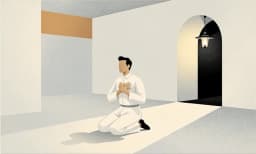
Mid-century illustration of Jesus teaching the crowd on a hillside above the sea

Matthew 5:19 · World English Bible

Matthew 5:19 Meaning Whoever

Whoever, therefore, shall break one of these least commandments, and teach others to do so, shall be called least in the Kingdom of Heaven; but whoever shall do and teach them shall be called great in the Kingdom of Heaven.

What does Matthew 5:19 mean?

Greatness here has nothing to do with the ego's hunger to be seen as important. To do first and then to teach is simply to speak from what you have become, not from ideas held in the mind.

From the Ego v. Being reading below.

Matthew 5:19 through 7 lenses

The same verse, read by 7 traditions.

EGO & BEING

Ego v. Being

Greatness here has nothing to do with the ego's hunger to be seen as important. To do first and then to teach is simply to speak from what you have become, not from ideas held in the mind. The one who lives the truth radiates it without effort, and others feel the presence behind the words.

When you dismiss even the smallest form of goodness and teach others to dismiss it too, you shrink your own aliveness. When you live it and share it, you grow into the fullness of who you already are, and that is what greatness means.

Ego v. Being lensGo deeper in the app

PSYCHOANALYSIS

Psychoanalysis

The commands given on the mountain are demands of the true self, the image of God pressing its call for wholeness into the shape of ordinary days.

Autumn only harvests what spring first planted. A person who loosens even a small inner demand, then teaches others to loosen it too, shrinks the room for growth in both teacher and student. Good and evil here are not simply ranked enemies but a matched pair, and holding the strain between them is what moves a person toward something new. To be called least in the Kingdom describes a self still in pieces, still dissolving the very tension that becoming whole depends on.

Psychoanalysis lensGo deeper in the app

CLINICAL PSYCHOLOGY

Clinical Psychology

How you treat the smallest obligations decides what you become, and it spreads, because you are always teaching by example whether you mean to or not. A man who shrugs off the little duties and tells others they are free to shrug too is not liberating anyone. He is quietly lowering the ceiling of what those around him believe is possible.

The reverse is just as contagious. Take the minor things seriously, do them and show others how, and you rise in a way that has nothing to do with status. You become someone whose mere conduct makes the good life look attainable, and that is the highest thing a person can be for others.

Clinical Psychology lensGo deeper in the app

BUDDHISM

Buddhism

Sīla: The Training Rules

Sīla is the complete network of ethical precepts that form the foundation of Buddhist practice. Its logic is wholeness: the full structure holds together, and treating any rule as optional weakens the rest. The verse's insistence on "the least commandments" runs on exactly this logic. A chain does not get stronger by removing its smallest links.

Appamāda: Non-Negligence

Appamāda is the care that lets nothing slip through inattention, the direct opposite of carelessness. The Dhammapada closes with it as the one quality that leads to the deathless. The verse's "least commandments" is precisely where appamāda is tested: the person who sorts precepts into important and negligible has already let the habit of cutting corners take root.

Kamma: Intentional Action and Its Fruit

Kamma is the law that what you do with intention shapes you and produces corresponding fruit. The verse's consequence structure, being "called least" or "called great," speaks kamma's language: your standing is made by what you do and what you teach, not by what you profess. Breaking precepts is a seed; teaching others to break them multiplies the crop.

Paṭipatti: Direct Practice

Paṭipatti is the living enactment of the teaching, as distinct from its study or recitation. Theravāda frames the path in three levels: pariyatti (learning), paṭipatti (practice), and paṭivedha (direct realization). The verse's warning is paṭipatti's warning: a teacher who knows the rules but does not live them has stopped at the first level. Words without roots in the speaker's own life pass on information, but not transformation.

Kalyāṇamittā: The Good Teacher

Kalyāṇamittā is the companion on the path whose own practice is the teaching. The Buddha called it "the whole of the holy life." Such a teacher does not only transmit doctrine; they transmit a way of living they already carry in themselves. The verse pairs "do and teach" as a single unit for this reason: the teacher who keeps even the smallest precept becomes, by that fact, a living expression of what they teach.


CYBERNETICS

Cybernetics

The small things you practice quietly build the self-image that later governs everything. Neglect the little disciplines and teach yourself, by daily example, that they do not matter, and you shrink your own picture of who you are. Honor them, and you rehearse greatness into that same picture.

There was a man careless in minor duties who came to see himself as a minor man, until he began keeping the small promises and felt his stature grow. Greatness is not one large act. It is the picture you form of yourself through the ordinary things you choose to do.

Cybernetics lensGo deeper in the app

SUFISM

Sufism (Ghazali)

Whoever ignores a small command and teaches others to ignore it is called least, while whoever keeps and teaches it is called great. The heart likes to sort duties by size and quietly drop the ones it finds too small to matter. That habit is really the appetite excusing itself, dressing laziness as wisdom, and teaching others the same spreads the disease and thickens the pride behind it.

The cure is to honor even the small duty and to teach by keeping it, not by explaining it away. When you guard the least command, the whole of you is lifted, not lowered.

Sufism (Ghazali) lensGo deeper in the app

SUFISM

Sufism (Ibn Arabi)

A person becomes large or small in an unseen way, by how much of God's word they let live through them. Someone who honors even the least command, and helps others honor it, makes himself a wider vessel, and more of the one light comes through. Someone who chips the word away narrows the very channel he stands in.

So when he ranks people by how they treat the smallest rule, he is not handing out prizes from outside. He is describing what each life actually holds. Greatness here is simply being a clearer place for God to show Himself, and smallness is having dimmed that showing by one's own hand. The measure and the man turn out to be one thing, seen from two sides.

Sufism (Ibn Arabi) lensGo deeper in the app

Ego v. Being lens

Live Matthew 5:19 today

  1. Keep one small promise to yourself today that nobody would miss, the glass of water, the ten minutes outside, the thing you said you would stop scrolling past. Small does not mean it does not count.
  2. Instead of giving someone advice today, do the thing beside them. Help with the dishes, sit with them while they make the call, and let the doing be the lesson.
  3. When you catch yourself about to post or say something you do not actually live yet, hold it. Go live it for a week first, then speak if you still want to.

Where am I teaching something I have not yet done myself?

The same truth in other traditions

Confucius · Analects

The wise one acts first and lets the words follow the action. Teaching that runs ahead of living is empty noise.

Stoicism · Epictetus

Do not talk about your philosophy; embody it. Sheep do not bring the shepherd grass to show how much they ate, they digest it and produce wool.

Zen

A teacher who has walked the road can point with one gesture. One who has only read the map fills the air with directions.

Mid-century illustration of Jesus teaching the crowd on a hillside above the sea

Free · No account needed

Read all of Matthew 5 through 17 lenses

Lensightful opens every verse of the Bible through the traditions you choose. Save readings, ask a follow-up question, and get one verse a day.

Get Lensightful on the App Store