

Matthew 6:19 · World English Bible
Matthew 6:19 Meaning Don’t Lay Up Treasures for Yourselves
Don’t lay up treasures for yourselves on the earth, where moth and rust consume, and where thieves break through and steal;
Matthew 6:19 · World English Bible
Don’t lay up treasures for yourselves on the earth, where moth and rust consume, and where thieves break through and steal;
What gets forbidden is piling up wealth for yourself, because the pile turns into what a person leans on when afraid. Money is not called wicked here.
From the Protestant reading below.
The same verse, read by 11 traditions.
 Protestant
 Ego v. Being
 Esoteric
 Psychoanalysis
 Clinical Psychology
 Buddhism
 Cybernetics
 Sufism (Ghazali)
 Sufism (Ibn Arabi)
 Sufism
 Self-Help
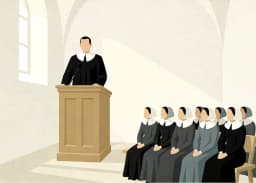
PROTESTANT
What gets forbidden is piling up wealth for yourself, because the pile turns into what a person leans on when afraid. Money is not called wicked here. Every earthly store is already being eaten or dug out while it grows.
Cloth was savings, and moths ate it; house walls were mud brick, so breaking in meant digging through a wall. The command lands on people already taught to call God their Father, so their safety rests on His care and not on what they can stack up.

EGO & BEING
All forms in the physical world are subject to the law of impermanence. When you seek your identity in material possessions, status, or achievements, you invest in that which must inevitably decay. The ego clings to form to feel complete, yet every form dissolves in time. Rust and decay are simply the universe reminding you that no permanent peace can ever be found in the world of things. Realize the eternal life of Being within you instead.

ESOTERIC
Whatever a person hoards in the field of the outer mind decays, because the earth here is the lower mind and everything stored there is subject to the wear and theft of passing thought. Treasures piled on that ground are eaten by the slow corrosion of worry and stripped by the intrusions that break into an unguarded consciousness. Nothing gathered at that level holds; the mind that heaps up outward gains finds them corrupting from within and carried off from without.
The surface mind cannot keep anything safe, for it is the very region where things rust and where thieving impulses break through, so what is stored there is always already being lost.
Earth: the lower mind, the outer field where stored things decay and are stolen Moth and rust: the slow corrosion of worry and craving that eats what the outer mind hoards Thieves: the intruding impulses that break into an unguarded consciousness and carry off its gains

PSYCHOANALYSIS
Piling up earthly wealth is the ego's defense against its own ending, a fortress of possessions built exactly where decay, like rust on iron, is quietly eating it away.
Growing whole reveals a different kind of treasure: the divine spark lodged deep in a person, which old thinkers called the stone that never rots, the inner stronghold no thief can break into and no moth can wear down. The moth here echoes an older image, the one drawn toward the sun rather than eating cloth: the soul pulled toward its true center rather than toward the ego's structures, which time dissolves. Wholeness cannot be hoarded. It is found exactly where hoarding stops.

CLINICAL PSYCHOLOGY
Everything you can grasp and pile up is already in the process of decaying. The wealth, the possessions, the status you accumulate as a hedge against chaos, all of it is subject to moth and rust and the thief in the night, and to build your life upon it is to build upon something actively dissolving beneath you. Anchor yourself to what perishes and you will perish along with it.
This is not an argument against having things. It is a warning about where you place the center of your being. When your deepest security rests on what can be corrupted or stolen, you have handed the meaning of your existence to forces entirely outside your control, and you will spend your days in fear of losing what was never solid enough to hold you up.

BUDDHISM
'Laying up treasures' is the mind reaching for more before it has finished holding what it has (lobha). The more it stores, the more it must guard, and the more it guards, the more it needs.
Beneath the storing runs a thirst no possession quiets, the feeling that things are not yet safe, that one more will settle the restlessness (taṇhā).
When that thirst closes its fingers on an object, the grip keeps the fire burning (upādāna). To lay up is to hold wealth as a wall against the future.
Yet everything stored arises, changes, and passes (anicca). 'Moth and rust' and 'thieves' that 'break through and steal' are one truth told three ways: organic things decay, metal corrodes, what survives is taken.
The release is discovering you do not need to hold (nekkhamma): what decay can take was never solid ground to stand on.

CYBERNETICS
A self-image staked on things that decay is a self-image forever under threat, and the mind that guards a crumbling treasure lives in a low-grade alarm that drains its striving power. Moth and rust are always at work, so the picture of yourself never gets to rest.
When your sense of worth depends on possessions that can be lost or taken, every loss becomes a wound to who you are. Build your inner picture on something a thief cannot reach, and you give the success mechanism a steady target instead of one it must anxiously defend.

SUFISM
A man spends his years stacking up what will not last, guarding a pile that moth quietly eats, that rust quietly spoils, that a thief can carry off in one night. His love has fastened onto things that are already dissolving in his hands, so his peace rises and falls with prices and locks and the fear of loss.
The disease is a greed that mistakes perishable things for lasting ones and pours the whole heart into them. The cure begins with seeing them plainly: everything stored on earth is on its way out. Loosen your grip on what decays, and you stop tying your happiness to a treasure that is built to leave you.

SUFISM
Everything a person can lock in a box is already leaking away, because whatever has a shape can lose it. Moth, rust and thief are only the slow truth of the thing: it was borrowed light wearing the mask of a possession, and it hands itself back to nothing no matter how tightly it is held.
To pile such things up is to love the cup and forget the water. God shows Himself here as the one wealth that does not thin, shining briefly in each object a person mistakes for solid. The one who sees this stops gripping the fading gleam and turns toward its source, and finds he has lost nothing worth keeping.

SUFISM
Dunyā: The world close at hand The Quran's word for the life within arm's reach. Money and belongings promise a settled feeling, the feeling never quite arrives, and so the pile keeps growing. Naming this the nearer life puts such things where they belong: handy for the road, too flimsy to rest a life on.
Everything perishes except His face: only God outlasts what we hold onto A line from the Quran that the Sufis return to constantly. Whatever someone stores away is quietly coming apart already, on its own schedule, with no announcement. Knowing that early takes some sting out of the loss, since the ending was in the thing from the first day.
Zuhd: Renunciation Al-Ghazali describes the heart turning away from what the hands may still be holding. One person owns a great deal and holds it loosely; another owns almost nothing and grips it hard. The difference shows when something goes: whether a person loses a possession or loses their footing.
Tawakkul: Relying on God Al-Ghazali treats this reliance as the answer to the fear running underneath every urge to hoard, that nobody will catch you. Trust here still plants the crop and does the day's work, then stops trying to guarantee the outcome. As the fear quiets, the need to guard against every possible future quiets with it.
Be in the world like a stranger or a traveler passing through: hold it lightly The Prophet said this to one of his companions, and Sufis have repeated it ever since. A traveler uses the hotel bed and the towels without a thought of how to get them home. Someone living that way still enjoys what comes, without the strain of trying to make it permanent.

SELF-HELP
A man can pour his whole life into things that decay the moment he owns them, then wonder why the pile never fills the hole inside. Whatever a person builds their identity on is exactly what they fear losing, and that fear quietly runs the show.
The pull toward stacking possessions is really a hunger for security and worth, mistaking the outer for the inner. Invest instead in what no moth touches: your character, your relationships, your growth, the person you are becoming. Those compound with time instead of corroding, and no thief can reach them. Build your life on what cannot be stolen, and you build on ground that holds.
Protestant lens
When you are scared, what do you reach for first?
He reminded himself that everything he held was on loan and would be asked back, so he leaned on none of it. Whatever can be taken was never a floor to stand on.
All made things come apart. Building a shelter out of what is already crumbling is how a person ends up homeless twice.
The one who stores up much loses much. Knowing when you have enough is the only wealth that does not rot.

Free · No account needed
Lensightful opens every verse of the Bible through the traditions you choose. Save readings, ask a follow-up question, and get one verse a day.
Get Lensightful on the App Store